Department of Chemistry, University of California, Irvine, California 92697-2025, United States.
J Phys Chem A. 2023 Jun 22;127(24):5209-5221. doi: 10.1021/acs.jpca.3c01794. Epub 2023 Jun 7.
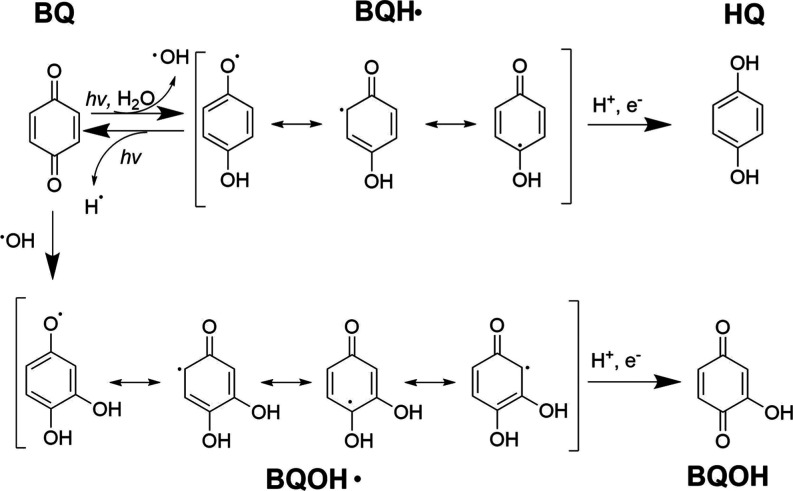
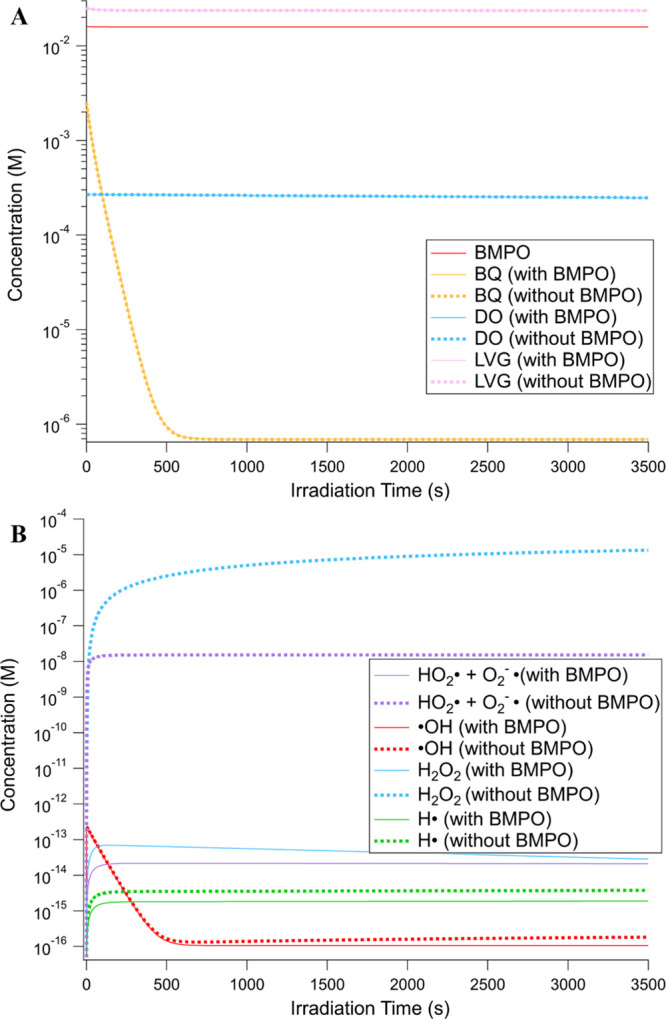
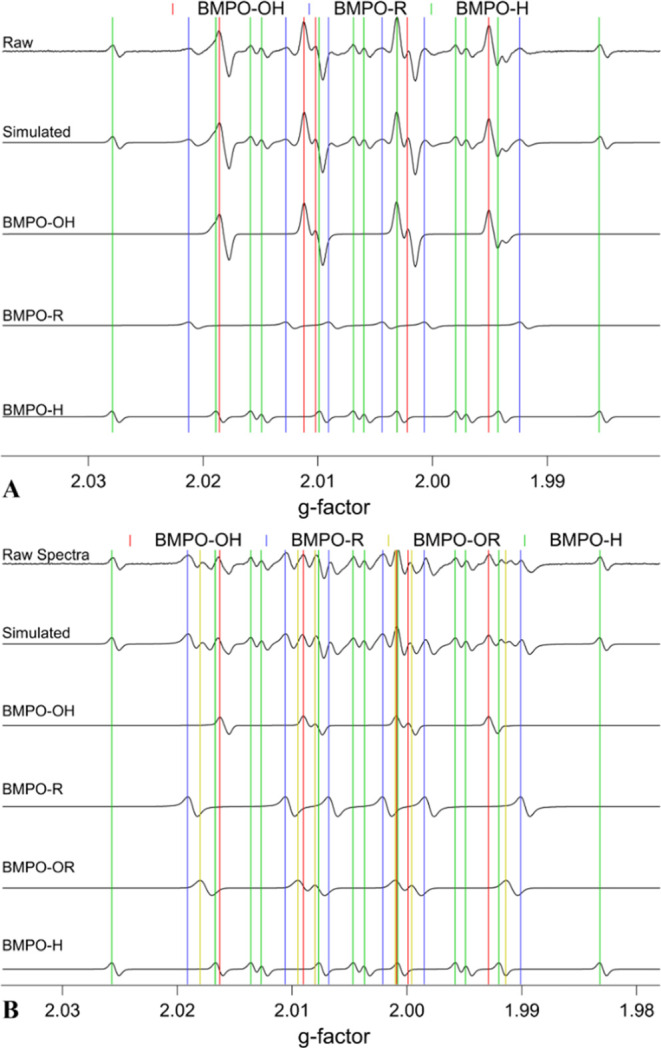
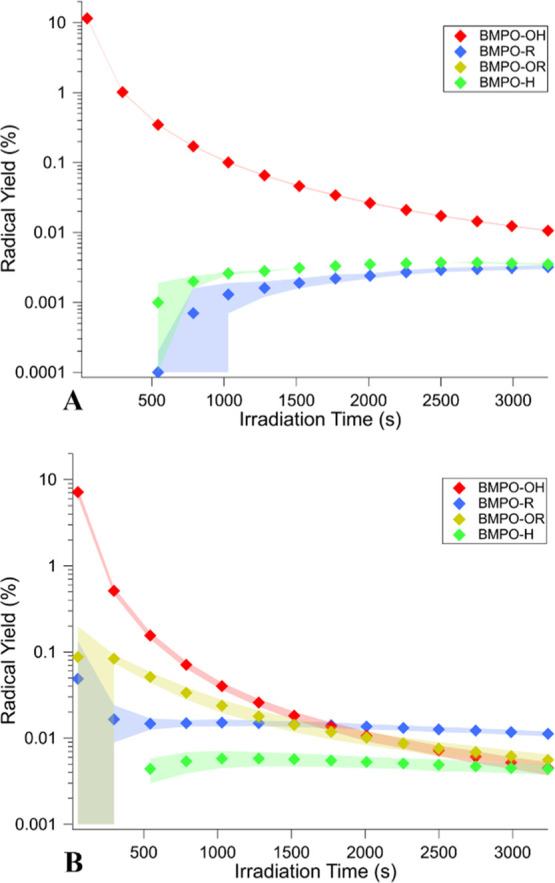
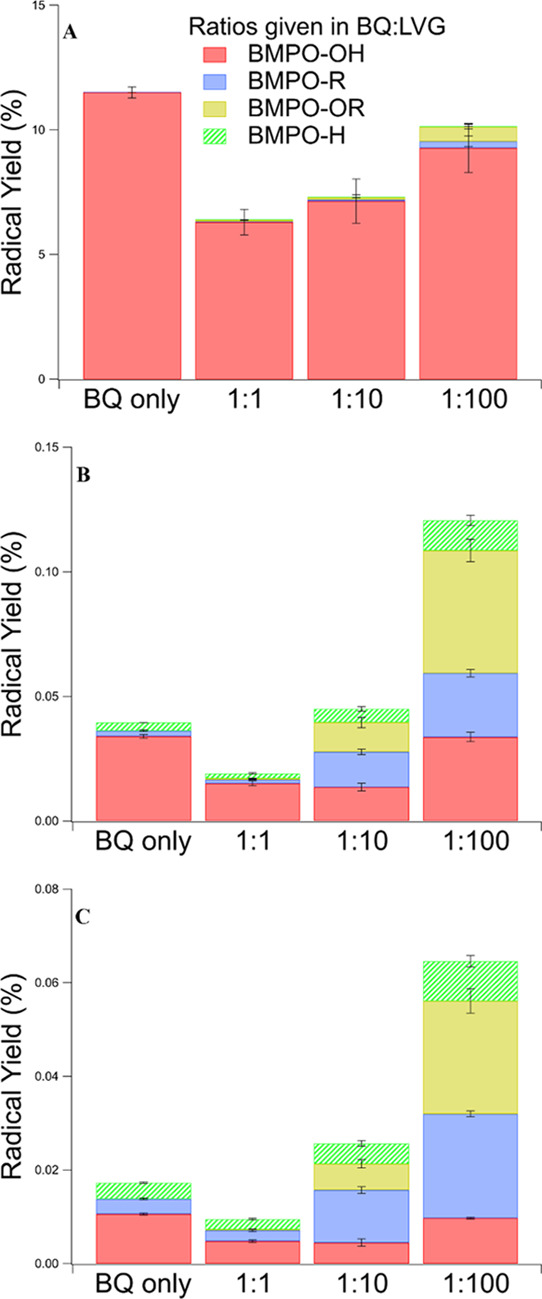
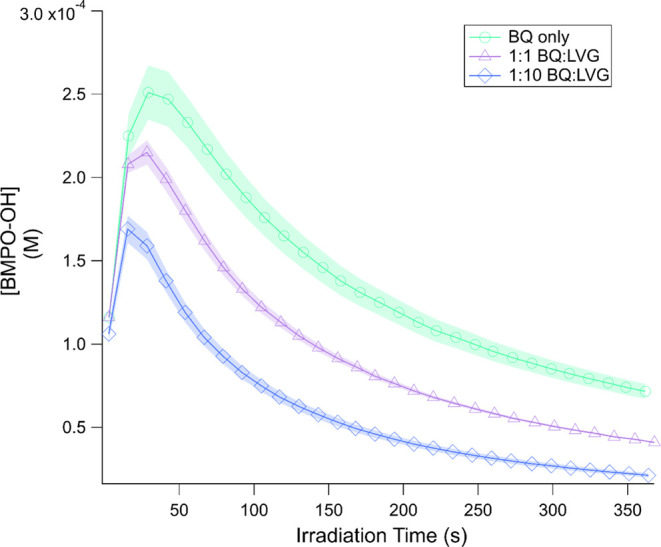
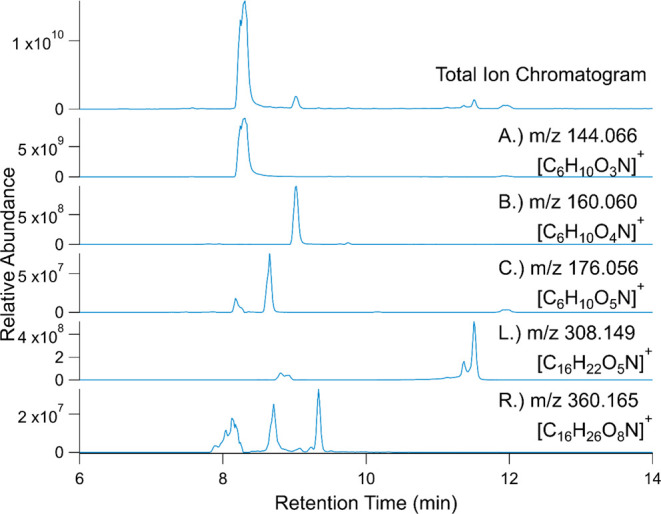
The photochemical aging of biomass-burning organic aerosols (BBOAs) by exposure to sunlight changes the chemical composition over its atmospheric lifetime, affecting the toxicological and climate-relevant properties of BBOA particles. This study used electron paramagnetic resonance (EPR) spectroscopy with a spin-trapping agent, 5--butoxycarbonyl-5-methyl-1-pyrroline--oxide (BMPO), high-resolution mass spectrometry, and kinetic modeling to study the photosensitized formation of reactive oxygen species (ROS) and free radicals in mixtures of benzoquinone and levoglucosan, known BBOA tracer molecules. EPR analysis of irradiated benzoquinone solutions showed dominant formation of hydroxyl radicals (OH), which are known products of reaction of triplet-state benzoquinone with water, also yielding semiquinone radicals. In addition, hydrogen radicals (H) were also observed, which were not detected in previous studies. They were most likely generated by photochemical decomposition of semiquinone radicals. The irradiation of mixtures of benzoquinone and levoglucosan led to substantial formation of carbon- and oxygen-centered organic radicals, which became prominent in mixtures with a higher fraction of levoglucosan. High-resolution mass spectrometry permitted direct observation of BMPO-radical adducts and demonstrated the formation of OH, semiquinone radicals, and organic radicals derived from oxidation of benzoquinone and levoglucosan. Mass spectrometry also detected superoxide radical adducts (BMPO-OOH) that did not appear in the EPR spectra. Kinetic modeling of the processes in the irradiated mixtures successfully reproduced the time evolution of the observed formation of the BMPO adducts of OH and H observed with EPR. The model was then applied to describe photochemical processes that would occur in mixtures of benzoquinone and levoglucosan in the absence of BMPO, predicting the generation of HO due to the reaction of H with dissolved oxygen. These results imply that photoirradiation of aerosols containing photosensitizers induces ROS formation and secondary radical chemistry to drive photochemical aging of BBOA in the atmosphere.
生物质燃烧有机气溶胶(BBOA)在阳光照射下的光化学老化会改变其在大气寿命期间的化学成分,从而影响 BBOA 颗粒的毒理学和与气候相关的性质。本研究使用电子顺磁共振(EPR)光谱仪结合自旋捕获剂 5--丁氧基羰基-5-甲基-1-吡咯啉-N-氧化物(BMPO)、高分辨质谱和动力学模型来研究在苯醌和左旋葡聚糖的混合物中,已知的 BBOA 示踪分子,光致活性氧物种(ROS)和自由基的形成。辐照苯醌溶液的 EPR 分析表明,羟基自由基(OH)的形成占主导地位,OH 是三重态苯醌与水反应的已知产物,也产生半醌自由基。此外,还观察到氢自由基(H),这在以前的研究中没有检测到。它们很可能是由半醌自由基的光化学分解产生的。苯醌和左旋葡聚糖混合物的辐照导致大量的碳和氧中心有机自由基形成,在左旋葡聚糖比例较高的混合物中更为明显。高分辨质谱可直接观察 BMPO-自由基加合物,并证明 OH、半醌自由基和源自苯醌和左旋葡聚糖氧化的有机自由基的形成。质谱还检测到超氧自由基加合物(BMPO-OOH),这在 EPR 光谱中没有出现。辐照混合物中过程的动力学模型成功地再现了 EPR 观察到的 BMPO 加合物中 OH 和 H 的形成的时间演变。然后,该模型被应用于描述在不存在 BMPO 的情况下苯醌和左旋葡聚糖混合物中发生的光化学过程,预测由于 H 与溶解氧的反应而产生 HO。这些结果表明,含有光敏剂的气溶胶的光照射会诱导 ROS 的形成和二次自由基化学,从而驱动大气中 BBOA 的光化学老化。