Columbia University, New York, NY, USA.
Harvard University, Cambridge, MA, USA.
Nature. 2023 Jun;618(7966):782-789. doi: 10.1038/s41586-023-06137-x. Epub 2023 Jun 7.
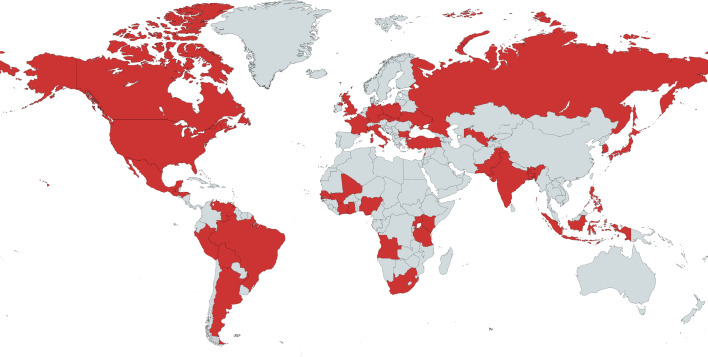
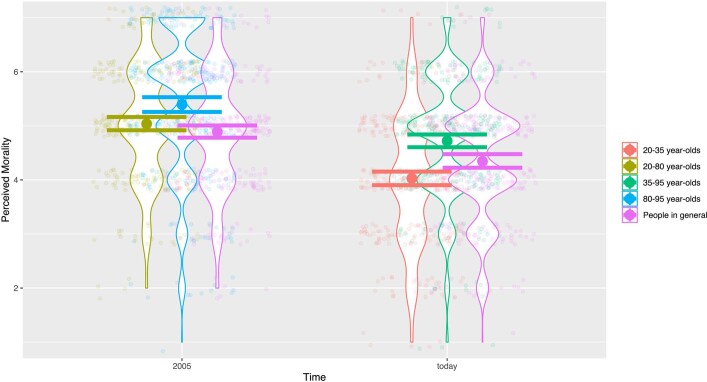
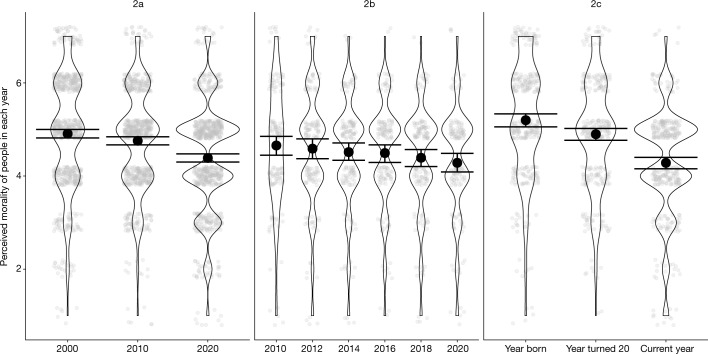
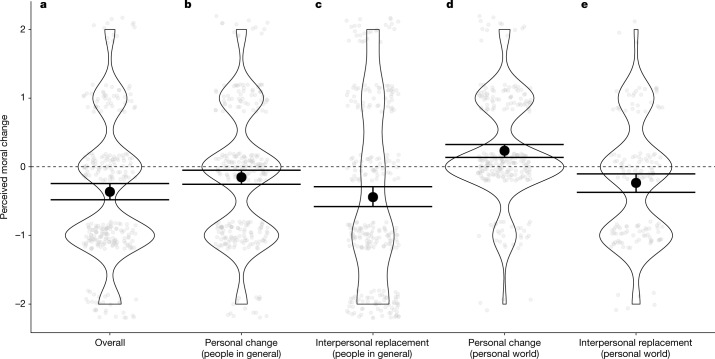
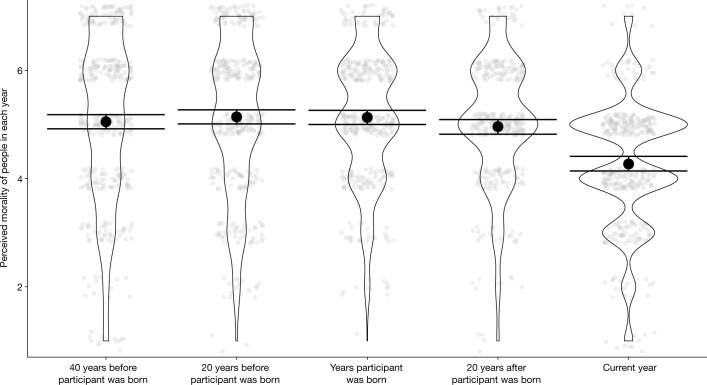
Anecdotal evidence indicates that people believe that morality is declining. In a series of studies using both archival and original data (n = 12,492,983), we show that people in at least 60 nations around the world believe that morality is declining, that they have believed this for at least 70 years and that they attribute this decline both to the decreasing morality of individuals as they age and to the decreasing morality of successive generations. Next, we show that people's reports of the morality of their contemporaries have not declined over time, suggesting that the perception of moral decline is an illusion. Finally, we show how a simple mechanism based on two well-established psychological phenomena (biased exposure to information and biased memory for information) can produce an illusion of moral decline, and we report studies that confirm two of its predictions about the circumstances under which the perception of moral decline is attenuated, eliminated or reversed (that is, when respondents are asked about the morality of people they know well or people who lived before the respondent was born). Together, our studies show that the perception of moral decline is pervasive, perdurable, unfounded and easily produced. This illusion has implications for research on the misallocation of scarce resources, the underuse of social support and social influence.
一些零星的证据表明,人们认为道德正在滑坡。通过一系列使用档案数据和原始数据的研究(n=12,492,983),我们发现,至少有 60 个国家的人民认为道德在滑坡,而且他们已经有这种认识至少 70 年了,他们将这种滑坡归咎于个人随着年龄增长道德的滑坡,以及代际之间道德的滑坡。接下来,我们发现,人们对同时代人道德的评价并没有随着时间的推移而下降,这表明道德滑坡的看法是一种错觉。最后,我们展示了一种基于两种已确立的心理现象(对信息的偏见性接触和对信息的偏见性记忆)的简单机制如何产生道德滑坡的错觉,并且我们报告了一些研究,这些研究证实了该机制关于道德滑坡感知减弱、消除或反转的两个预测(也就是说,当被问及他们熟悉的人的道德或受访者出生前的人的道德时)。总的来说,我们的研究表明,道德滑坡的观念普遍存在、持久存在、毫无根据且容易产生。这种错觉对研究稀缺资源的错误分配、社会支持和社会影响的使用不足具有重要意义。