Mullen Lisa A, Walton William C, Williams Michael P, Peyton Keith S, Porter David W
Johns Hopkins Medicine, Breast Imaging Division, Baltimore, Maryland, United States.
Johns Hopkins University Applied Physics Laboratory, Laurel, Maryland, United States.
J Med Imaging (Bellingham). 2023 Feb;10(Suppl 2):S22409. doi: 10.1117/1.JMI.10.S2.S22409. Epub 2023 Jun 6.
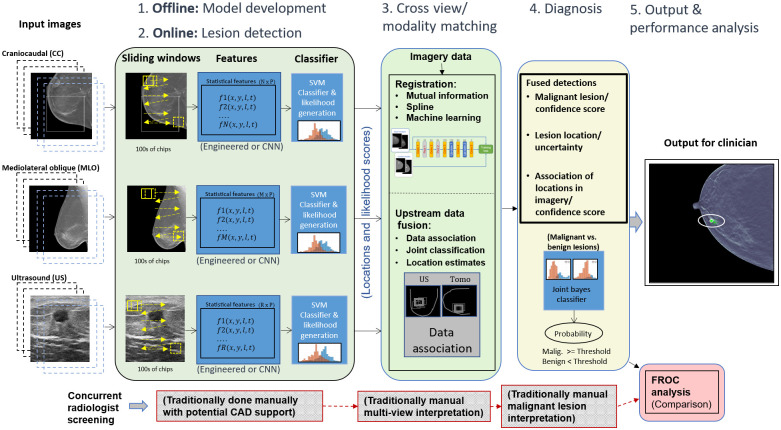
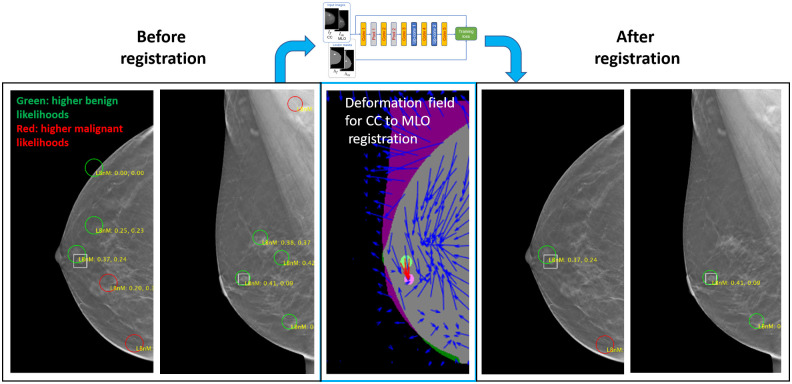
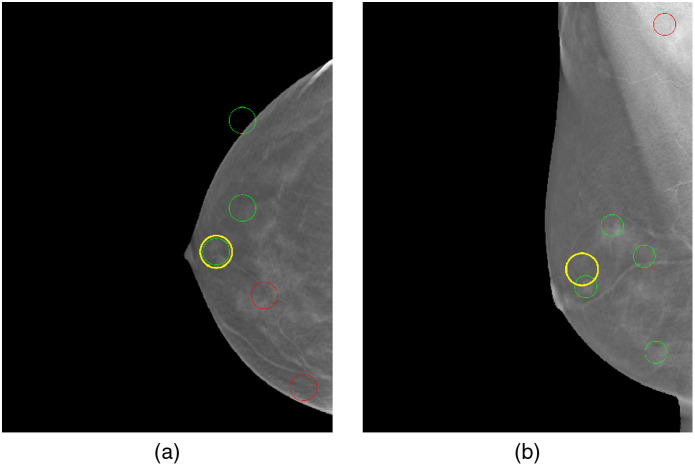
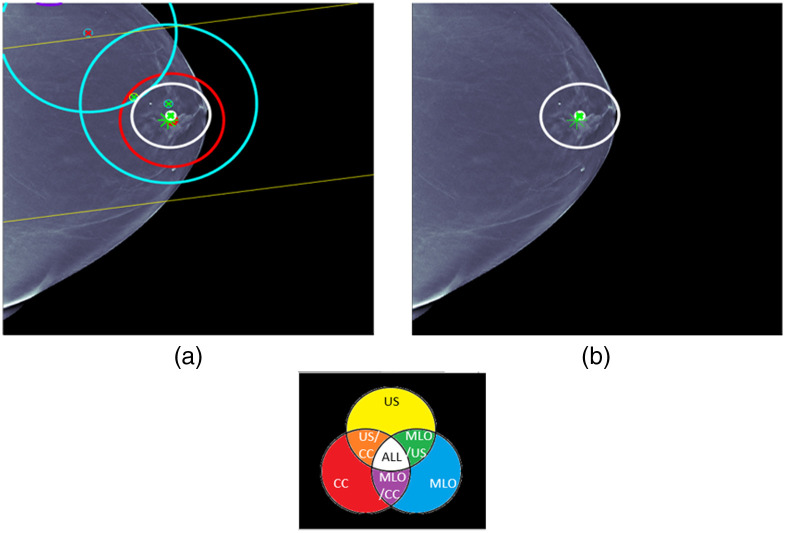
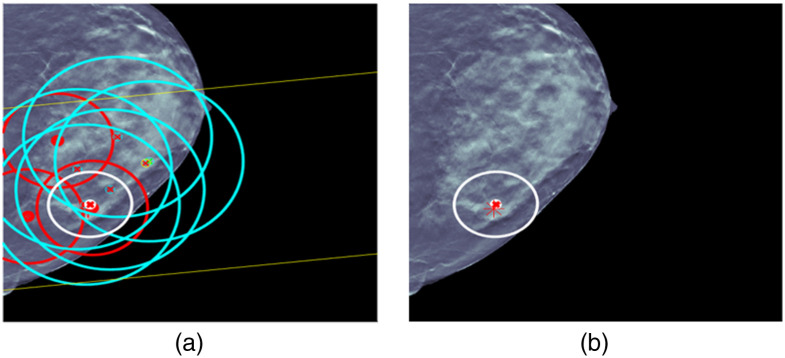
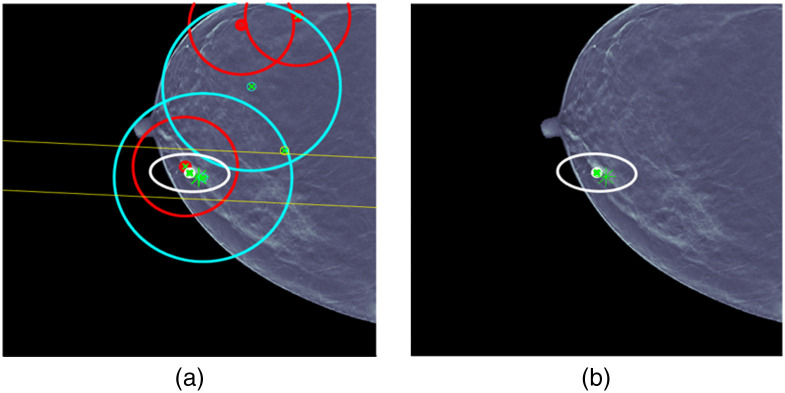
To develop an artificial intelligence algorithm for the detection of breast cancer by combining upstream data fusion (UDF), machine learning (ML), and automated registration, using digital breast tomosynthesis (DBT) and breast ultrasound (US).
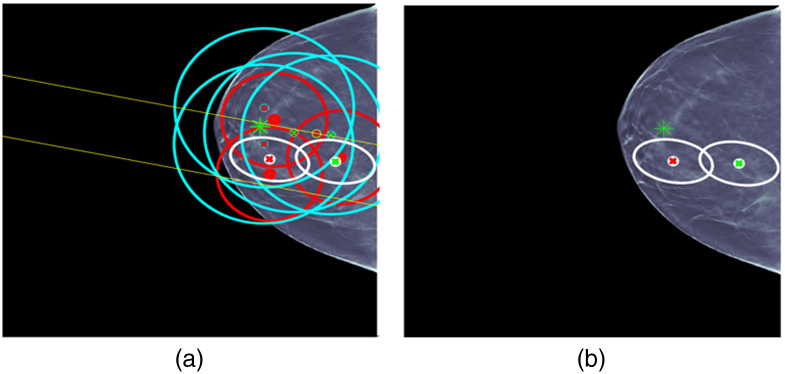
Our retrospective study included examinations from 875 women obtained between April 2013 and January 2019. Included patients had a DBT mammogram, breast US, and biopsy proven breast lesion. Images were annotated by a breast imaging radiologist. An AI algorithm was developed based on ML for image candidate detections and UDF for fused detections. After exclusions, images from 150 patients were evaluated. Ninety-five cases were used for training and validation of ML. Fifty-five cases were included in the UDF test set. UDF performance was evaluated with a free-response receiver operating characteristic (FROC) curve.
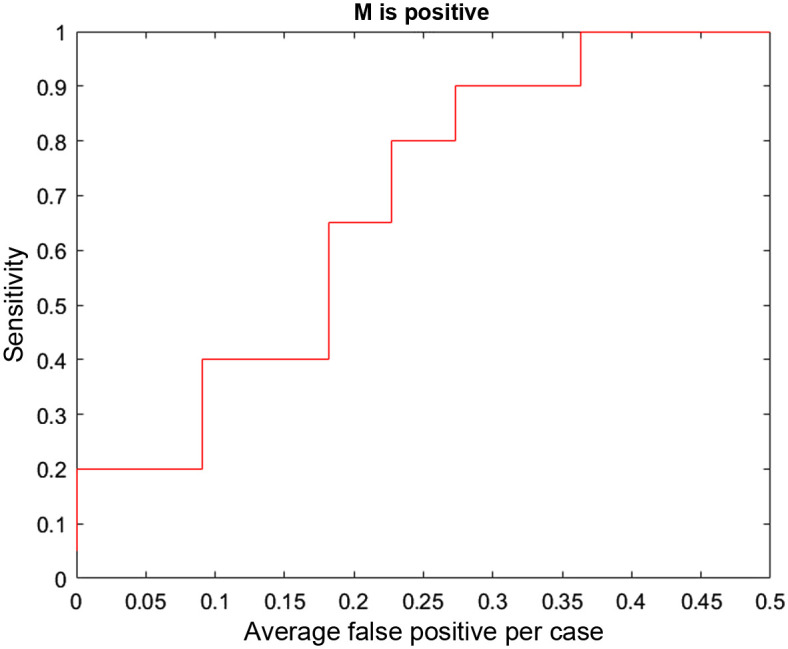
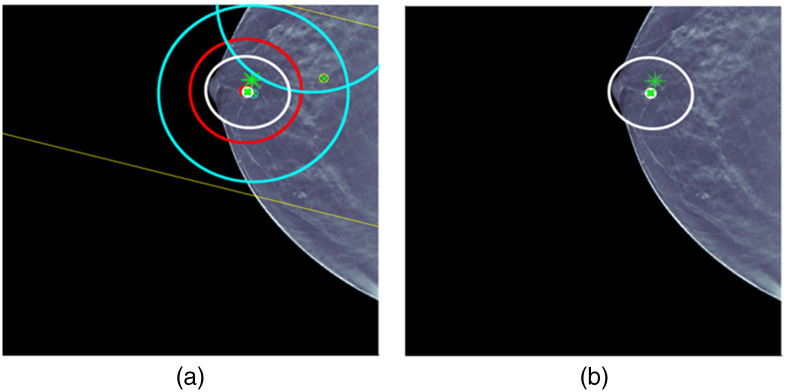
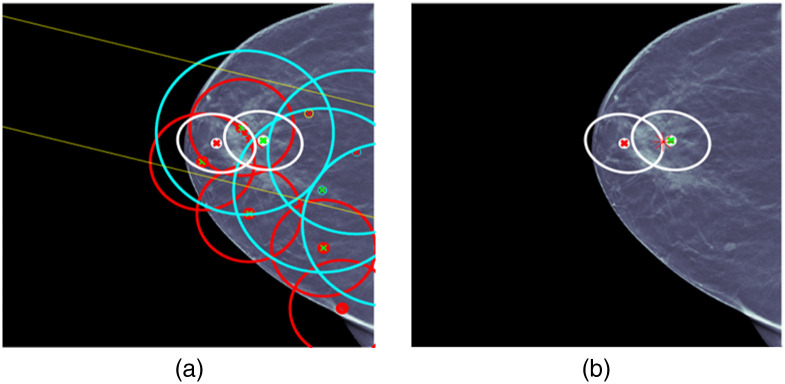
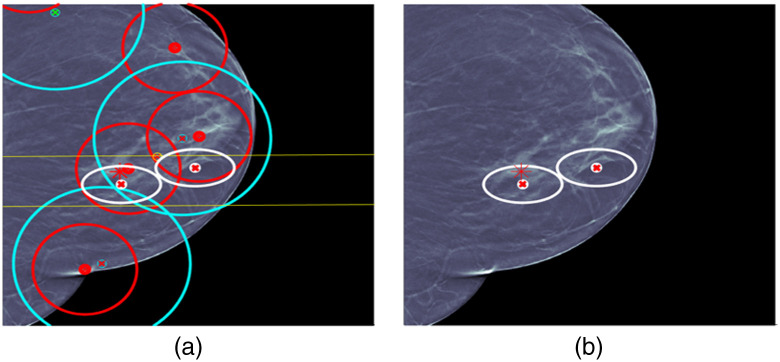
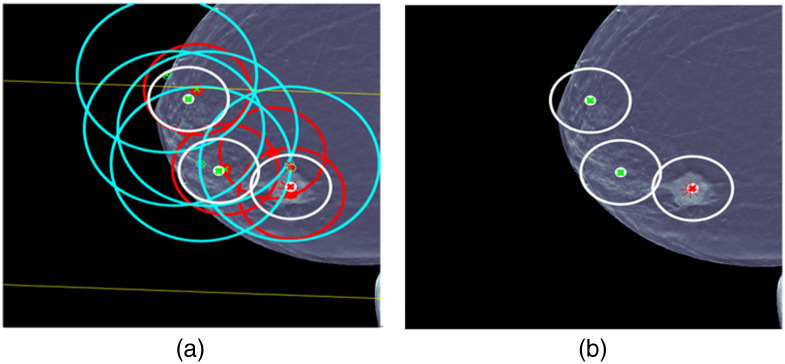
Forty percent of cases evaluated with UDF (22/55) yielded true ML detections in all three images (craniocaudal DBT, mediolateral oblique DBT, and US). Of these, 20/22 (90.9%) produced a UDF fused detection that contained and classified the lesion correctly. FROC analysis for these cases showed 90% sensitivity at 0.3 false positives per case. In contrast, ML yielded an average of 8.0 false alarms per case.
An AI algorithm combining UDF, ML, and automated registration was developed and applied to test cases, showing that UDF can yield fused detections and decrease false alarms when applied to breast cancer detection. Improvement of ML detection is needed to realize the full benefit of UDF.
通过结合上游数据融合(UDF)、机器学习(ML)和自动配准技术,利用数字乳腺断层合成(DBT)和乳腺超声(US),开发一种用于检测乳腺癌的人工智能算法。
我们的回顾性研究纳入了2013年4月至2019年1月期间875名女性的检查数据。纳入的患者均有DBT乳腺钼靶、乳腺超声检查,且活检证实有乳腺病变。图像由乳腺影像放射科医生进行标注。基于机器学习开发了一种人工智能算法用于图像候选检测,并利用上游数据融合技术进行融合检测。排除部分病例后,对150名患者的图像进行了评估。95例用于机器学习的训练和验证。55例纳入上游数据融合测试集。采用自由响应接收者操作特征(FROC)曲线评估上游数据融合的性能。
在上游数据融合评估的病例中,40%(22/55)在所有三张图像(头尾位DBT、内外斜位DBT和US)中均产生了真正的机器学习检测结果。其中,20/22(90.9%)产生了上游数据融合的融合检测结果,且对病变进行了正确的包含和分类。这些病例的FROC分析显示,在每例0.3个假阳性时,灵敏度为90%。相比之下,机器学习平均每例产生8.0次误报。
开发了一种结合上游数据融合、机器学习和自动配准的人工智能算法,并应用于测试病例,结果表明,在上游数据融合应用于乳腺癌检测时,可产生融合检测结果并减少误报。需要改进机器学习检测,以充分发挥上游数据融合的优势。