Reproductive Medical Center, Department of Obstetrics and Gynecology, Peking University People's Hospital, Peking University, Beijing, China.
Beijing National Laboratory for Molecular Sciences (BNLMS), MOE Key Laboratory of Bioorganic Chemistry and Molecular Engineering, College of Chemistry and Molecular Engineering, Peking University, Beijing, China.
BMC Pregnancy Childbirth. 2023 Jun 8;23(1):425. doi: 10.1186/s12884-023-05666-7.
Metabolites in spent embryo culture medium correlate with the embryo's viability. However, there is no widely accepted method using metabolite dada to predict successful implantation. We sought to combine metabolomic profiling of spent embryo culture medium and clinical variables to create an implantation prediction model as an adjunct to morphological screening of day 3 embryos.
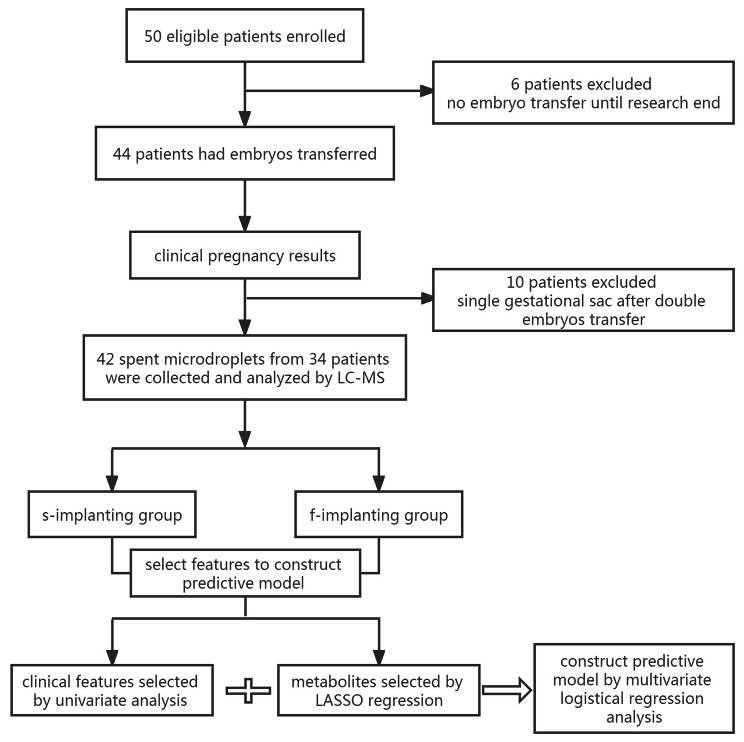
This investigation was a prospective, nested case-control study. Forty-two day 3 embryos from 34 patients were transferred, and the spent embryo culture medium was collected. Twenty-two embryos implanted successfully, and the others failed. Metabolites in the medium relevant to implantation were detected and measured by Liquid Chromatography-Mass Spectrometry. Clinical signatures relevant to embryo implantation were subjected to univariate analysis to select candidates for a prediction model. Multivariate logistical regression of the clinical and metabolomic candidates was used to construct a prediction model for embryo implantation potential.
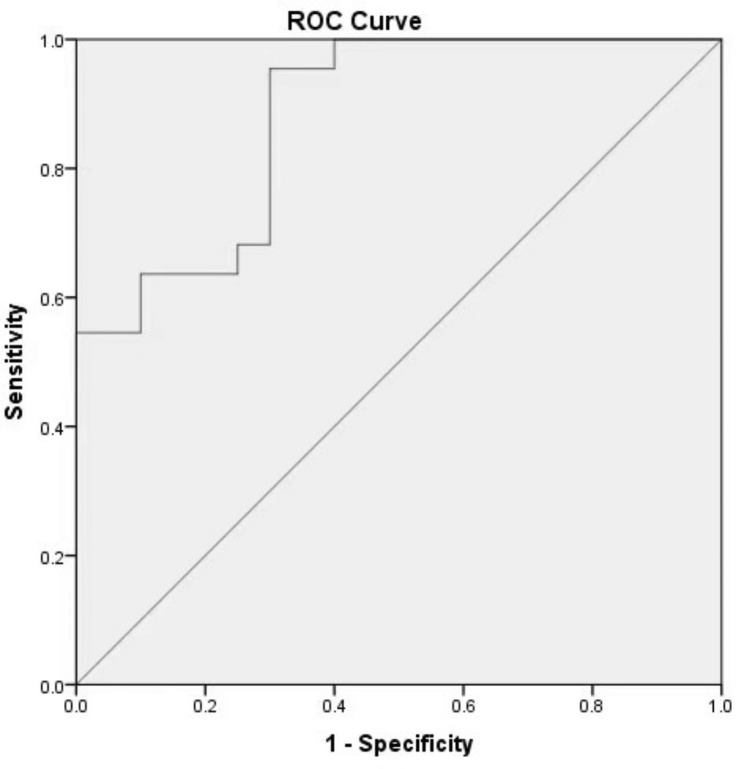
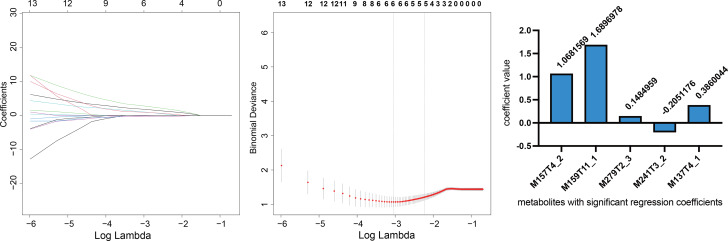
The levels of 13 metabolites were significantly different between the successful and failed groups, among which five were most relevant and interpretable selected by Least Absolute Shrinkage and Selection Operator regression analysis. None of the clinical variables significantly affected day 3 embryo implantation. The most relevant and interpretable set of metabolites was used to construct a prediction model for day 3 embryo implantation potential with an accuracy of 0.88.
Day 3 embryos'implantation potential could be noninvasively predicted by the spent embryo culture medium's metabolites measured by LC-MS. This approach may become a useful adjunct to morphological evaluation of day 3 embryos.
废弃胚胎培养液中的代谢物与胚胎的活力相关。然而,目前尚无广泛接受的方法可利用代谢数据来预测胚胎成功着床。我们试图结合废弃胚胎培养液的代谢组学分析和临床变量,创建一个着床预测模型,作为对第 3 天胚胎形态学筛选的辅助手段。
这是一项前瞻性、巢式病例对照研究。34 名患者的 42 个第 3 天胚胎被移植,收集废弃的胚胎培养液。22 个胚胎成功着床,其余胚胎着床失败。通过液相色谱-质谱联用技术检测和测量培养液中的代谢物。对与胚胎着床相关的临床特征进行单变量分析,以选择预测模型的候选因素。对临床和代谢候选因素进行多变量逻辑回归分析,构建胚胎着床潜能预测模型。
成功组和失败组之间有 13 种代谢物的水平存在显著差异,其中 5 种通过最小绝对收缩和选择算子回归分析,是最相关和最具解释性的。没有任何临床变量对第 3 天胚胎着床有显著影响。最相关和最具解释性的代谢物集合被用于构建第 3 天胚胎着床潜能的预测模型,其准确性为 0.88。
通过 LC-MS 测量的废弃胚胎培养液中的代谢物可以无创预测第 3 天胚胎的着床潜能。这种方法可能成为第 3 天胚胎形态学评估的有用辅助手段。