Key Laboratory of Plant Resources, Institute of Botany, Chinese Academy of Sciences, Beijing, 100093, China.
China National Botanical Garden, Beijing, 100093, China.
BMC Plant Biol. 2023 Jun 8;23(1):307. doi: 10.1186/s12870-023-04275-y.
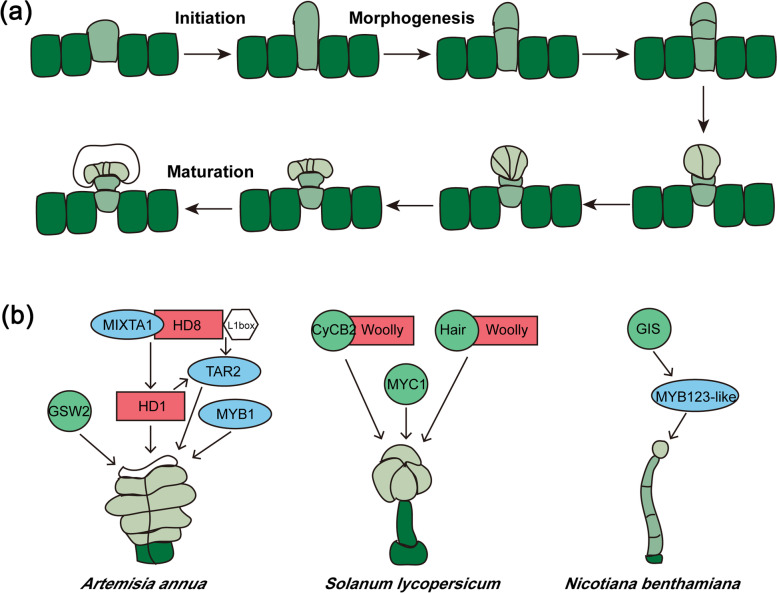
Lavender (genus Lavandula, family Lamiaceae) is an aromatic plant widely grown as an ornamental plant. The chemical composition of lavender is characterized by monoterpenoids, sesquiterpenoids, and other compounds, which are primarily synthesized and stored in epidermal secretory structures called glandular trichomes (GTs). Volatile organic compounds (VOCs) are responsible for the aroma characteristics of plant oil that drive consumer preference. Aroma is usually regarded as a characteristic trait for the classification of aromatic plants. Interestingly, VOCs are synthesized and stored in GTs. Lamiaceae species such as purple perilla, peppermint, basil, thyme, and oregano usually possess two types of GTs: peltate glandular trichomes (PGTs) and capitate glandular trichomes (CGTs). But the development process of PGTs in lavender has been reported in only a few studies to date.
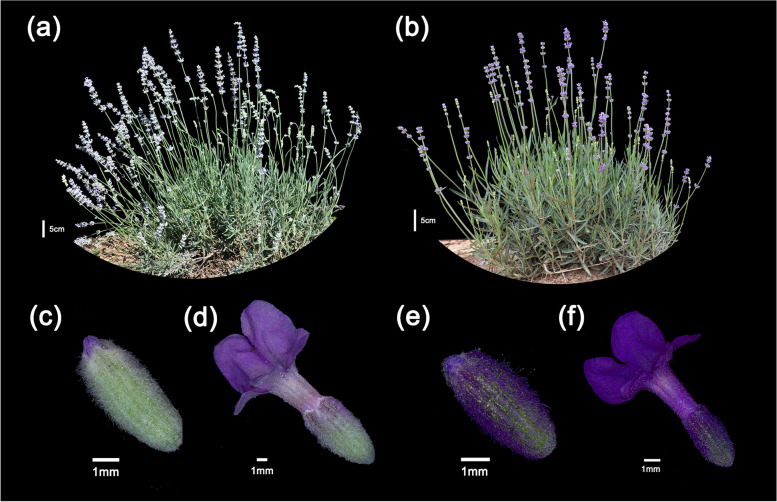
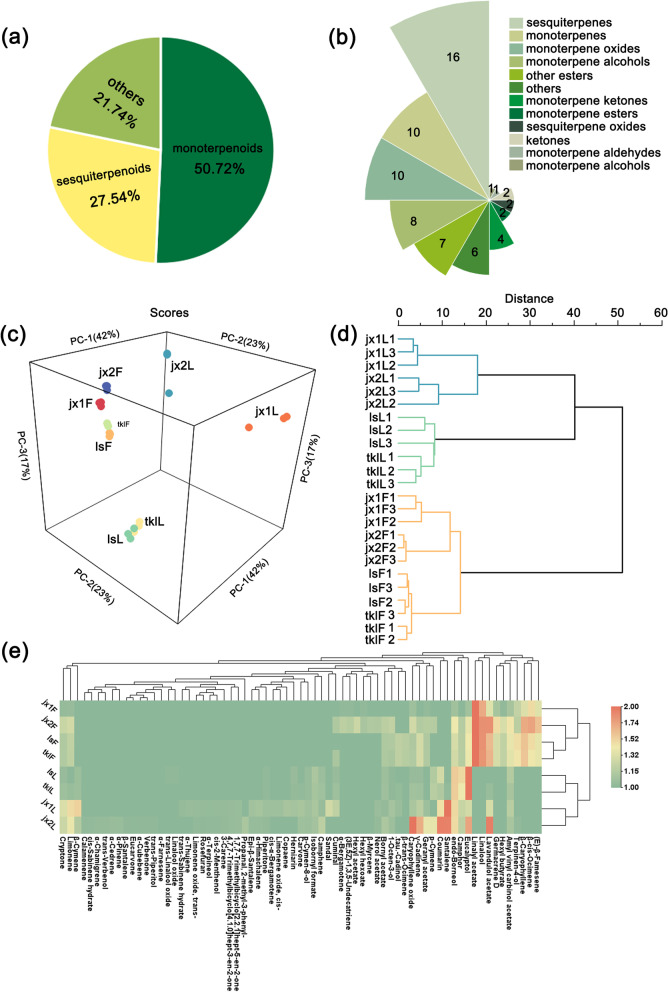
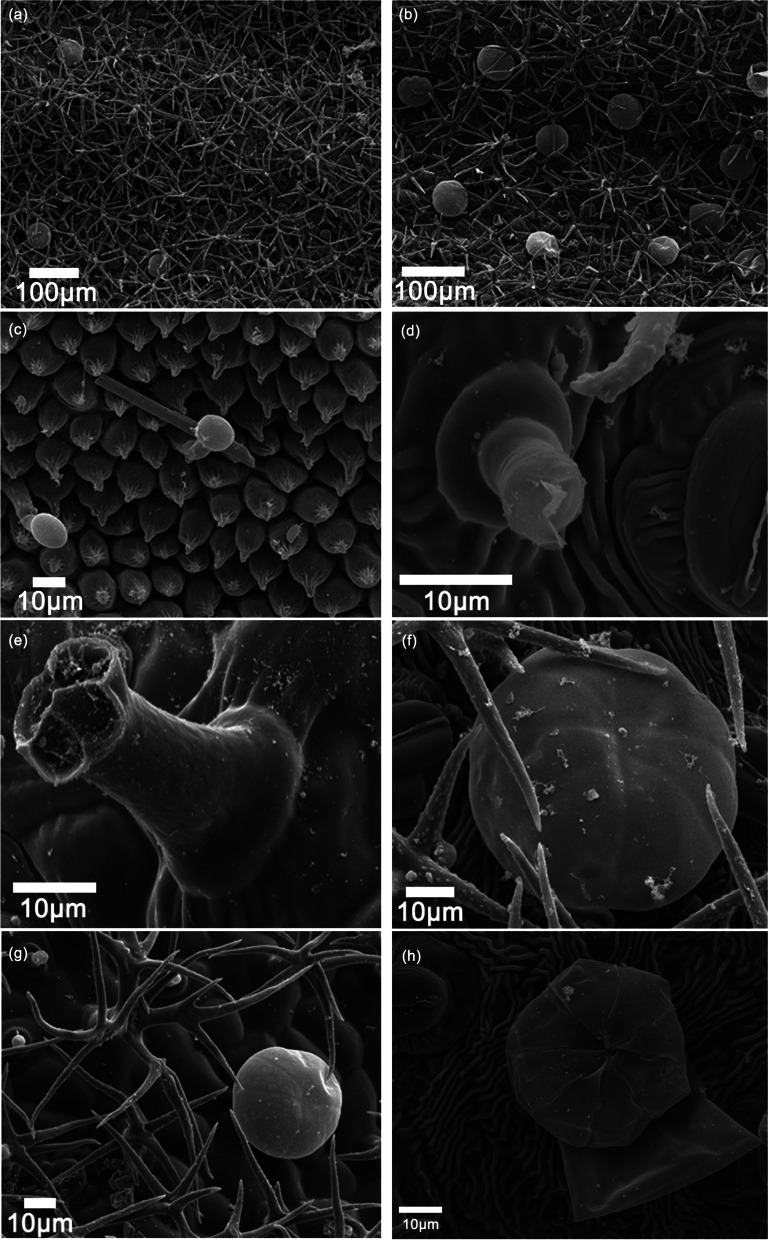
In this study, we identified and quantified the VOCs in four lavender cultivars by headspace-solid phase micro extraction-gas chromatography mass spectrometry (HS-SPME-GC-MS). A total of 66 VOCs were identified in these four cultivars, the most prominent of which were linalyl acetate and linalool, and flowers were the main site of accumulation of these VOCs. Here, we examined the developmental process of PGTs, including the formation of their base, body, and apex. The apex cells contained secretory cavities, which produced VOCs. Based on the reference genome sequence of the lavender cultivar 'Jingxun 2', several R2R3-MYB subfamily genes related to GT formation were identified. These results will guide the engineering of GTs and molecular breeding of lavender for improving the VOC content.
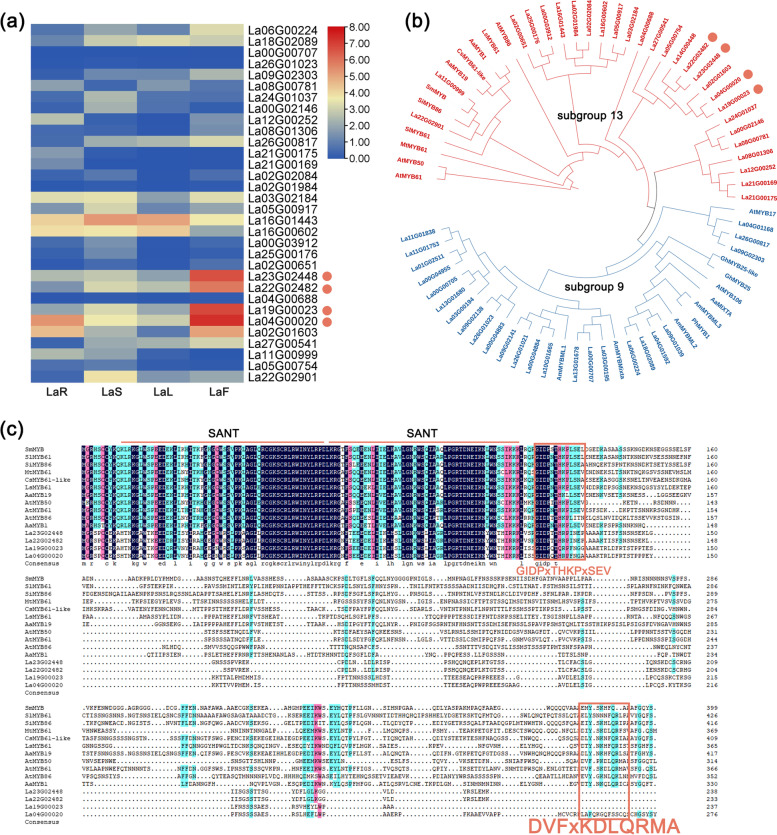
In this study, we identified the VOCs in four lavender cultivars. We analyzed the formation of GTs, and compared the number and diameter size of PGTs among four lavender cultivars. Additionally, we identified four candidate genes belonging to the R2R3-MYB family.
薰衣草(薰衣草属,唇形科)是一种芳香植物,作为观赏植物广泛种植。薰衣草的化学成分以单萜、倍半萜和其他化合物为特征,这些化合物主要在表皮分泌结构称为腺毛(GTs)中合成和储存。挥发性有机化合物(VOCs)是植物油香气特征的主要原因,也是消费者偏好的驱动因素。香气通常被认为是芳香植物分类的一个特征。有趣的是,VOCs是在 GTs 中合成和储存的。唇形科植物如紫苏、薄荷、罗勒、百里香和牛至通常具有两种类型的 GTs:盘状腺毛(PGTs)和头状腺毛(CGTs)。但是,到目前为止,只有少数研究报道了薰衣草 PGTs 的发育过程。
在这项研究中,我们通过顶空固相微萃取-气相色谱质谱联用(HS-SPME-GC-MS)鉴定和定量了四个薰衣草品种的 VOCs。这四个品种中共鉴定出 66 种 VOCs,其中最主要的是乙酸芳樟酯和芳樟醇,花是这些 VOCs的主要积累部位。在这里,我们研究了 PGTs 的发育过程,包括它们的基部、体部和顶部的形成。顶部细胞含有分泌腔,产生 VOCs。基于薰衣草品种'Jingxun 2'的参考基因组序列,鉴定了几个与 GT 形成相关的 R2R3-MYB 亚家族基因。这些结果将指导 GT 的工程改造和薰衣草的分子育种,以提高 VOC 含量。
在这项研究中,我们鉴定了四个薰衣草品种的 VOCs。我们分析了 GT 的形成,并比较了四个薰衣草品种中 PGTs 的数量和直径大小。此外,我们鉴定了属于 R2R3-MYB 家族的四个候选基因。