Rochester Institute of Technology, Rochester, New York 14623, USA.
Hampden-Sydney College, Hampden-Sydney, Virginia 23943, USA.
Phys Rev Lett. 2023 May 26;130(21):218401. doi: 10.1103/PhysRevLett.130.218401.
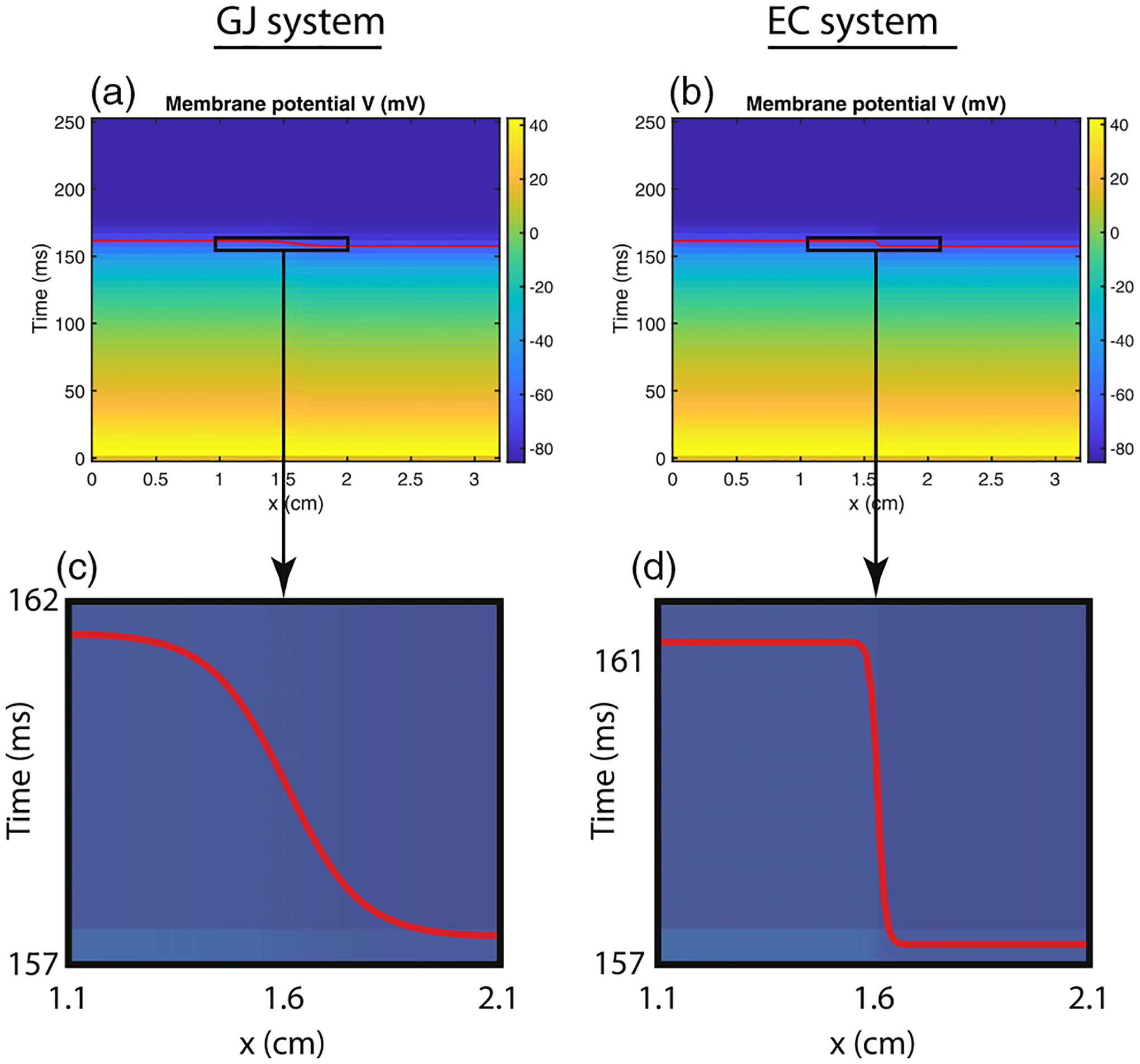
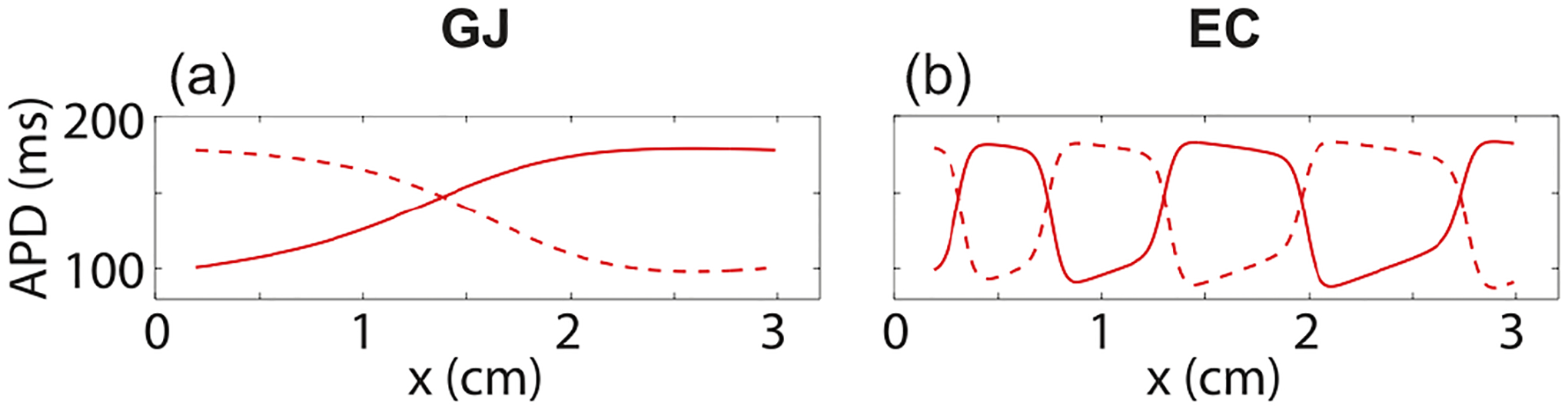
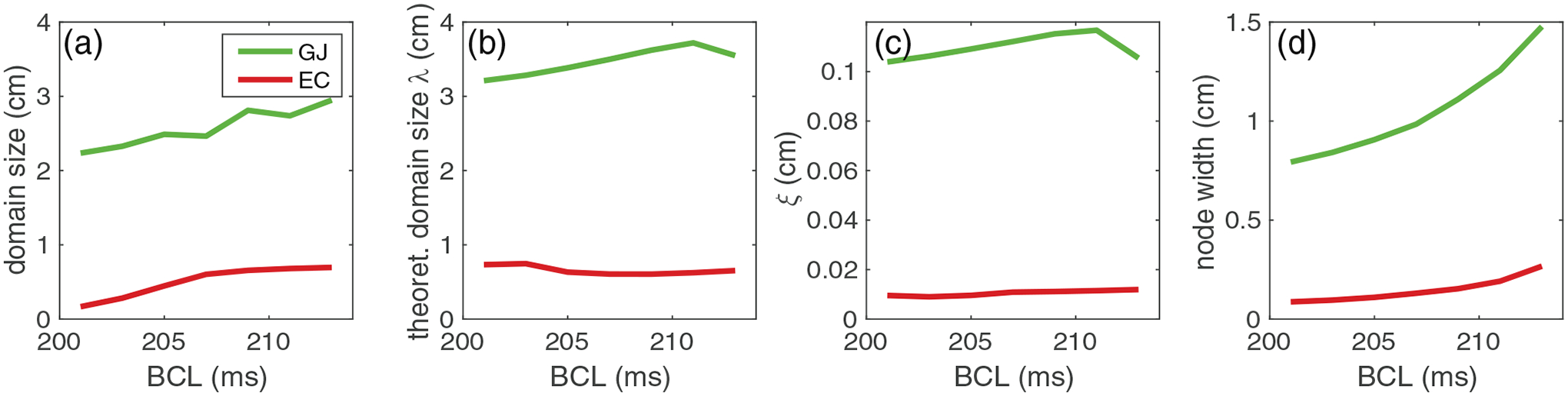
Previous computer simulations have suggested that existing models of action potential wave propagation in the heart are not consistent with observed wave propagation behavior. Specifically, computer models cannot simultaneously reproduce the rapid wave speeds and small spatial scales of discordant alternans patterns measured experimentally in the same simulation. The discrepancy is important, because discordant alternans can be a key precursor to the development of abnormal and dangerous rapid rhythms in the heart. In this Letter, we show that this paradox can be resolved by allowing so-called ephaptic coupling to play a primary role in wave front propagation in place of conventional gap-junction coupling. With this modification, physiological wave speeds and small discordant alternans spatial scales both occur with gap-junction resistance values that are more in line with those observed in experiments. Our theory thus also provides support to the hypothesis that ephaptic coupling plays an important role in normal wave propagation.
先前的计算机模拟表明,现有的心脏动作电位波传播模型与观察到的波传播行为不一致。具体来说,计算机模型不能在同一模拟中同时再现实验测量到的快速波速和不和谐交替模式的小空间尺度。这种差异很重要,因为不和谐交替可能是心脏异常和危险快速节律发展的关键前兆。在这封信中,我们表明,通过允许所谓的电突触耦合在波前传播中发挥主要作用,而不是传统的缝隙连接耦合,可以解决这个悖论。通过这种修改,生理波速和小的不和谐交替空间尺度都出现在与实验观察到的更一致的缝隙连接电阻值下。因此,我们的理论也支持电突触耦合在正常波传播中起着重要作用的假说。