Borrelli Antonella, Pecoraro Martina, Del Giudice Francesco, Cristofani Leonardo, Messina Emanuele, Dehghanpour Ailin, Landini Nicholas, Roberto Michela, Perotti Stefano, Muscaritoli Maurizio, Santini Daniele, Catalano Carlo, Panebianco Valeria
Department of Radiological Sciences, Oncology and Pathology, Sapienza University of Rome, 00161 Rome, Italy.
Department of Maternal Infant and Urologic Sciences, Sapienza University of Rome, 00161 Rome, Italy.
Cancers (Basel). 2023 May 29;15(11):2968. doi: 10.3390/cancers15112968.
Sarcopenia is a well know prognostic factor in oncology, influencing patients' quality of life and survival. We aimed to investigate the role of sarcopenia, assessed by a Computed Tomography (CT)-based artificial intelligence (AI)-powered-software, as a predictor of objective clinical benefit in advanced urothelial tumors and its correlations with oncological outcomes.
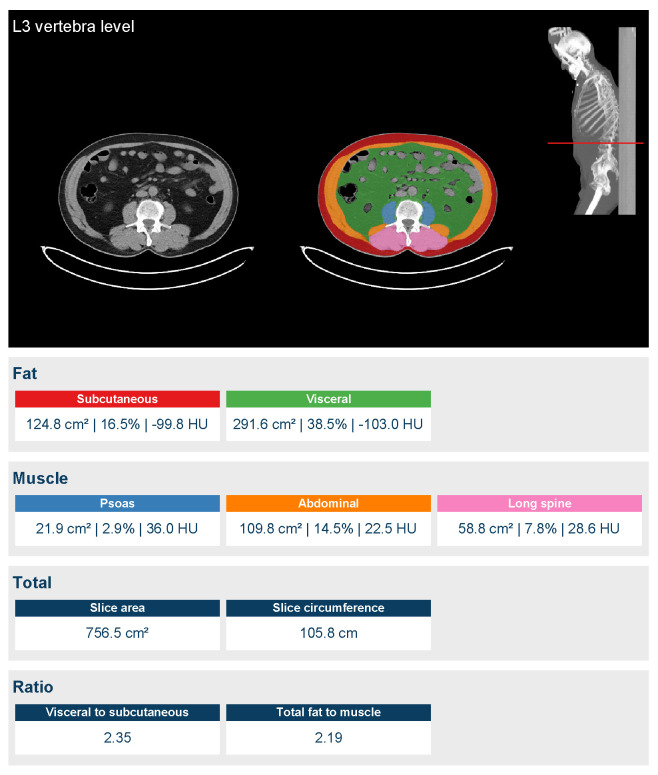
We retrospectively searched patients with advanced urothelial tumors, treated with systemic platinum-based chemotherapy and an available total body CT, performed before and after therapy. An AI-powered software was applied to CT to obtain the Skeletal Muscle Index (SMI-L3), derived from the area of the psoas, long spine, and abdominal muscles, at the level of L3 on CT axial images. Logistic and Cox-regression modeling was implemented to explore the association of sarcopenic status and anthropometric features to the clinical benefit rate and survival endpoints.
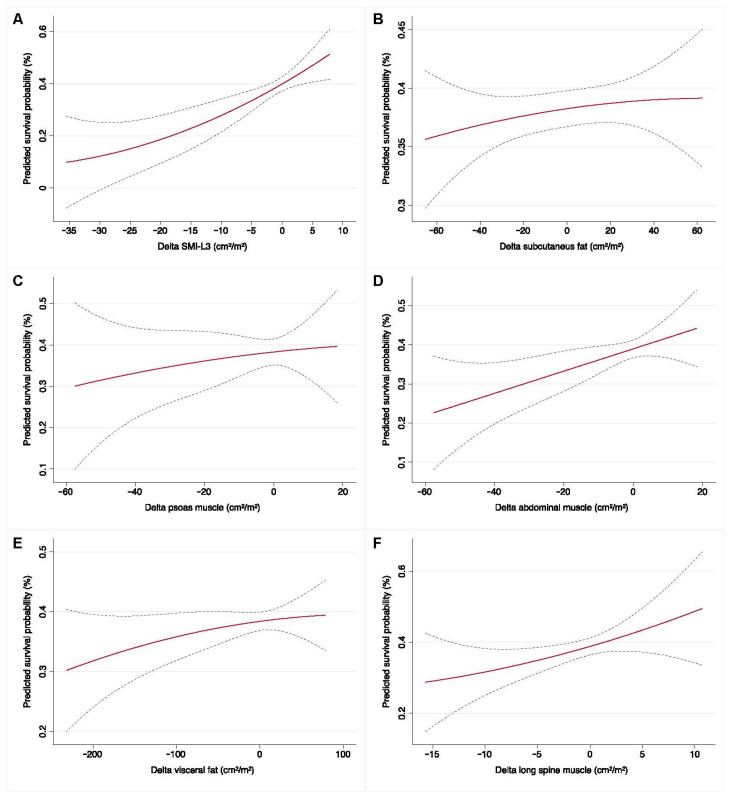
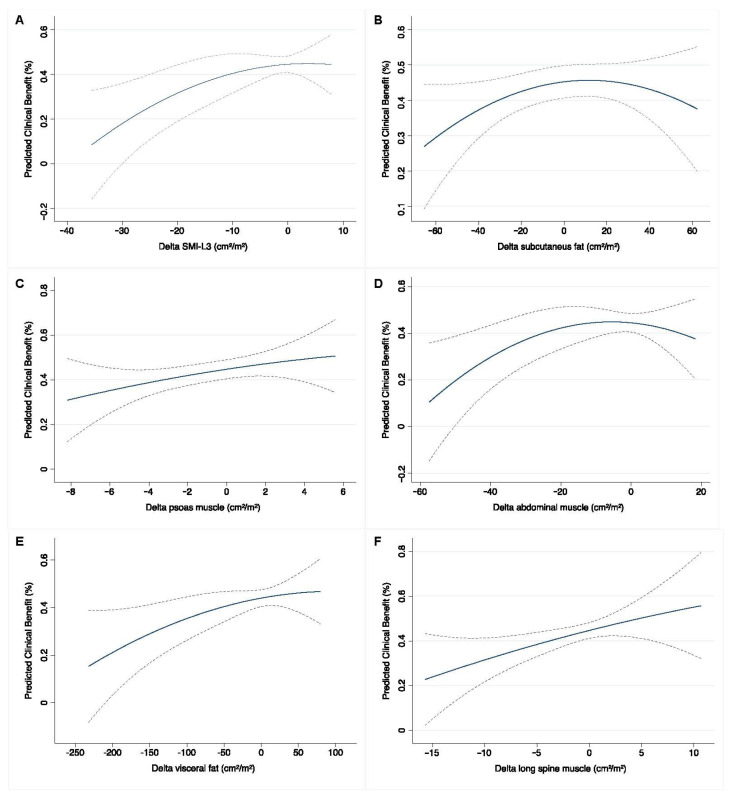
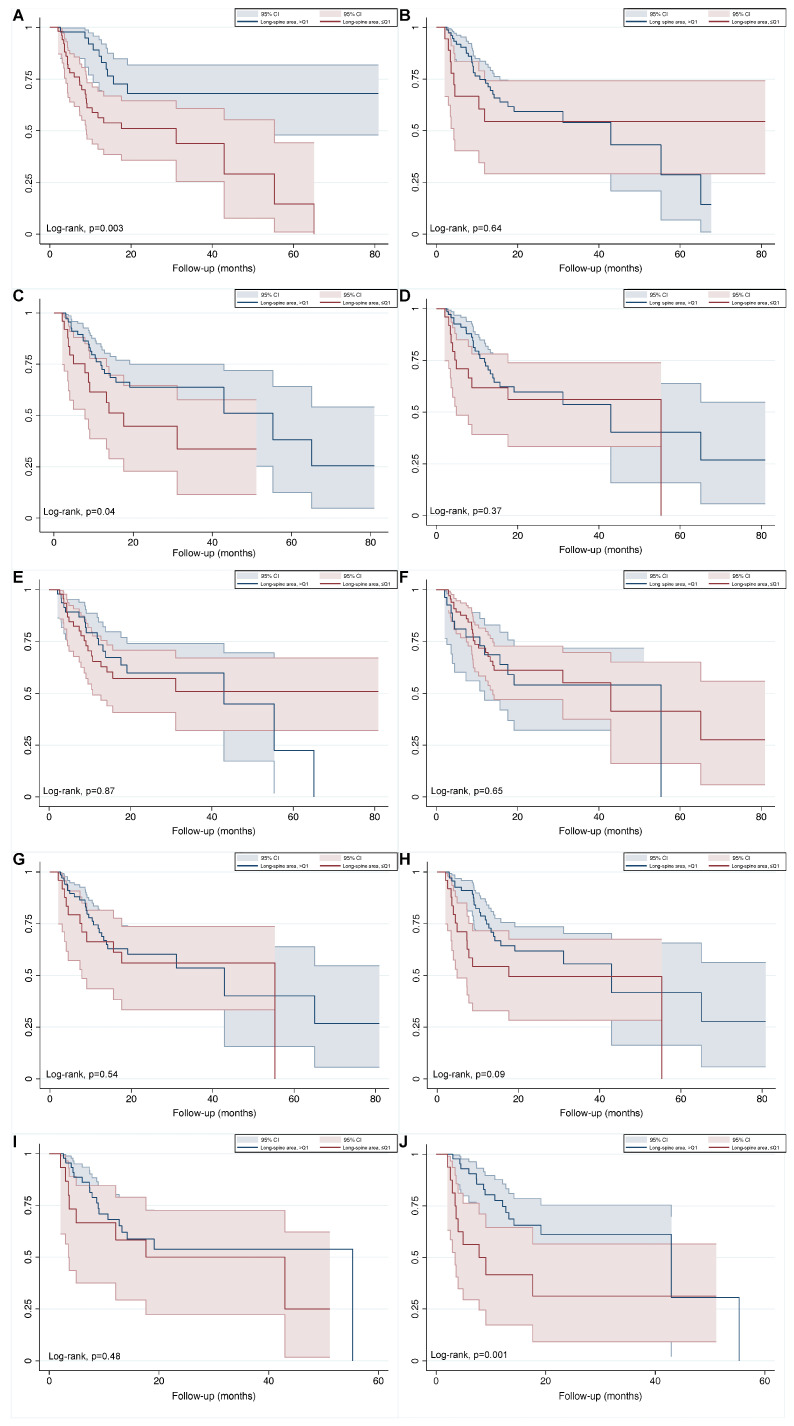
97 patients were included, 66 with bladder cancer and 31 with upper-tract urothelial carcinoma. Clinical benefit outcomes showed a linear positive association with all the observed body composition variables variations. The chances of not experiencing disease progression were positively associated with ∆_SMI-L3, ∆_psoas, and ∆_long spine muscle when they ranged from ~10-20% up to ~45-55%. Greater survival chances were matched by patients achieving a wider ∆_SMI-L3, ∆_abdominal and ∆_long spine muscle.
A CT-based AI-powered software body composition and sarcopenia analysis provide prognostic assessments for objective clinical benefits and oncological outcomes.
肌肉减少症是肿瘤学中一个众所周知的预后因素,会影响患者的生活质量和生存率。我们旨在研究通过基于计算机断层扫描(CT)的人工智能(AI)软件评估的肌肉减少症作为晚期尿路上皮肿瘤客观临床获益预测指标的作用及其与肿瘤学结局的相关性。
我们回顾性检索了接受全身铂类化疗且治疗前后均有可用全身CT的晚期尿路上皮肿瘤患者。将一款人工智能软件应用于CT,以获取基于CT轴位图像L3水平处腰大肌、长脊肌和腹肌面积得出的骨骼肌指数(SMI-L3)。采用逻辑回归和Cox回归模型来探讨肌肉减少症状态和人体测量特征与临床获益率及生存终点之间的关联。
共纳入97例患者,其中66例为膀胱癌,31例为上尿路尿路上皮癌。临床获益结局与所有观察到的身体成分变量变化呈线性正相关。当∆_SMI-L3、∆_腰大肌和∆_长脊肌的变化范围在10%-20%至45%-55%之间时,无疾病进展的几率与它们呈正相关。实现更广泛的∆_SMI-L3、∆_腹肌和∆_长脊肌变化的患者具有更高的生存几率。
基于CT的人工智能软件身体成分和肌肉减少症分析可为客观临床获益和肿瘤学结局提供预后评估。