Fűrész Attila, Penksza Károly, Sipos László, Turcsányi-Járdi Ildikó, Szentes Szilárd, Fintha Gabriella, Penksza Péter, Viszló Levente, Szalai Ferenc, Wagenhoffer Zsombor
Institute of Agronomy, Hungarian University of Agriculture and Life Science, Páter Károly u., 2100 Gödöllő, Hungary.
Department of Postharvest, Commercial and Sensory Science, Institute of Food Science and Technology, Hungarian University of Agriculture and Life Sciences, Villányi út, 1118 Budapest, Hungary.
Plants (Basel). 2023 May 31;12(11):2184. doi: 10.3390/plants12112184.
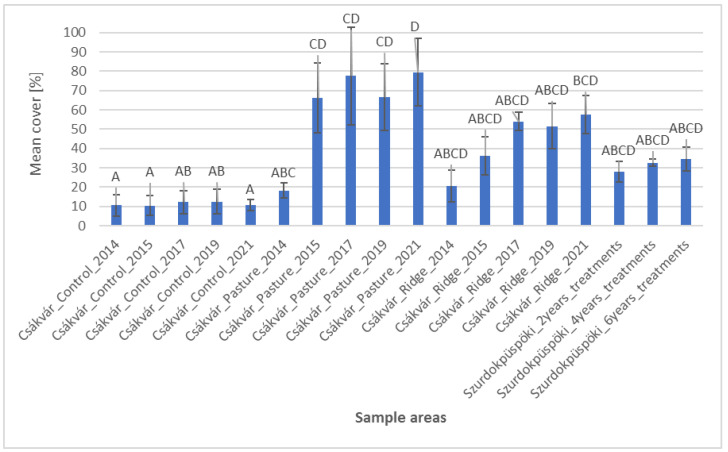
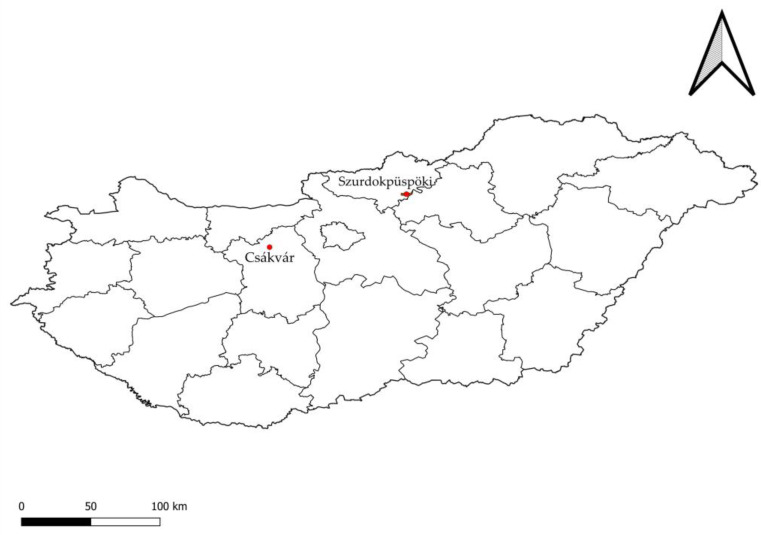
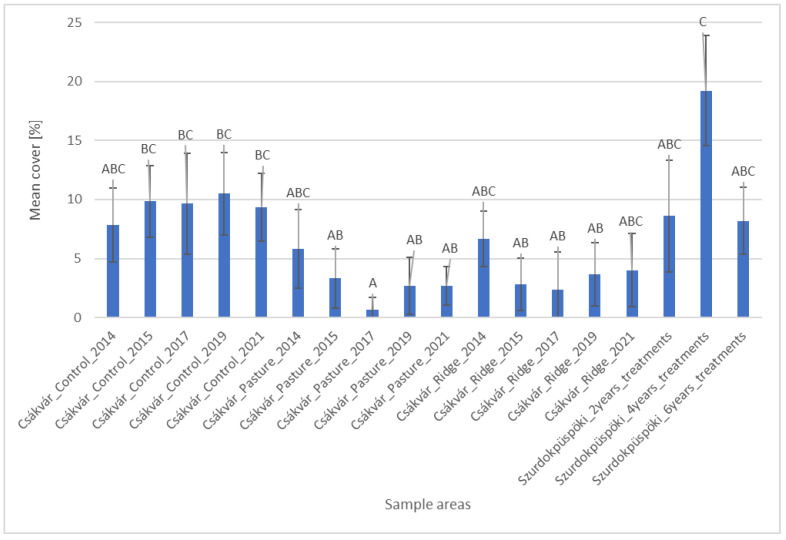
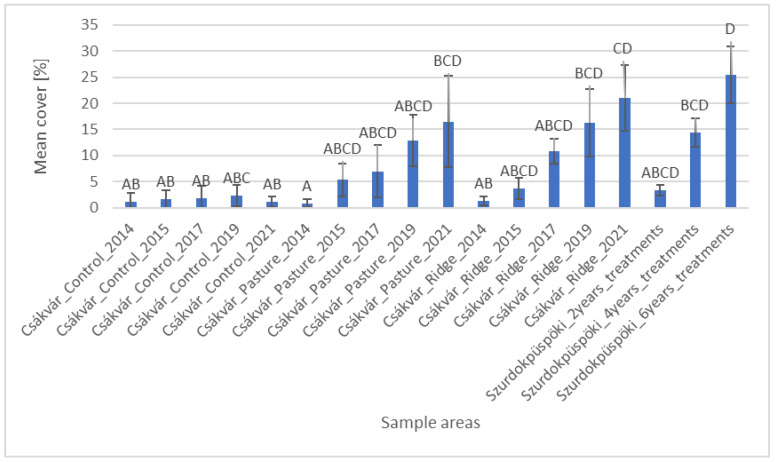
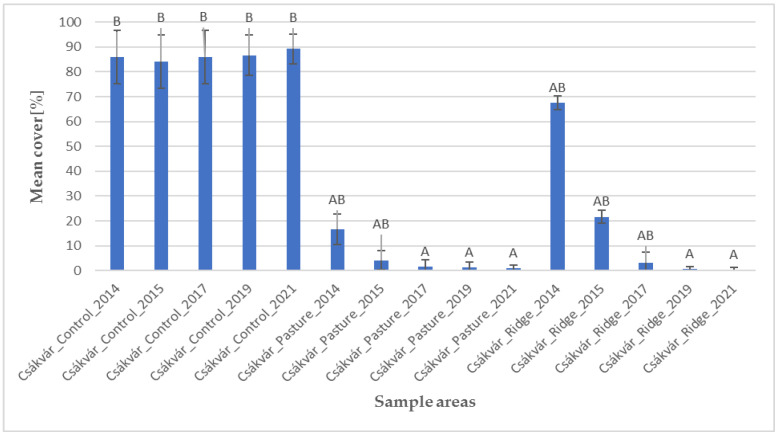
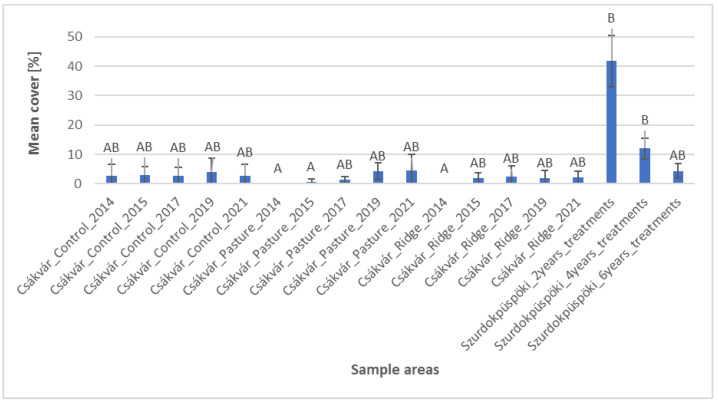
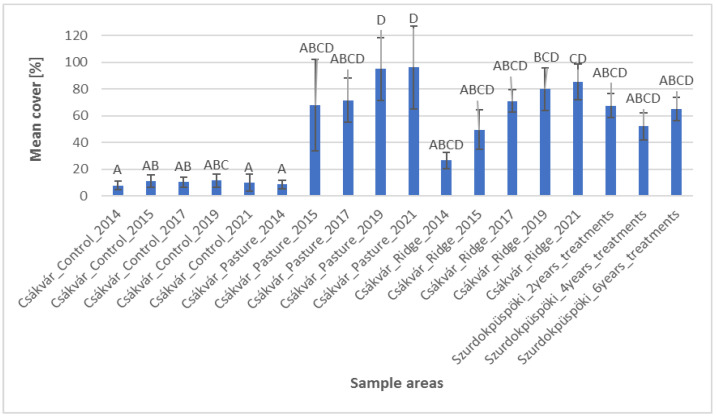
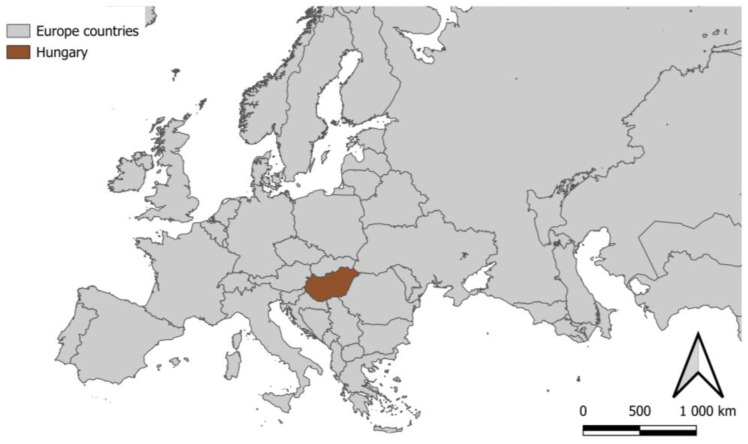
In nature conservation today, there is a global problem with the aggressive expansion of invasive plant species and the conservation of valuable grassland vegetation. Based on this, the following question has been formed: Is the domestic water buffalo () appropriate for managing various habitat types? How does grazing by water buffalo () affect on grassland vegetation? This study was carried out in four areas of Hungary. One of the sample areas was in the Mátra Mountains, on dry grassland areas where grazing had been applied for two, four and six years. The other sample areas were in the Zámolyi Basin, where wet fens with a high risk of and in a typic Pannonian dry grassland were investigated. In all areas, grazing was carried out with domestic water buffalo (). During the study, we carried out a coenological survey, examining the change of cover of plant species, their feed values and the biomass of the grassland. According to the results, both the number and cover of economically important grasses (from 28% to 34.6%) and legumes (from 3.4% to 25.4%) increased in Mátra as well as the high proportion of shrubs (from 41.8% to 4.4%) shifted toward grassland species. In the areas of the Zámolyi Basin, invasive has been suppressed completely, the pasture has been converted completely (from 16% to 1%) and the dominant species has become . Thus, we have found that grazing with buffalo is suitable as a habitat management method in both dry grasslands and wet grasslands. Therefore, in addition to its effectiveness in the control of , grazing with buffalo is successful in both nature conservation and economic aspects of grassland vegetation.
在当今的自然保护中,入侵植物物种的 aggressive 扩张和珍贵草原植被的保护是一个全球性问题。基于此,形成了以下问题:家养水牛()是否适合管理各种栖息地类型?水牛()放牧如何影响草原植被?这项研究在匈牙利的四个地区进行。其中一个采样区域位于马特劳山脉,在已进行了两年、四年和六年放牧的干旱草原地区。其他采样区域位于扎莫伊盆地,在那里对具有高风险的湿地沼泽和典型的潘诺尼亚干旱草原进行了调查。在所有区域,均采用家养水牛()进行放牧。在研究过程中,我们进行了群落学调查,研究了植物物种覆盖度的变化、它们的饲料价值以及草原的生物量。根据结果,马特劳地区具有经济重要性的禾本科植物(从28%增至34.6%)和豆科植物(从3.4%增至25.4%)的数量和覆盖度均有所增加,同时高比例的灌木(从41.8%降至4.4%)向草原物种转变。在扎莫伊盆地地区,入侵的已被完全抑制,牧场已完全转变(从16%降至1%),优势物种已变为。因此,我们发现水牛放牧作为一种栖息地管理方法在干旱草原和湿地草原均适用。所以,除了在控制方面的有效性外,水牛放牧在草原植被的自然保护和经济方面均取得了成功。 (注:原文中“aggressive”未准确翻译,“”未明确具体物种名,翻译存在部分不完整和不准确情况)