Jahanyar Jama, Tsai Peter I, Arabkhani Bardia, Aphram Gaby, Mastrobuoni Stefano, El Khoury Gebrine, de Kerchove Laurent
Department of Cardiovascular & Thoracic Surgery, Cliniques Universitaires Saint-Luc, Université Catholique de Louvain (UCL), Brussels, Belgium.
Division of Cardiovascular and Thoracic Surgery, Queen's Heart Institute, Department of Surgery, John A. Burns School of Medicine, University of Hawaii, Honolulu, HI, USA.
Ann Cardiothorac Surg. 2023 May 31;12(3):179-193. doi: 10.21037/acs-2023-avs1-22. Epub 2023 May 15.
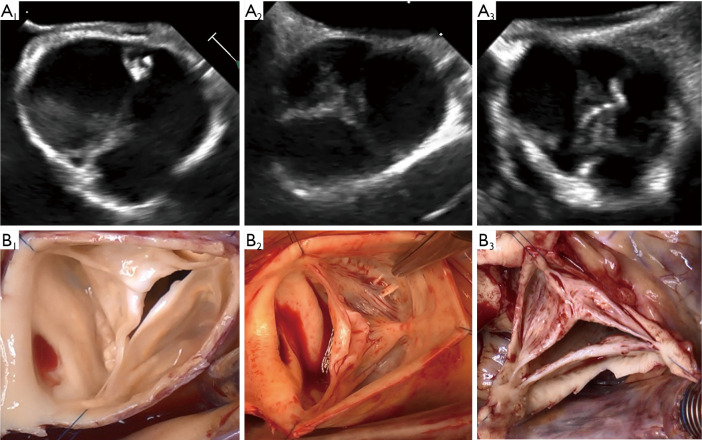
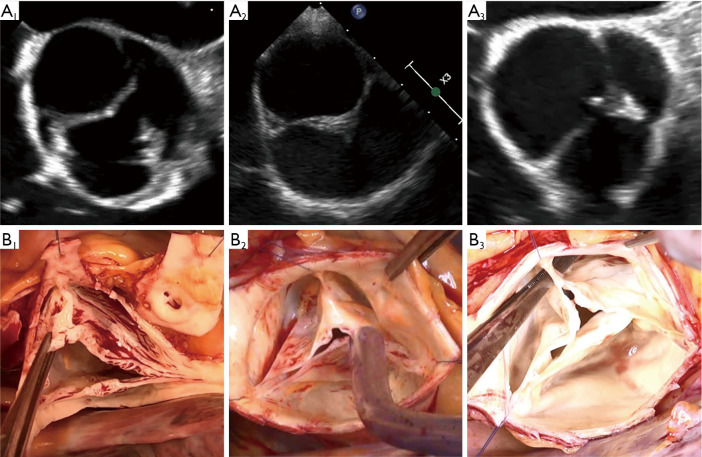
The aortic valve (AV) is a three-dimensional structure, with leaflets that are suspended within the functional aortic annulus (FAA). These structures (AV and FAA) are therefore intrinsically connected and disease of just one component can independently lead to AV dysfunction. Hence, AV dysfunction can occur in the setting of entirely normal valve leaflets. However, as these structures are functionally inter-connected, disease of one component can lead to abnormalities of the other over time. Thus, AV dysfunction is often multifactorial. Valve-sparing root procedures require an in-depth understanding of these inter-relationships, and herein we are providing a detailed account of some of the most pertinent anatomical relationships.
主动脉瓣(AV)是一种三维结构,其瓣叶悬挂在功能性主动脉瓣环(FAA)内。因此,这些结构(AV和FAA)本质上是相互连接的,仅一个组成部分的疾病就可独立导致AV功能障碍。因此,AV功能障碍可在瓣膜叶完全正常的情况下发生。然而,由于这些结构在功能上相互连接,随着时间的推移,一个组成部分的疾病可导致另一个组成部分出现异常。因此,AV功能障碍往往是多因素的。保留瓣膜的根部手术需要深入了解这些相互关系,在此我们将详细阐述一些最相关的解剖关系。