Prinzing Anatol, Boehm Johannes, Erlebach Magdalena, Sideris Konstantinos, Lange Ruediger, Krane Markus
Department of Cardiovascular Surgery, German Heart Center Munich, Technische Universität München, Munich, Germany.
Insure (Institute for Translational Cardiac Surgery), Department of Cardiovascular Surgery, German Heart Center Munich, Technische Universität München, Munich, Germany.
J Thorac Dis. 2020 Jul;12(7):3514-3523. doi: 10.21037/jtd-19-4193.
Aortic valve repair (AV-repair) is an alternative treatment option for patients with aortic regurgitation (AR), but durability is still reason for concern, especially for bicuspid aortic valves (BAV). We retrospectively evaluated mid-term results after AV-repair in patients with BAV or tricuspid aortic valves (TAV), including reoperation rates, recurrence of regurgitation, and survival.
Patients undergoing AV-repair between November 2004 and March 2016 without procedures involving the aortic root were included. Echocardiographic examinations were performed before and after the operation and at follow-up. Repair techniques were recorded and evaluated.
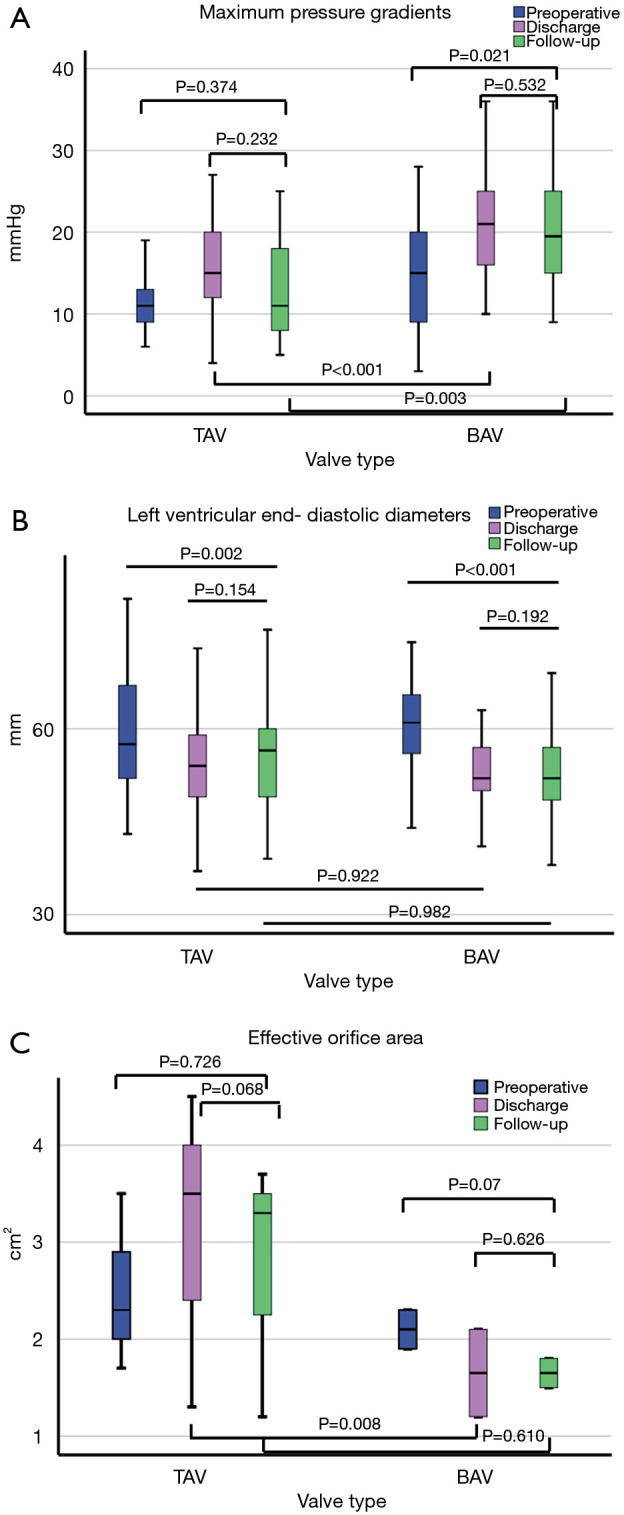
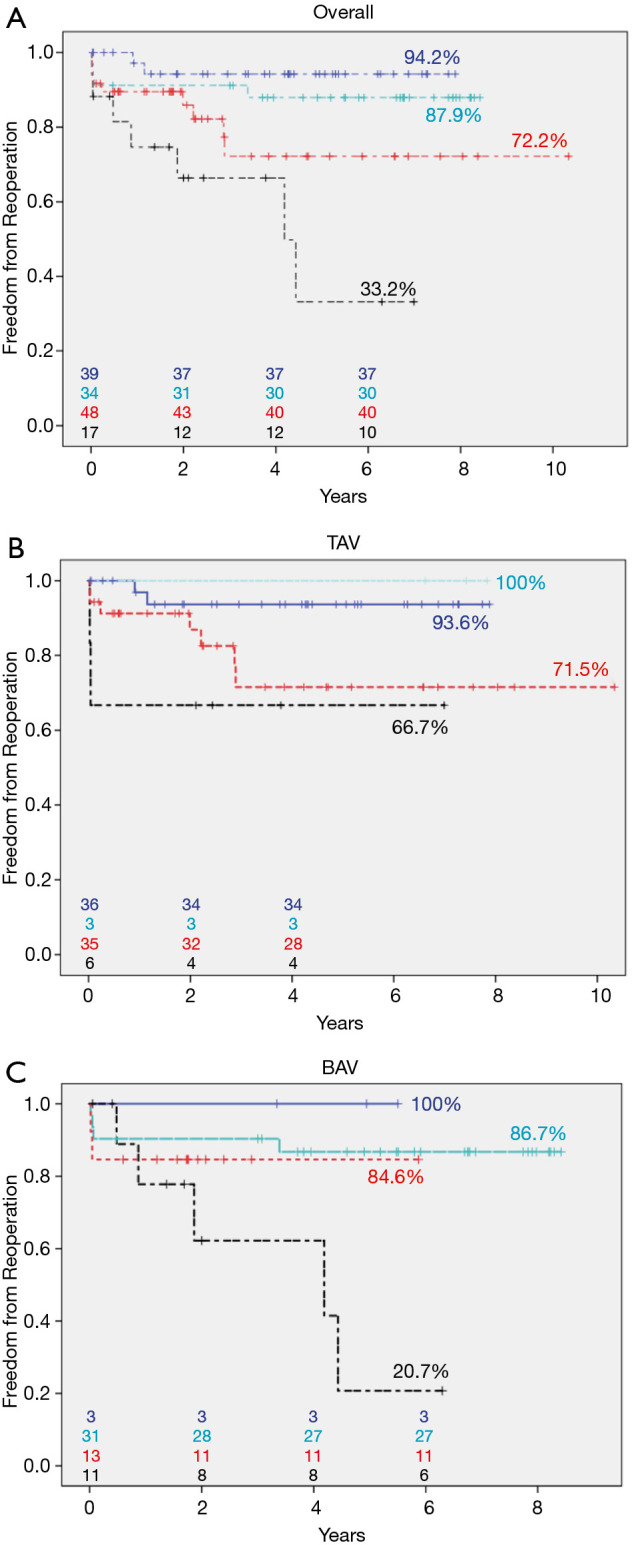
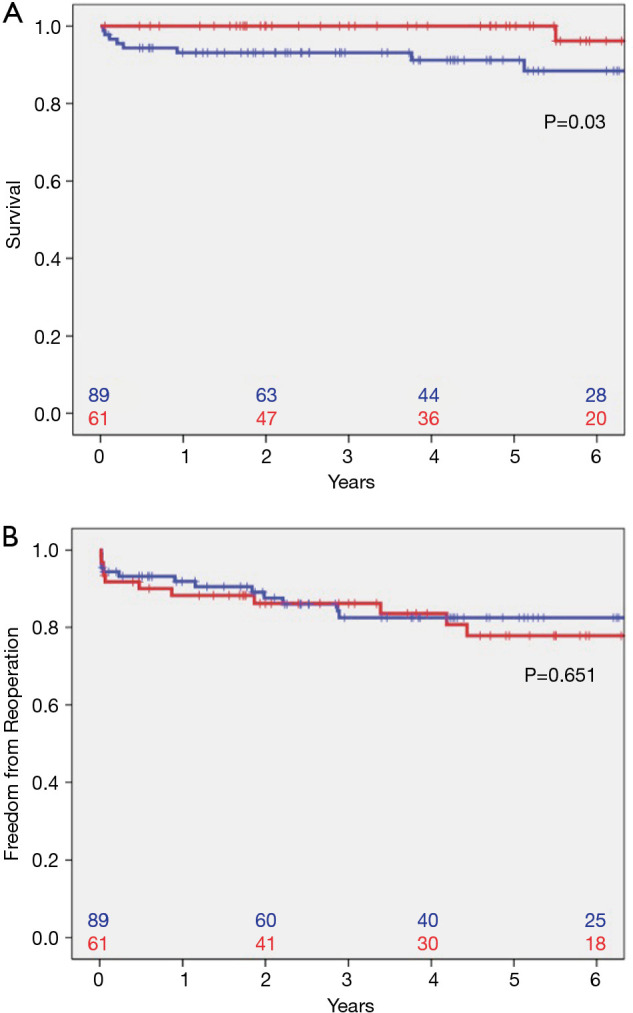
Of 150 patients, 89 (59.3%) had TAV and 61 (40.7%) BAV. AR ≥ moderate was found in 66 patients with TAV (74.2%) and 49 with BAV (80.3%). At discharge, 74 TAV-patients had ≤ mild AR (84.4%), 11 (12.4%) moderate. 57 patients (93.4%) with BAV had ≤ mild AR, 1 (1.6%) moderate and 2 (3.3%) severe. Mean follow-up was 4.4±2.7 years with ≤ mild AR in 56 TAV patients (73.7%) and moderate in 18 (20.2%). In patients with BAV, 43 (76.8%) had ≤ mild AR and 4 (6.6%) moderate. Survival in patients with TAV was significantly decreased compared to BAV (P=0.033), but reoperation-rates did not differ significantly (P=0.651).
AV-repair is a safe and feasible option in patients with AR and can achieve similar results in patients with TAV and BAV. The complexity of the repair technique predicts repair failure.
主动脉瓣修复术(AV修复)是主动脉瓣反流(AR)患者的一种替代治疗选择,但耐久性仍是令人担忧的问题,尤其是对于二叶式主动脉瓣(BAV)。我们回顾性评估了BAV或三叶式主动脉瓣(TAV)患者AV修复后的中期结果,包括再次手术率、反流复发情况和生存率。
纳入2004年11月至2016年3月期间接受AV修复且未涉及主动脉根部手术的患者。在手术前后及随访时进行超声心动图检查。记录并评估修复技术。
150例患者中,89例(59.3%)为TAV,61例(40.7%)为BAV。66例TAV患者(74.2%)和49例BAV患者(80.3%)存在≥中度的AR。出院时,74例TAV患者的AR≤轻度(84.4%),11例(12.4%)为中度。57例BAV患者(93.4%)的AR≤轻度,1例(1.6%)为中度,2例(3.3%)为重度。平均随访4.4±2.7年,56例TAV患者(73.7%)的AR≤轻度,18例(20.2%)为中度。在BAV患者中,43例(76.8%)的AR≤轻度,4例(6.6%)为中度。TAV患者的生存率与BAV患者相比显著降低(P=0.033),但再次手术率无显著差异(P=0.651)。
AV修复对于AR患者是一种安全可行的选择,在TAV和BAV患者中可取得相似结果。修复技术的复杂性预示着修复失败。