Department of Emergency Medicine, Germans Trias i Pujol University Hospital, c/ Canyet, 08916, Badalona, Spain.
Department of Emergency Medicine, Marqués de Valdecilla University Hospital, Santander, Spain.
Intern Emerg Med. 2023 Oct;18(7):2093-2103. doi: 10.1007/s11739-023-03328-2. Epub 2023 Jun 12.
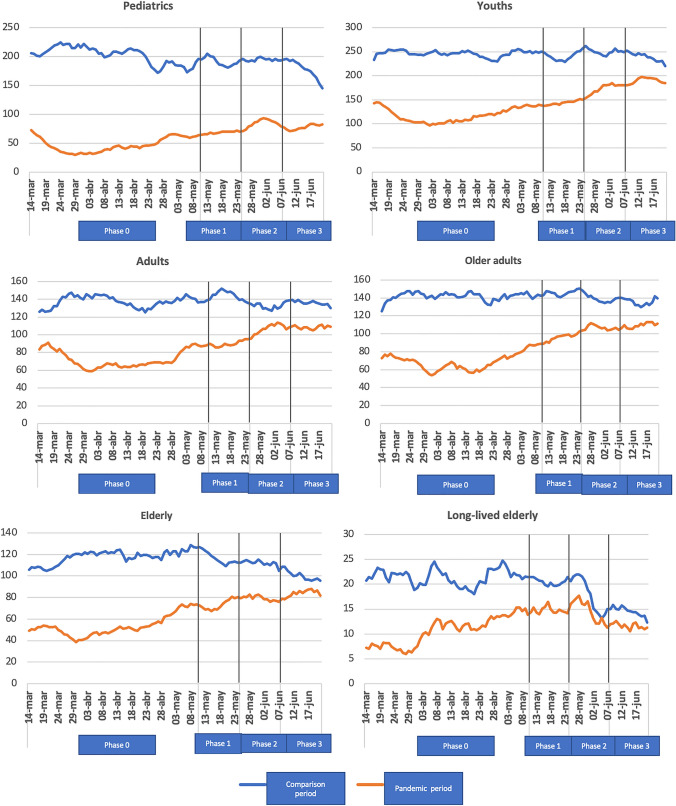
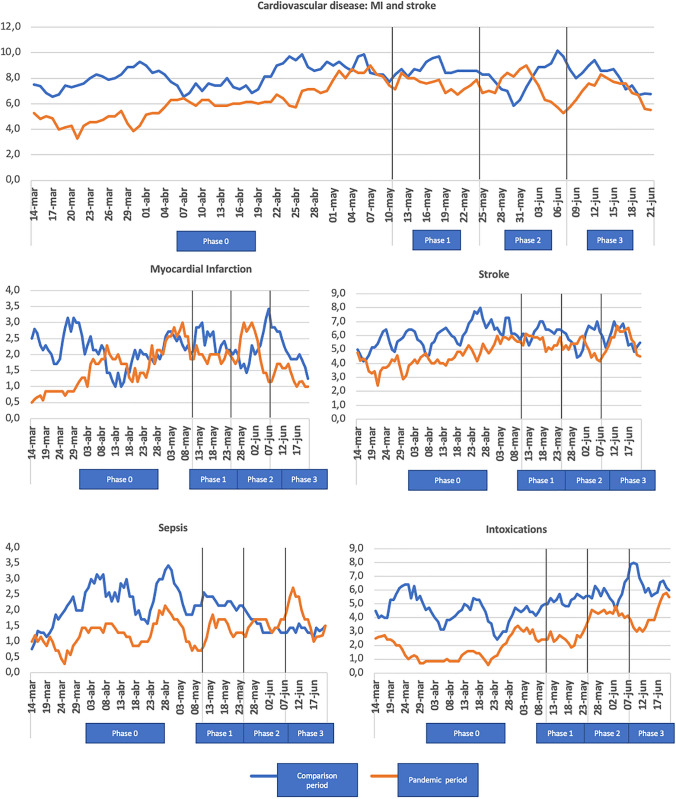
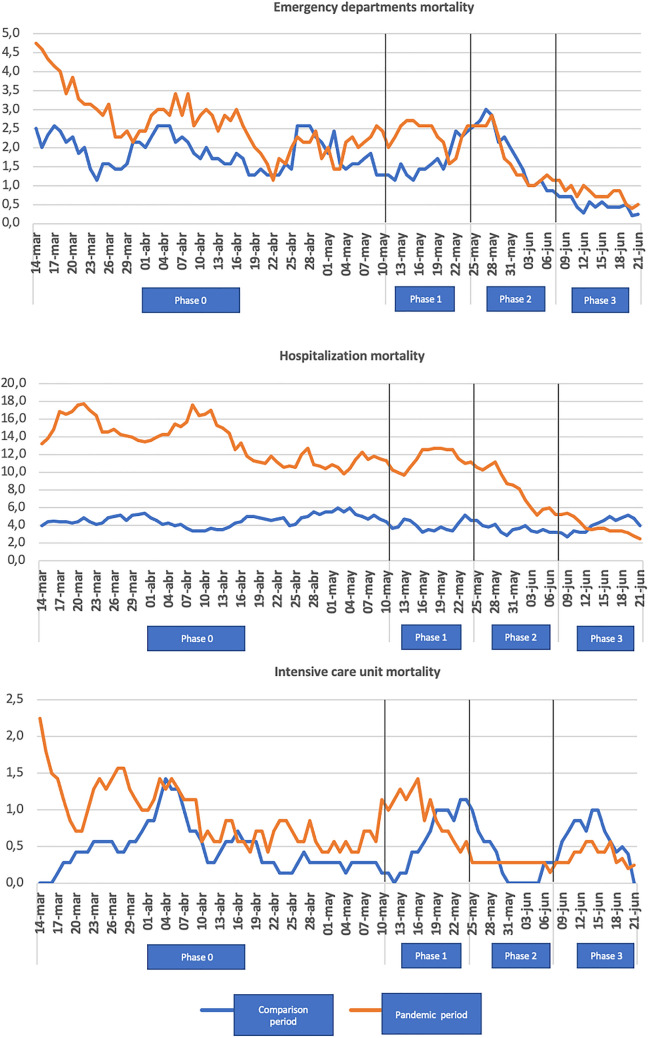
This study will describe trends in the use of emergency departments before and after the Spanish State of Alarm, especially in pathologies not directly related to this infection. A cross-sectional study was conducted of all visits to the emergency departments in two third-level hospitals in two Spanish communities during the Spanish State of Alarm, compared with the same period of the previous year. The variables collected included the day of the week, the time of the visit, the duration of the visit, the final destination of the patients (home, admission to a conventional hospitalization ward, admission to the intensive care unit, and death), and the diagnosis at discharge according to the International Classification of Diseases 10th Revision. During the Spanish State of Alarm period, an overall decrease in care demand of 48% was observed, which reached 69.5% in pediatric emergency departments. We also saw a drop of between 20 and 30% in time-dependent pathologies (heart attack, stroke, sepsis, poisoning). The decrease in overall attendance in the emergency departments and absence of serious pathologies, such as time-dependent diseases, observed during the Spanish State of Alarm compared to the previous year highlights the need to strengthen the messages addressed to the population to encourage them to seek care without delay in case of alarming symptoms and reduce the high morbidity and mortality rate if the diagnosis is delayed.
这项研究将描述在西班牙警报状态前后急诊就诊的趋势,特别是与这种感染不直接相关的病症。对两个西班牙社区的两家三级医院在西班牙警报状态期间的所有急诊就诊情况进行了横断面研究,并与前一年同期进行了比较。收集的变量包括就诊日期、就诊时间、就诊时长、患者最终去向(回家、常规住院病房入院、重症监护室入院和死亡),以及根据国际疾病分类第 10 版出院时的诊断。在西班牙警报状态期间,就诊需求总体下降了 48%,儿科急诊就诊需求下降了 69.5%。我们还观察到,与前一年相比,时间依赖性疾病(心脏病发作、中风、败血症、中毒)的就诊量下降了 20%至 30%。与前一年相比,在西班牙警报状态期间,急诊就诊人数总体下降,且没有出现严重的病症,如时间依赖性疾病,这凸显出需要向民众强化信息,鼓励他们在出现警报症状时毫不拖延地寻求治疗,以降低如果诊断延迟的高发病率和死亡率。