Department of Surgery, University of California, San Francisco, CA, USA.
Center for Bioengineering and Tissue Regeneration, University of California, San Francisco, San Francisco, CA, USA.
Nat Commun. 2023 Jun 15;14(1):3561. doi: 10.1038/s41467-023-39085-1.
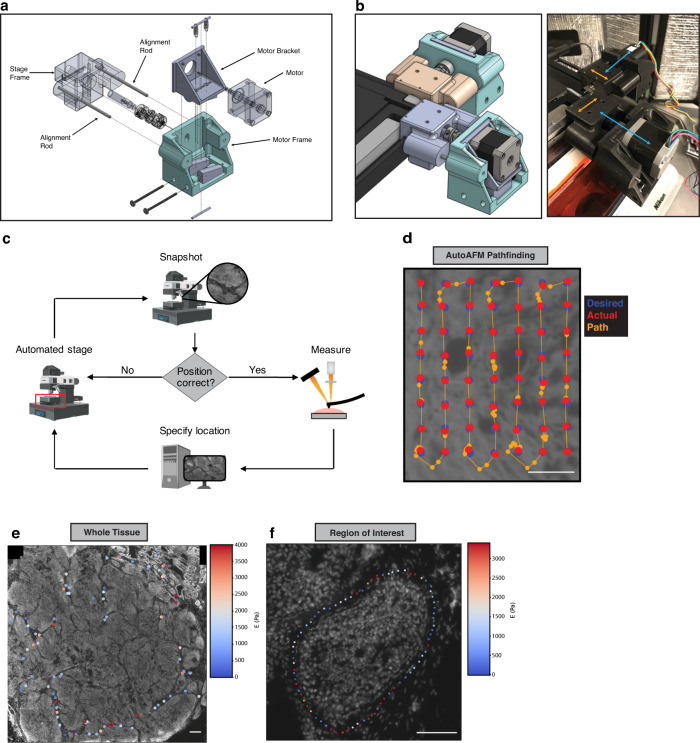
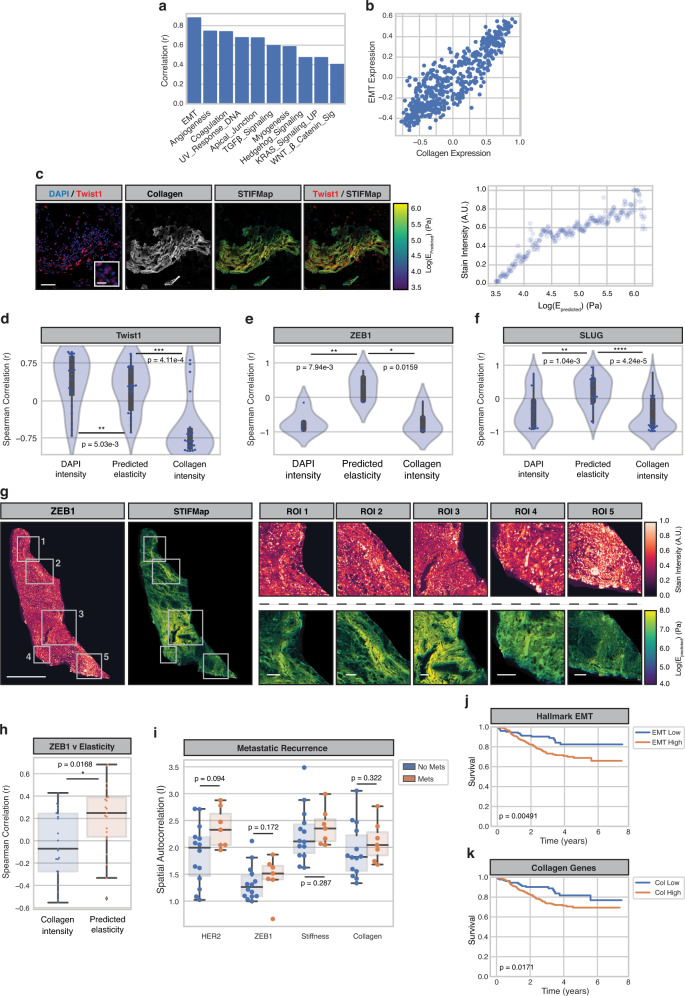
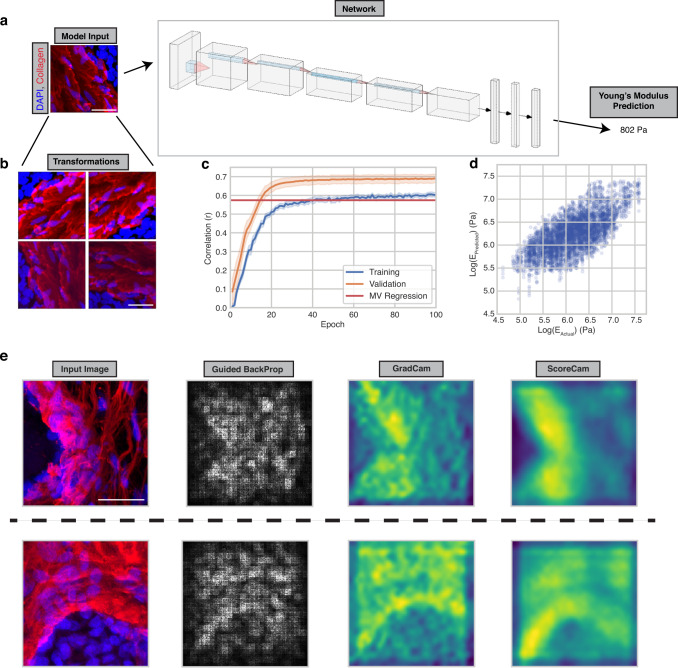
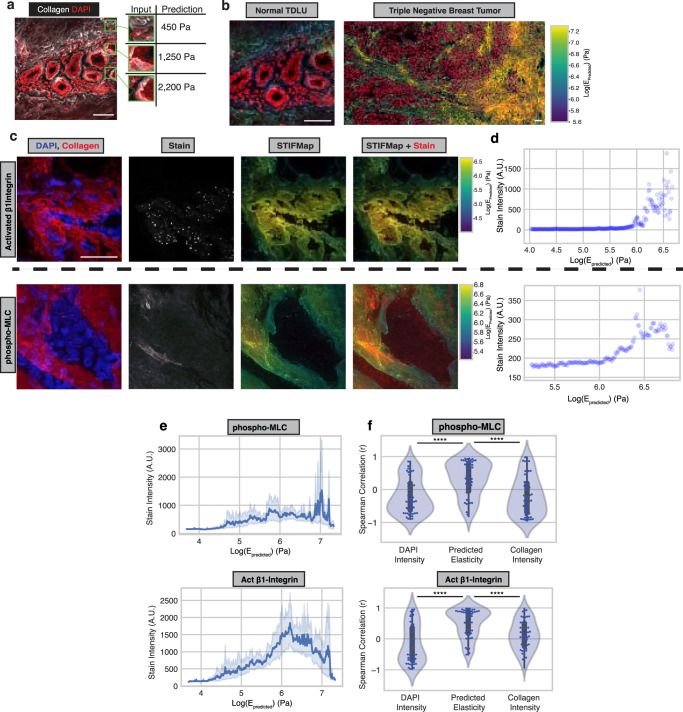
Intratumor heterogeneity associates with poor patient outcome. Stromal stiffening also accompanies cancer. Whether cancers demonstrate stiffness heterogeneity, and if this is linked to tumor cell heterogeneity remains unclear. We developed a method to measure the stiffness heterogeneity in human breast tumors that quantifies the stromal stiffness each cell experiences and permits visual registration with biomarkers of tumor progression. We present Spatially Transformed Inferential Force Map (STIFMap) which exploits computer vision to precisely automate atomic force microscopy (AFM) indentation combined with a trained convolutional neural network to predict stromal elasticity with micron-resolution using collagen morphological features and ground truth AFM data. We registered high-elasticity regions within human breast tumors colocalizing with markers of mechanical activation and an epithelial-to-mesenchymal transition (EMT). The findings highlight the utility of STIFMap to assess mechanical heterogeneity of human tumors across length scales from single cells to whole tissues and implicates stromal stiffness in tumor cell heterogeneity.
肿瘤内异质性与患者预后不良相关。肿瘤基质硬度也随之增加。目前尚不清楚癌症是否表现出硬度异质性,如果存在这种异质性,是否与肿瘤细胞异质性有关。我们开发了一种测量人类乳腺肿瘤硬度异质性的方法,该方法量化了每个细胞所经历的基质硬度,并允许与肿瘤进展的生物标志物进行可视化配准。我们提出了空间变换推理力图(STIFMap),它利用计算机视觉精确地自动执行原子力显微镜(AFM)压痕,结合经过训练的卷积神经网络,使用胶原形态特征和 AFM 数据的地面实况来预测微米分辨率的基质弹性。我们在人类乳腺肿瘤中注册了与机械激活和上皮间质转化(EMT)标志物共定位的高弹性区域。这些发现突出了 STIFMap 在评估人类肿瘤力学异质性方面的效用,这种方法可以跨单细胞到整个组织的长度尺度评估肿瘤的力学异质性,并暗示了基质硬度与肿瘤细胞异质性有关。