Gebeyehu Natnael Atnafu, Gesese Molalegn Melese, Tegegne Kirubel Dagnaw, Kebede Yenalem Solomon, Kassie Gizachew Ambaw, Mengstie Misganaw Asmamaw, Zemene Melkamu Aderajaw, Bantie Berihun, Feleke Sefineh Fenta, Dejenie Tadesse Asmamaw, Abebe Endeshaw Chekol, Anley Denekew Tenaw, Dessie Anteneh Mengist, Bayih Wubet Alebachew, Adela Getachew Asmare
School of Midwifery, College of Medicine and Health Sciences, Wolaita Sodo University, Sodo, Ethiopia.
Department of Comprehensive Nursing, College of Medicine and Health Science, Wollo University, Dessie, Ethiopia.
Metabol Open. 2023 Jun 5;18:100247. doi: 10.1016/j.metop.2023.100247. eCollection 2023 Jun.
Both men and women can have a wide range of physical, emotional, and sexual issues as a result of diabetes. One of them is sexual dysfunction, which has an effect on marital relationships as well as the effectiveness of therapy and can develop into a serious social and psychological condition. As a result, the purpose of this study was to identify the global prevalence of sexual dysfunction among diabetic patients.
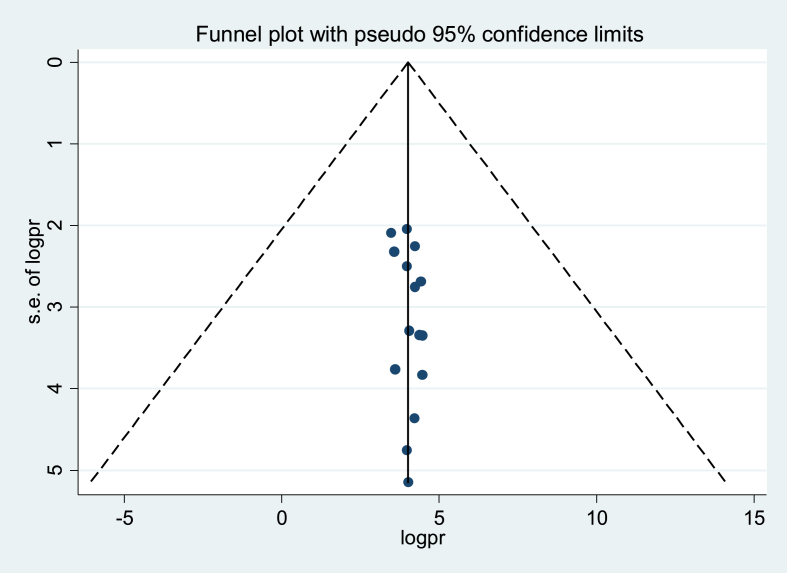
Science Direct, Scopus, Google Scholar, and PubMed were all searched for information. Data were extracted using Microsoft Excel (v. 14), STATA statistical software, and STATA. Publication bias was investigated by a forest plot, rank test, and Egger's regression test. To detect heterogeneity, I was calculated and an overall estimated analysis was performed. Subgroup analysis was done by study region and sample size. The pooled odds ratio was also computed.
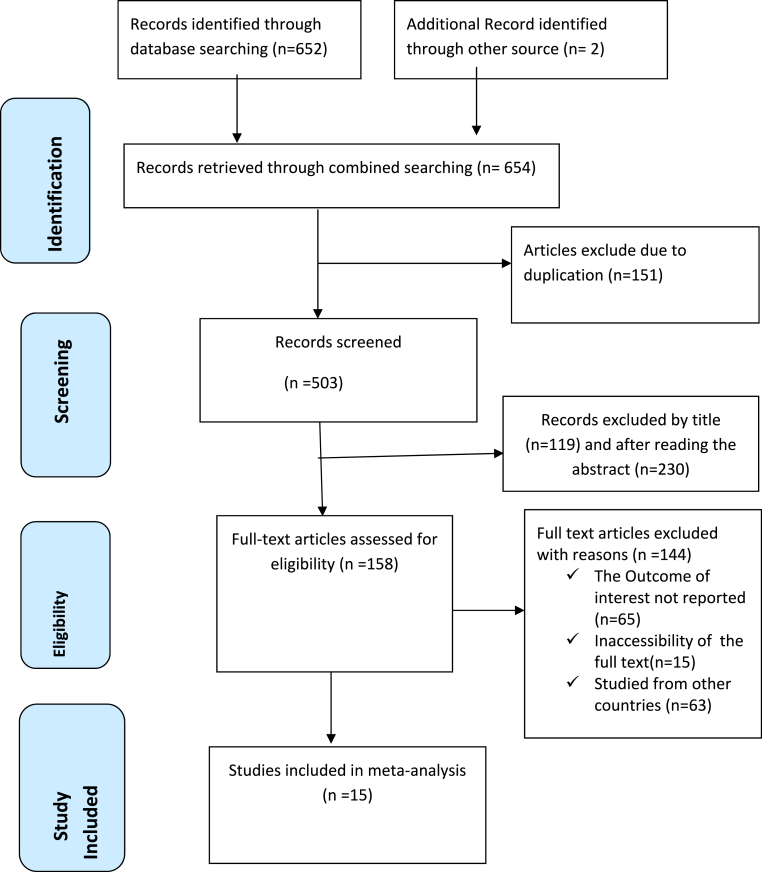
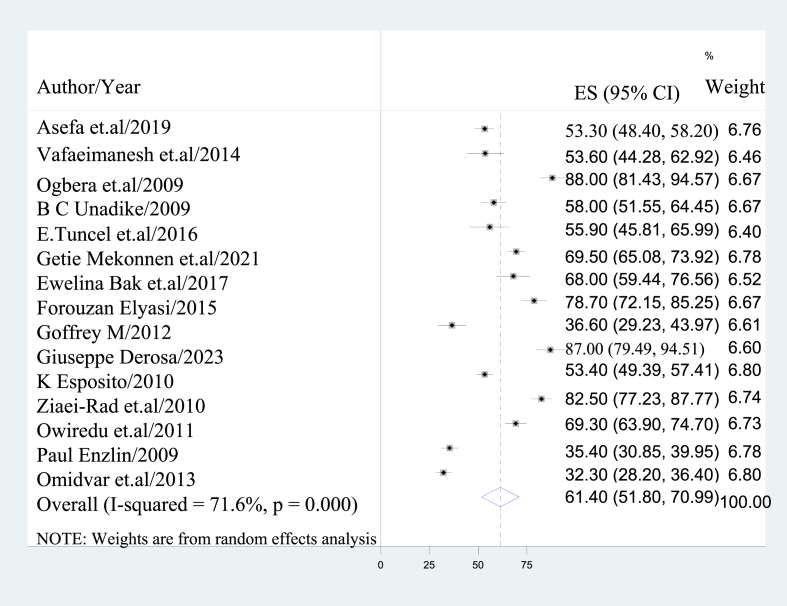
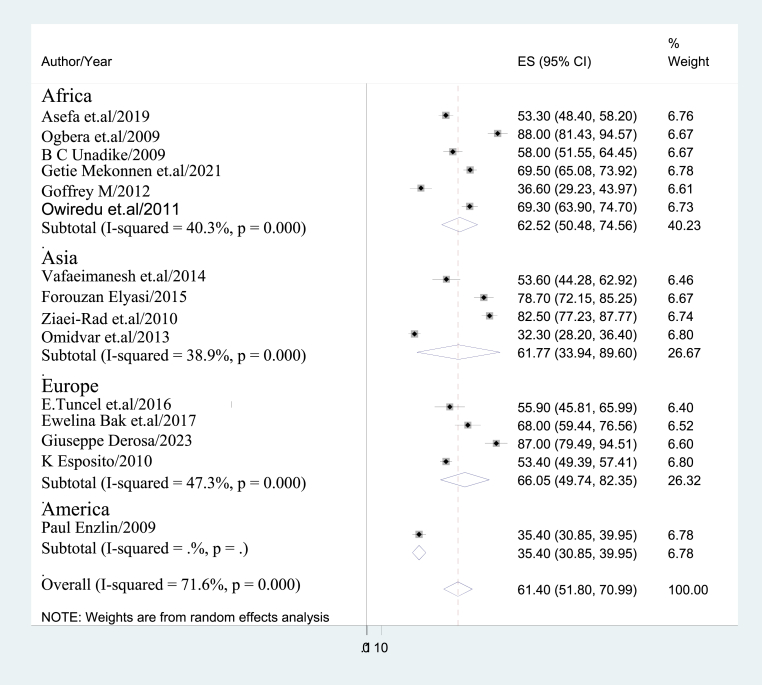
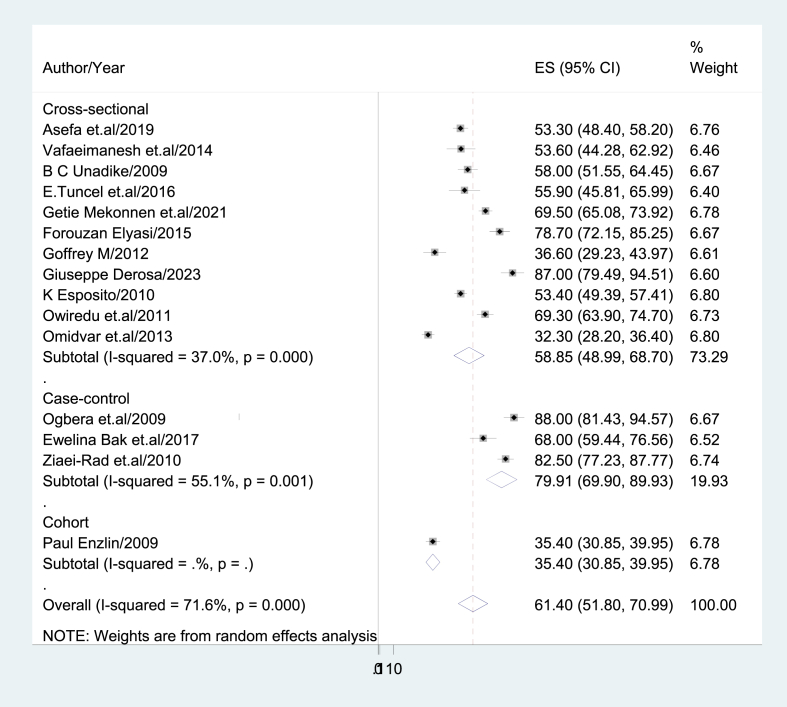
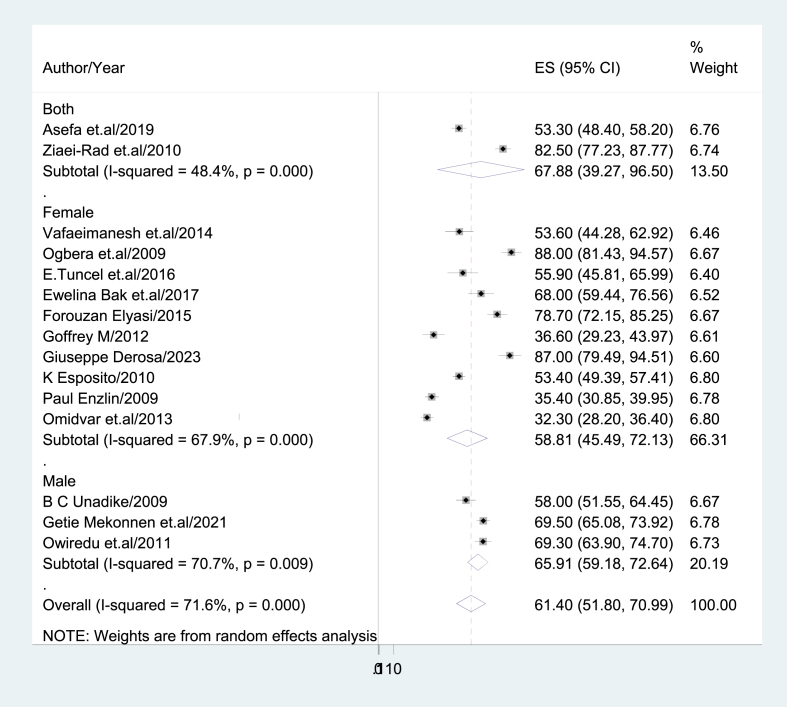
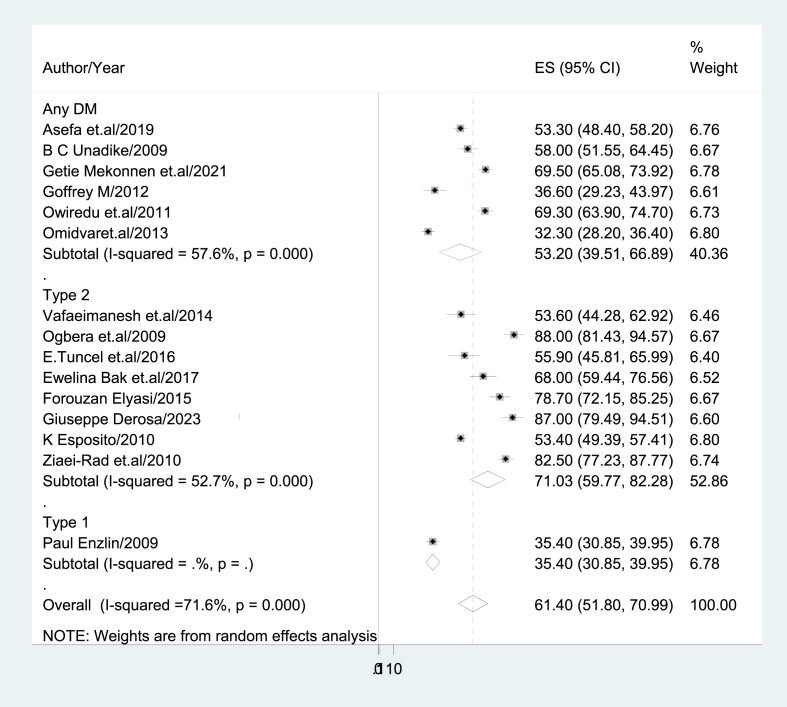
The study was able to include 15 of the 654 publications that were evaluated since they met the criteria. 67,040 people participated in the survey in all. The pooled global prevalence of sexual dysfunction among diabetic patients was 61.4% (95% CI: 51.80, 70.99), I2 = 71.6%. The frequency of sexual dysfunction was highest in the European region (66.05%). For males, the prevalence of sexual dysfunction was 65.91%, while for females, it was 58.81%. Patients with type 2 diabetes mellitus were more likely (71.03%) to experience sexual dysfunction.
Finally, sexual dysfunction was fairly common all across the world. There were variations in the prevalence of sexual dysfunction depending on the sex, type of diabetes, and location of the study participant. Our findings imply that screening and appropriate treatment are required for diabetes persons exhibiting sexual dysfunction.
糖尿病会导致男性和女性出现一系列广泛的身体、情感和性方面的问题。其中之一是性功能障碍,它会影响婚姻关系以及治疗效果,并可能发展成严重的社会和心理问题。因此,本研究的目的是确定糖尿病患者中性功能障碍的全球患病率。
在科学Direct、Scopus、谷歌学术和PubMed上搜索信息。使用Microsoft Excel(v. 14)、STATA统计软件和STATA提取数据。通过森林图、秩检验和Egger回归检验研究发表偏倚。为检测异质性,计算I并进行总体估计分析。按研究地区和样本量进行亚组分析。还计算了合并比值比。
该研究能够纳入654篇评估文献中的15篇,因为它们符合标准。共有67,040人参与了调查。糖尿病患者中性功能障碍的合并全球患病率为61.4%(95%置信区间:51.80, 70.99),I2 = 71.6%。欧洲地区性功能障碍的发生率最高(66.05%)。男性性功能障碍的患病率为65.91%,而女性为58.81%。2型糖尿病患者更易出现性功能障碍(71.03%)。
最后,性功能障碍在全球范围内相当普遍。性功能障碍的患病率因性别、糖尿病类型和研究参与者所在地区而异。我们的研究结果表明,对出现性功能障碍的糖尿病患者需要进行筛查和适当治疗。