Doheny Margaret M, Lighthall Nichole R
Department of Psychology, University of Central Florida, Orlando, FL, United States.
Front Hum Neurosci. 2023 May 30;17:1168788. doi: 10.3389/fnhum.2023.1168788. eCollection 2023.
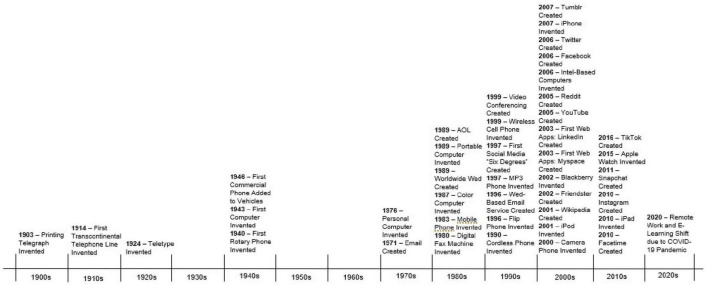
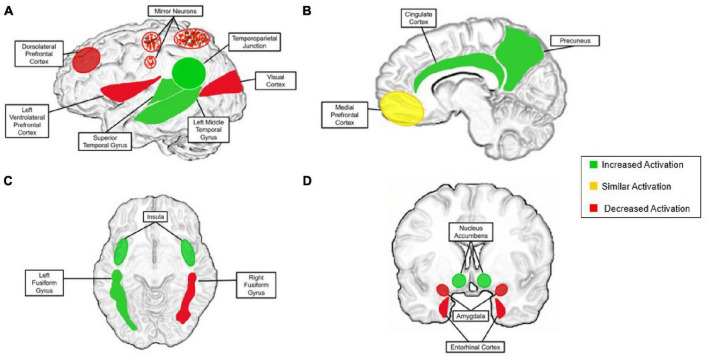
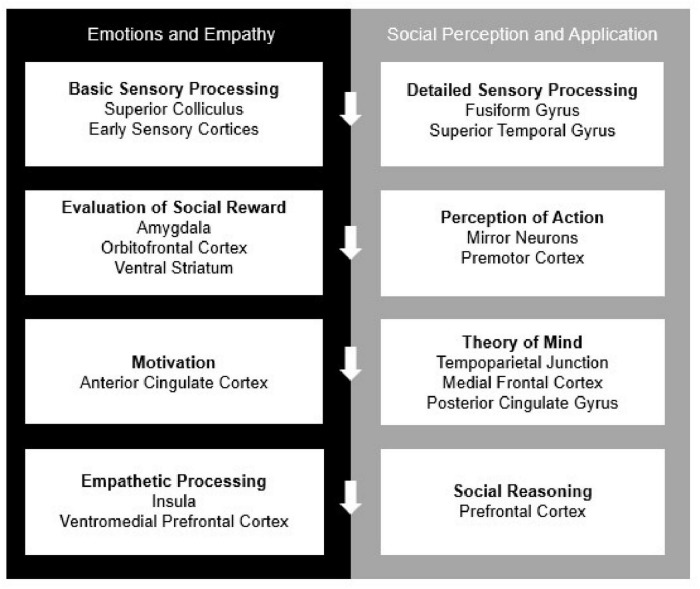
Human interactions are increasingly taking place from a distance through methods of remote interpersonal communication like video chatting and social media. While remote interpersonal communication has existed for millennia-with the first postal system arising in ∼2400 B.C.-accelerated advances in technology and the recent global COVID-19 pandemic have led to a dramatic increase in remote interpersonal communication use in daily life. Remote interpersonal communication presents a challenge to the field of social-cognitive neuroscience, as researchers seek to understand the implications of various types of remote interpersonal communication for the "social brain." The present paper reviews our current understanding of the social-cognitive neural network and summarizes critical differences between the neural correlates of social cognition in remote vs. face-to-face interactions. In particular, empirical and theoretical work is reviewed that highlight disparities in the neural mechanisms of social perception, evaluation of social stimuli, human motivation, evaluation of social reward, and theory of mind. Potential impacts of remote interpersonal communication on the development of the brain's social-cognitive network are also discussed. Finally, this review closes with future directions for research on social-cognitive neuroscience in our digital technology-connected world and outlines a neural model for social cognition in the context of remote interpersonal communication. For the field of social-cognitive neuroscience to advance alongside of the ever-evolving society, it is crucial for researchers to acknowledge the implications and concepts suggested for future research in this review.
人类互动越来越多地通过视频聊天和社交媒体等远程人际沟通方式在远距离进行。虽然远程人际沟通已经存在了数千年——公元前约2400年就出现了首个邮政系统——但技术的加速进步以及近期全球新冠疫情导致了日常生活中远程人际沟通使用的急剧增加。远程人际沟通给社会认知神经科学领域带来了挑战,因为研究人员试图了解各种类型的远程人际沟通对“社会大脑”的影响。本文回顾了我们目前对社会认知神经网络的理解,并总结了远程互动与面对面互动中社会认知神经关联的关键差异。特别是,回顾了实证和理论工作,这些工作突出了社会感知、社会刺激评估、人类动机、社会奖励评估和心理理论在神经机制上的差异。还讨论了远程人际沟通对大脑社会认知网络发展的潜在影响。最后,本综述以数字技术连接的世界中社会认知神经科学的未来研究方向作为结尾,并概述了远程人际沟通背景下社会认知的神经模型。为了让社会认知神经科学领域与不断发展的社会同步前进,研究人员认识到本综述中为未来研究所建议的影响和概念至关重要。