l'Institut national de recherche pour l'agriculture, l'alimentation et l'environnement (INRAE), Institut Agro, Science et Technologie du Lait et de l'Oeuf (STLO), Rennes, France.
Department of Surgery and Center of Excellence in Inflammation, Infectious Disease and Immunity, Quillen College of Medicine, East Tennessee State University, Johnson, TN, United States.
Front Immunol. 2023 May 31;14:1138539. doi: 10.3389/fimmu.2023.1138539. eCollection 2023.
The mechanisms underlying innate immune memory (trained immunity) comprise epigenetic reprogramming of transcriptional pathways associated with alterations of intracellular metabolism. While the mechanisms of innate immune memory carried out by immune cells are well characterized, such processes in non-immune cells, are poorly understood. The opportunistic pathogen, , is responsible for a multitude of human diseases, including pneumonia, endocarditis and osteomyelitis, as well as animal infections, including chronic cattle mastitis that are extremely difficult to treat. An induction of innate immune memory may be considered as a therapeutic alternative to fight infection.
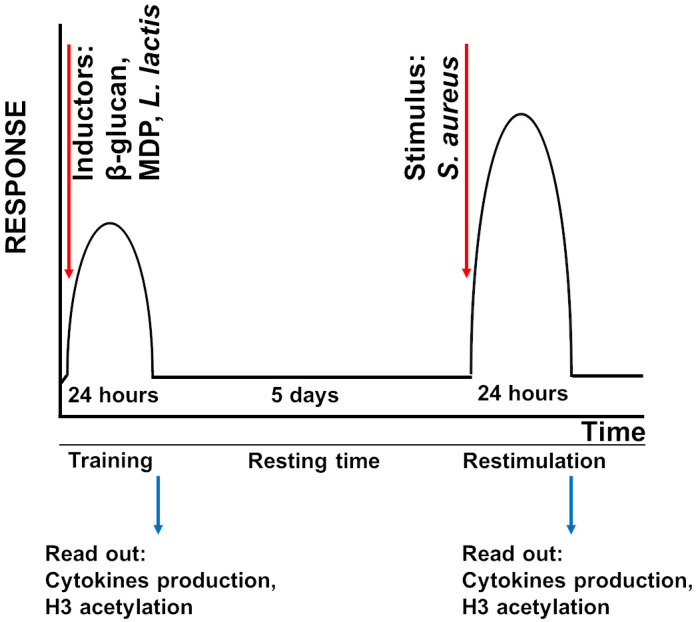
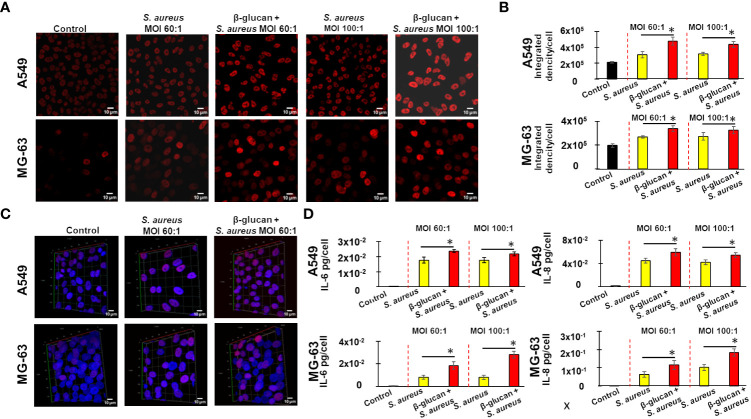
In the current work, we demonstrated the development of innate immune memory in non-immune cells during S. aureus infection employing a combination of techniques including Enzyme-linked immunosorbent assay (ELISA), microscopic analysis, and cytometry.
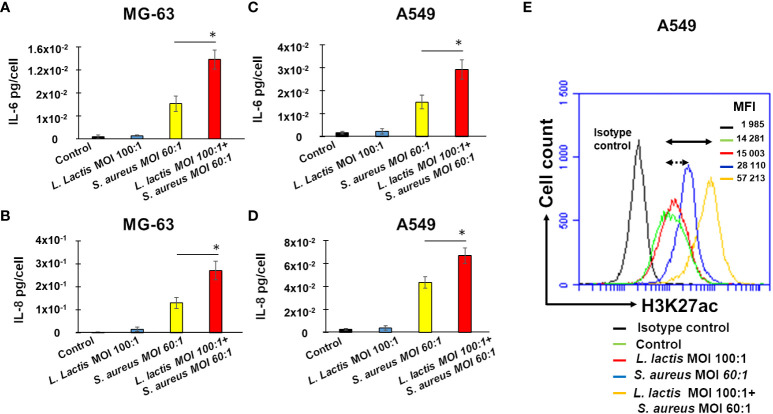
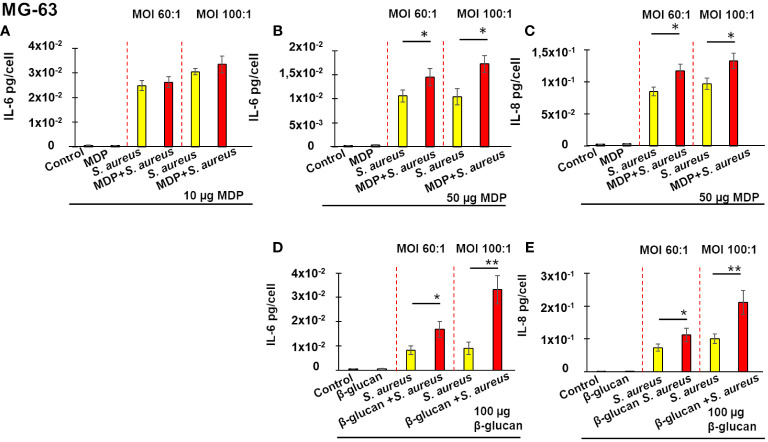
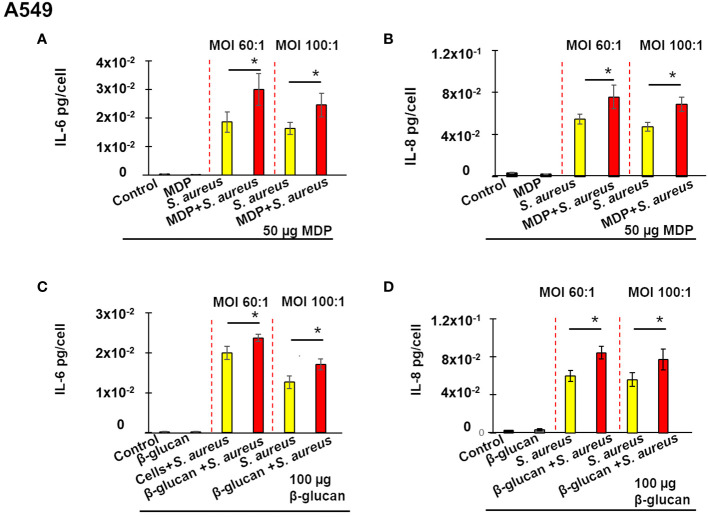
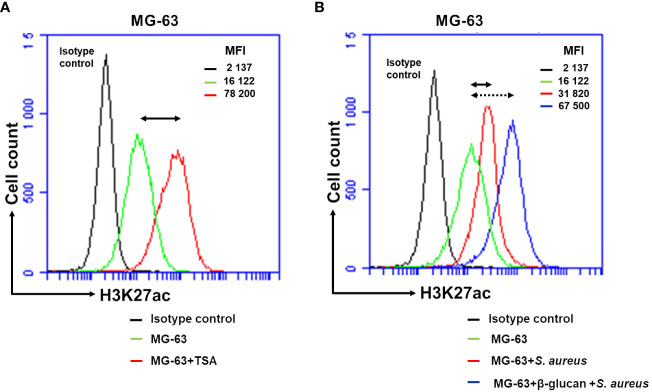
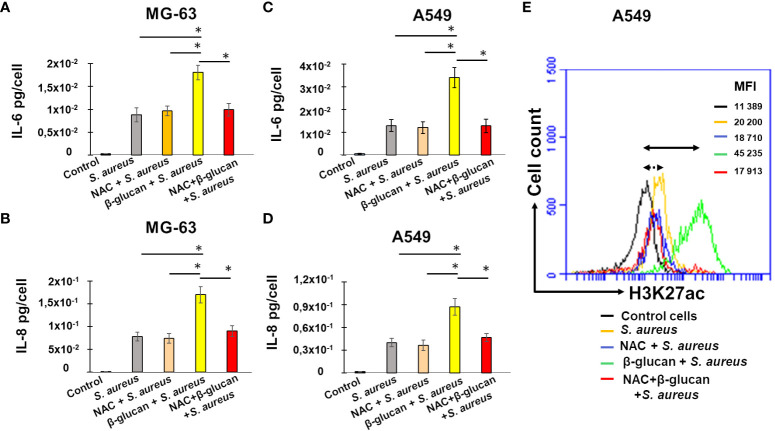
We observed that training of human osteoblast-like MG-63 cells and lung epithelial A549 cells with β-glucan increased IL-6 and IL-8 production upon a stimulation with , concomitant with histones modifications. IL-6 and IL-8 production was positively correlated with an acetylation of histone 3 at lysine 27 (H3K27), thus suggesting epigenetic reprogramming in these cells. An addition of the ROS scavenger N-Acetylcysteine, NAC, prior to β-glucan pretreatment followed by an exposure to , resulted in decreased IL-6 and IL-8 production, thereby supporting the involvement of ROS in the induction of innate immune memory. Exposure of cells to resulted in increased IL-6 and IL-8 production by MG-63 and A549 cells upon a stimulation with S. aureus that was correlated with H3K27 acetylation, suggesting the ability of this beneficial bacterium to induce innate immune memory.
This work improves our understanding of innate immune memory in non-immune cells in the context of infection. In addition to known inducers, probiotics may represent good candidates for the induction of innate immune memory. Our findings may help the development of alternative therapeutic approaches for the prevention of infection.
先天免疫记忆(训练免疫)的机制包括与细胞内代谢改变相关的转录途径的表观遗传重编程。虽然免疫细胞执行先天免疫记忆的机制已经得到很好的描述,但非免疫细胞中的这些过程知之甚少。机会性病原体 是多种人类疾病的病原体,包括肺炎、心内膜炎和骨髓炎,以及动物感染,包括慢性牛乳腺炎,这些疾病极难治疗。诱导先天免疫记忆可以被认为是对抗 感染的一种治疗替代方法。
在目前的工作中,我们通过酶联免疫吸附试验(ELISA)、显微镜分析和细胞术等技术的组合,证明了金黄色葡萄球菌感染过程中非免疫细胞中先天免疫记忆的发展。
我们观察到,用 β-葡聚糖对人成骨样 MG-63 细胞和肺上皮 A549 细胞进行训练,可增加这些细胞在受到 刺激时产生 IL-6 和 IL-8,同时伴随着组蛋白修饰。IL-6 和 IL-8 的产生与组蛋白 3 赖氨酸 27 (H3K27)的乙酰化呈正相关,因此表明这些细胞中存在表观遗传重编程。在 β-葡聚糖预处理后加入 ROS 清除剂 N-乙酰半胱氨酸(NAC),然后再暴露于 ,可导致 IL-6 和 IL-8 的产生减少,这支持 ROS 参与诱导先天免疫记忆。金黄色葡萄球菌刺激后,MG-63 和 A549 细胞产生的 IL-6 和 IL-8 增加,与 H3K27 乙酰化相关,表明这种有益细菌有诱导先天免疫记忆的能力。
这项工作提高了我们对 感染背景下非免疫细胞先天免疫记忆的理解。除了已知的诱导剂外,益生菌可能是诱导先天免疫记忆的良好候选物。我们的发现可能有助于开发预防 感染的替代治疗方法。