• 文献检索
  • 文档翻译
  • 深度研究
  • 学术资讯
  • Suppr Zotero 插件Zotero 插件
  • 邀请有礼
  • 套餐&价格
  • 历史记录
应用&插件
Suppr Zotero 插件Zotero 插件浏览器插件Mac 客户端Windows 客户端微信小程序
定价
高级版会员购买积分包购买API积分包
服务
文献检索文档翻译深度研究API 文档MCP 服务
关于我们
关于 Suppr公司介绍联系我们用户协议隐私条款
关注我们

Suppr 超能文献

核心技术专利:CN118964589B侵权必究
粤ICP备2023148730 号-1Suppr @ 2026

文献检索

告别复杂PubMed语法,用中文像聊天一样搜索,搜遍4000万医学文献。AI智能推荐,让科研检索更轻松。

立即免费搜索

文件翻译

保留排版,准确专业,支持PDF/Word/PPT等文件格式,支持 12+语言互译。

免费翻译文档

深度研究

AI帮你快速写综述,25分钟生成高质量综述,智能提取关键信息,辅助科研写作。

立即免费体验

在流感相关的继发性细菌感染期间,病毒传播增加会导致更严重的肺损伤,但不会引发炎症。

Increased virus dissemination leads to enhanced lung injury but not inflammation during influenza-associated secondary bacterial infection.

作者信息

Smith Amanda P, Lane Lindey C, Ramirez Zuniga Ivan, Moquin David M, Vogel Peter, Smith Amber M

机构信息

Department of Pediatrics, University of Tennessee Health Science Center, Memphis, TN, United States.

Department of Anesthesiology, Washington University School of Medicine, St. Louis, MO, United States.

出版信息

FEMS Microbes. 2022 Jul 25;3:xtac022. doi: 10.1093/femsmc/xtac022. eCollection 2022.

DOI:10.1093/femsmc/xtac022
PMID:37332507
原文链接:https://pmc.ncbi.nlm.nih.gov/articles/PMC10117793/
Abstract

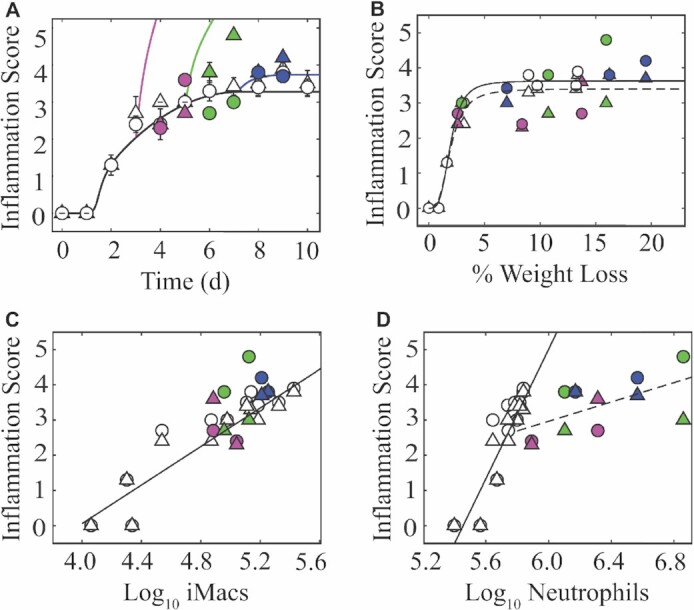
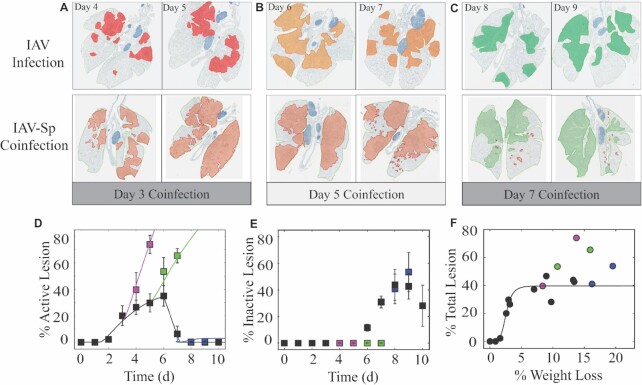
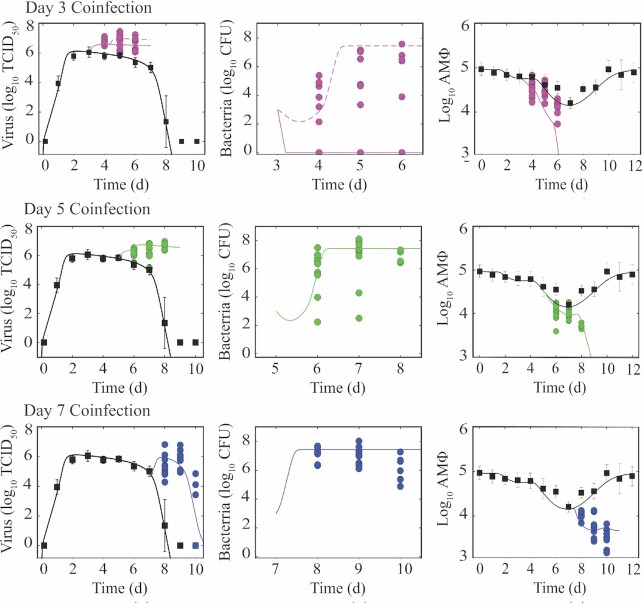
Secondary bacterial infections increase influenza-related morbidity and mortality, particularly if acquired after 5-7 d from the viral onset. Synergistic host responses and direct pathogen-pathogen interactions are thought to lead to a state of hyperinflammation, but the kinetics of the lung pathology have not yet been detailed, and identifying the contribution of different mechanisms to disease is difficult because these may change over time. To address this gap, we examined host-pathogen and lung pathology dynamics following a secondary bacterial infection initiated at different time points after influenza within a murine model. We then used a mathematical approach to quantify the increased virus dissemination in the lung, coinfection time-dependent bacterial kinetics, and virus-mediated and postbacterial depletion of alveolar macrophages. The data showed that viral loads increase regardless of coinfection timing, which our mathematical model predicted and histomorphometry data confirmed was due to a robust increase in the number of infected cells. Bacterial loads were dependent on the time of coinfection and corresponded to the level of IAV-induced alveolar macrophage depletion. Our mathematical model suggested that the additional depletion of these cells following the bacterial invasion was mediated primarily by the virus. Contrary to current belief, inflammation was not enhanced and did not correlate with neutrophilia. The enhanced disease severity was correlated to inflammation, but this was due to a nonlinearity in this correlation. This study highlights the importance of dissecting nonlinearities during complex infections and demonstrated the increased dissemination of virus within the lung during bacterial coinfection and simultaneous modulation of immune responses during influenza-associated bacterial pneumonia.

摘要

继发性细菌感染会增加流感相关的发病率和死亡率,尤其是在病毒感染发病5至7天后发生的感染。协同的宿主反应和病原体-病原体之间的直接相互作用被认为会导致一种炎症反应亢进状态,但肺部病理变化的动力学尚未详细阐明,而且由于这些机制可能随时间变化,因此很难确定不同机制对疾病的影响。为了填补这一空白,我们在小鼠模型中研究了流感后不同时间点引发继发性细菌感染后的宿主-病原体及肺部病理动态变化。然后,我们采用数学方法来量化肺部病毒传播的增加、共感染时间依赖性细菌动力学以及病毒介导的和细菌感染后肺泡巨噬细胞的消耗。数据显示,无论共感染时间如何,病毒载量都会增加,我们的数学模型预测并经组织形态计量学数据证实,这是由于受感染细胞数量的强劲增加所致。细菌载量取决于共感染时间,并与IAV诱导的肺泡巨噬细胞消耗水平相对应。我们的数学模型表明,细菌入侵后这些细胞的额外消耗主要由病毒介导。与当前的观点相反,炎症并未增强,也与中性粒细胞增多无关。疾病严重程度的增加与炎症相关,但这是由于这种相关性存在非线性。这项研究强调了在复杂感染过程中剖析非线性的重要性,并证明了在细菌共感染期间肺部病毒传播增加以及在流感相关细菌性肺炎期间免疫反应的同时调节。
https://cdn.ncbi.nlm.nih.gov/pmc/blobs/bca0/10117793/719fa44b3768/xtac022fig3.jpg
https://cdn.ncbi.nlm.nih.gov/pmc/blobs/bca0/10117793/aaf82e2cabe3/xtac022fig1.jpg
https://cdn.ncbi.nlm.nih.gov/pmc/blobs/bca0/10117793/08e308349ba4/xtac022fig2.jpg
https://cdn.ncbi.nlm.nih.gov/pmc/blobs/bca0/10117793/719fa44b3768/xtac022fig3.jpg
https://cdn.ncbi.nlm.nih.gov/pmc/blobs/bca0/10117793/aaf82e2cabe3/xtac022fig1.jpg
https://cdn.ncbi.nlm.nih.gov/pmc/blobs/bca0/10117793/08e308349ba4/xtac022fig2.jpg
https://cdn.ncbi.nlm.nih.gov/pmc/blobs/bca0/10117793/719fa44b3768/xtac022fig3.jpg

相似文献

1
Increased virus dissemination leads to enhanced lung injury but not inflammation during influenza-associated secondary bacterial infection.在流感相关的继发性细菌感染期间,病毒传播增加会导致更严重的肺损伤,但不会引发炎症。
FEMS Microbes. 2022 Jul 25;3:xtac022. doi: 10.1093/femsmc/xtac022. eCollection 2022.
2
Coinfection With Influenza A Virus and : An Underrecognized Impact on Host Resistance and Tolerance to Pulmonary Infections.甲型流感病毒与......的合并感染:对宿主抵抗和耐受肺部感染能力的一种被低估的影响。
Front Immunol. 2018 Oct 29;9:2377. doi: 10.3389/fimmu.2018.02377. eCollection 2018.
3
Lethal synergism of 2009 pandemic H1N1 influenza virus and Streptococcus pneumoniae coinfection is associated with loss of murine lung repair responses.2009 年大流行性 H1N1 流感病毒与肺炎链球菌合并感染的致命协同作用与小鼠肺修复反应的丧失有关。
mBio. 2011 Sep 20;2(5). doi: 10.1128/mBio.00172-11. Print 2011.
4
A Perfect Storm: Increased Colonization and Failure of Vaccination Leads to Severe Secondary Bacterial Infection in Influenza Virus-Infected Obese Mice.完美风暴:肥胖小鼠流感病毒感染后,定植增加和疫苗接种失败导致严重继发性细菌感染。
mBio. 2017 Sep 19;8(5):e00889-17. doi: 10.1128/mBio.00889-17.
5
GP96 Drives Exacerbation of Secondary Bacterial Pneumonia following Influenza A Virus Infection.GP96 驱动甲型流感病毒感染后继发细菌性肺炎恶化。
mBio. 2021 Jun 29;12(3):e0326920. doi: 10.1128/mBio.03269-20. Epub 2021 Jun 1.
6
Attenuation of Influenza A Virus Disease Severity by Viral Coinfection in a Mouse Model.病毒混合感染对小鼠流感病毒病严重程度的抑制作用。
J Virol. 2018 Nov 12;92(23). doi: 10.1128/JVI.00881-18. Print 2018 Dec 1.
7
Modeling Influenza Virus Infection: A Roadmap for Influenza Research.流感病毒感染建模:流感研究路线图
Viruses. 2015 Oct 12;7(10):5274-304. doi: 10.3390/v7102875.
8
Cysteinyl Maresins Reprogram Macrophages to Protect Mice from Streptococcus pneumoniae after Influenza A Virus Infection.半胱氨酰马尿酸能重编程巨噬细胞,使其在甲型流感病毒感染后保护小鼠免受肺炎链球菌的侵害。
mBio. 2022 Aug 30;13(4):e0126722. doi: 10.1128/mbio.01267-22. Epub 2022 Aug 1.
9
Altered Respiratory Microbiomes, Plasma Metabolites, and Immune Responses in Influenza A Virus and Methicillin-Resistant Staphylococcus aureus Coinfection.甲型流感病毒和耐甲氧西林金黄色葡萄球菌合并感染改变的呼吸微生物组、血浆代谢物和免疫反应。
Microbiol Spectr. 2023 Aug 17;11(4):e0524722. doi: 10.1128/spectrum.05247-22. Epub 2023 Jun 15.
10
Memory Th17 cell-mediated protection against lethal secondary pneumococcal pneumonia following influenza infection.记忆性 Th17 细胞介导的流感感染后对致死性二次肺炎链球菌肺炎的保护作用。
mBio. 2023 Aug 31;14(4):e0051923. doi: 10.1128/mbio.00519-23. Epub 2023 May 24.

引用本文的文献

1
Quantitatively Mapping Immune Control during Influenza.流感期间免疫控制的定量映射
Curr Opin Syst Biol. 2024 Jun;38. doi: 10.1016/j.coisb.2024.100516. Epub 2024 Mar 20.
2
Toward mechanistic medical digital twins: some use cases in immunology.迈向机制性医学数字孪生:免疫学中的一些用例
Front Digit Health. 2024 Mar 7;6:1349595. doi: 10.3389/fdgth.2024.1349595. eCollection 2024.
3
Staphylococcus epidermidis induced toxic shock syndrome (TSS) secondary to influenza infection.表皮葡萄球菌引起的中毒性休克综合征(TSS)继发于流感感染。

本文引用的文献

1
Time-Dependent Increase in Susceptibility and Severity of Secondary Bacterial Infections During SARS-CoV-2.新冠病毒感染期间,继发性细菌性感染的易感性和严重程度呈时间依赖性增加。
Front Immunol. 2022 May 12;13:894534. doi: 10.3389/fimmu.2022.894534. eCollection 2022.
2
Dynamically linking influenza virus infection kinetics, lung injury, inflammation, and disease severity.动态关联流感病毒感染动力学、肺损伤、炎症和疾病严重程度。
Elife. 2021 Jul 20;10:e68864. doi: 10.7554/eLife.68864.
3
Dynamic Pneumococcal Genetic Adaptations Support Bacterial Growth and Inflammation during Coinfection with Influenza.
BMC Infect Dis. 2023 Sep 6;23(1):583. doi: 10.1186/s12879-023-08487-3.
4
How Interactions during Viral-Viral Coinfection Can Shape Infection Kinetics.病毒-病毒共感染期间的相互作用如何影响感染动力学。
Viruses. 2023 May 31;15(6):1303. doi: 10.3390/v15061303.
5
Editorial: Thematic issue on bacterial-viral co-infections.社论:关于细菌-病毒合并感染的专题
FEMS Microbes. 2023 Jan 19;4:xtac031. doi: 10.1093/femsmc/xtac031. eCollection 2023.
6
Time-Dependent Increase in Susceptibility and Severity of Secondary Bacterial Infections During SARS-CoV-2.新冠病毒感染期间,继发性细菌性感染的易感性和严重程度呈时间依赖性增加。
Front Immunol. 2022 May 12;13:894534. doi: 10.3389/fimmu.2022.894534. eCollection 2022.
7
Time-Dependent Increase in Susceptibility and Severity of Secondary Bacterial Infection during SARS-CoV-2 Infection.新型冠状病毒感染期间继发性细菌感染易感性和严重程度的时间依赖性增加
bioRxiv. 2022 Mar 1:2022.02.28.482305. doi: 10.1101/2022.02.28.482305.
动态肺炎球菌遗传适应性支持细菌生长和流感合并感染时的炎症反应。
Infect Immun. 2021 Jun 16;89(7):e0002321. doi: 10.1128/IAI.00023-21.
4
Influenza Infection Induces Alveolar Macrophage Dysfunction and Thereby Enables Noninvasive to Cause Deadly Pneumonia.流感感染可诱导肺泡巨噬细胞功能障碍,从而使无创通气导致致命性肺炎。
J Immunol. 2020 Sep 15;205(6):1601-1607. doi: 10.4049/jimmunol.2000094. Epub 2020 Aug 12.
5
Direct interactions with influenza promote bacterial adherence during respiratory infections.流感的直接相互作用促进呼吸道感染期间细菌的黏附。
Nat Microbiol. 2019 Aug;4(8):1328-1336. doi: 10.1038/s41564-019-0447-0. Epub 2019 May 20.
6
Influenza Virus Infection Model With Density Dependence Supports Biphasic Viral Decay.具有密度依赖性的流感病毒感染模型支持双相病毒衰减。
Front Microbiol. 2018 Jul 10;9:1554. doi: 10.3389/fmicb.2018.01554. eCollection 2018.
7
A Critical, Nonlinear Threshold Dictates Bacterial Invasion and Initial Kinetics During Influenza.一项关键的非线性阈值决定了流感期间细菌的入侵和初始动力学。
Sci Rep. 2016 Dec 15;6:38703. doi: 10.1038/srep38703.
8
Quantifying the therapeutic requirements and potential for combination therapy to prevent bacterial coinfection during influenza.量化流感期间联合治疗预防细菌合并感染的治疗需求和潜力。
J Pharmacokinet Pharmacodyn. 2017 Apr;44(2):81-93. doi: 10.1007/s10928-016-9494-9. Epub 2016 Sep 27.
9
Influenza virus infection causes neutrophil dysfunction through reduced G-CSF production and an increased risk of secondary bacteria infection in the lung.流感病毒感染通过减少粒细胞集落刺激因子(G-CSF)的产生导致中性粒细胞功能障碍,并增加肺部继发细菌感染的风险。
Virology. 2016 Dec;499:23-29. doi: 10.1016/j.virol.2016.08.025. Epub 2016 Sep 12.
10
Differential Type I Interferon Signaling Is a Master Regulator of Susceptibility to Postinfluenza Bacterial Superinfection.差异性I型干扰素信号传导是流感后细菌重叠感染易感性的主要调节因子。
mBio. 2016 May 3;7(3):e00506-16. doi: 10.1128/mBio.00506-16.