Yu Haitian, Yang Feng, Hu Chaoqin, Yang Xin, Zheng Aiqing, Wang Yubao, Tang Yongsheng, He Yuhua, Lv Meiyuan
Institute of Food Crops, Yunnan Academy of Agricultural Science, Kunming, Yunnan, China.
Department of Agricultural, Food and Nutritional Science, University of Alberta, Edmonton, AB, Canada.
Front Plant Sci. 2023 Jun 2;14:1165658. doi: 10.3389/fpls.2023.1165658. eCollection 2023.
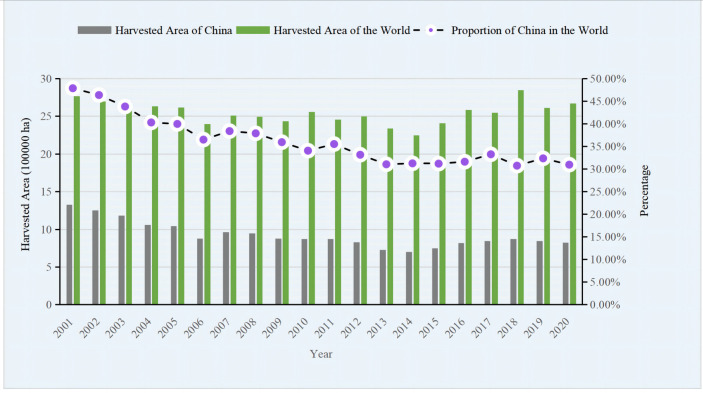
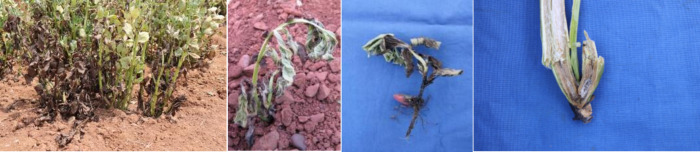
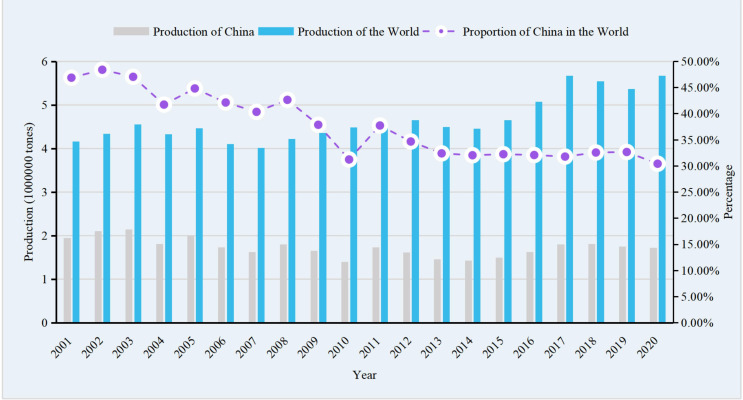
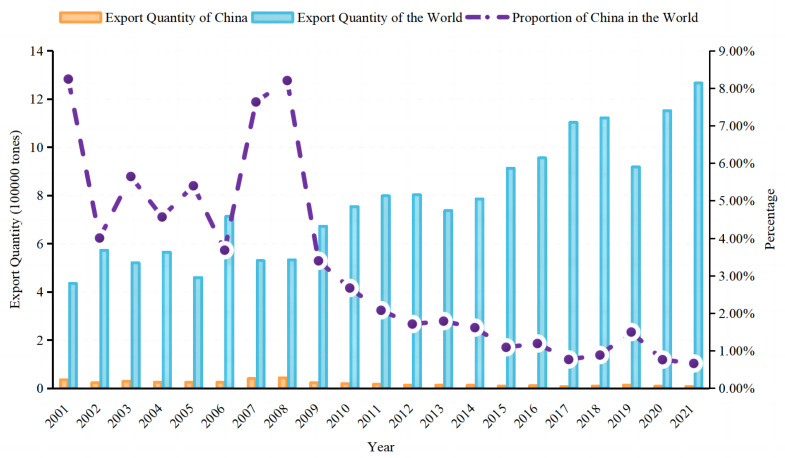
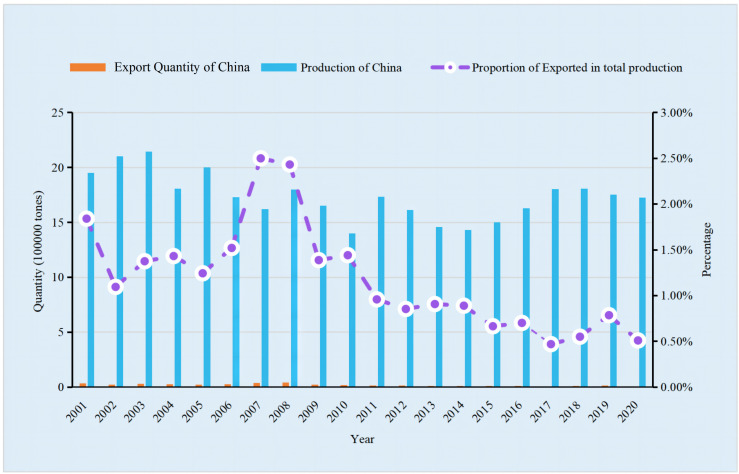
China is the largest producer of faba bean with a total harvested area of 8.11×10 ha and a total production of 1.69 ×10 tons (dry beans) in 2020, accounting for 30% of the world production. Faba bean is grown in China for both fresh pods and dry seed. East China cultivates large seed cultivars for food processing and fresh vegetables, while northwestern and southwestern China grow cultivars for dry seeds, with an increased production of fresh green pods. Most of the faba bean is consumed domestically, with limited exports. The absence of unified quality control measures and simple traditional cultivation practices contributes to the lower competitiveness of the faba bean industry in international markets. Recently, new cultivation methods have emerged with improved weed control, as well as better water and drainage management, resulting in higher quality and income for producers. Root rot disease in faba bean is caused by multiple pathogens, including spp., spp., and spp. spp. is the most prevalent species causing root rot in faba bean crops and is responsible for severe yield loss, with different species causing the disease in different regions in China. The yield loss ranges from 5% to 30%, up to 100% in severely infected fields. The management of faba bean root rot disease in China involves a combination of physical, chemical, and bio-control methods, including intercropping with non-host crops, applying rational nitrogen, and treating seeds with chemical or bio-seed treatments. However, the effectiveness of these methods is limited due to the high cost, the broad host range of the pathogens, and potential negative impacts on the environment and non-targeted soil organisms. Intercropping is the most widely utilized and economically friendly control method to date. This review provides an overview of the current status of faba bean production in China, the challenges faced by the industry due to root rot disease, and the progress in identifying and managing this disease. This information is critical for developing integrated management strategies to effectively control root rot in faba bean cultivation and facilitating the high-quality development of the faba bean industry.
中国是蚕豆的最大生产国,2020年收获面积总计8.11×10公顷,总产量为1.69×10吨(干豆),占世界产量的30%。在中国,种植蚕豆既用于收获鲜荚,也用于收获干种子。中国东部种植大粒种子品种用于食品加工和新鲜蔬菜,而中国西北和西南部种植用于收获干种子的品种,鲜绿荚产量有所增加。蚕豆大多在国内消费,出口有限。缺乏统一的质量控制措施和简单的传统种植方式导致蚕豆产业在国际市场上竞争力较低。最近,出现了新的种植方法,杂草控制得到改善,水和排水管理也更好,从而提高了生产者的质量和收入。蚕豆根腐病由多种病原体引起,包括 spp.、 spp. 和 spp.。 spp. 是导致蚕豆作物根腐病最普遍的物种,会造成严重的产量损失,在中国不同地区由不同物种引起该病。产量损失范围为5%至30%,在严重感染的田地中高达100%。中国蚕豆根腐病的管理涉及物理、化学和生物防治方法的结合,包括与非寄主作物间作、合理施用氮肥以及用化学或生物种子处理剂处理种子。然而,由于成本高、病原体寄主范围广以及对环境和非目标土壤生物的潜在负面影响,这些方法的有效性有限。间作是迄今为止使用最广泛且经济友好的防治方法。本综述概述了中国蚕豆生产的现状、根腐病给该产业带来的挑战以及在识别和管理这种疾病方面取得的进展。这些信息对于制定综合管理策略以有效控制蚕豆种植中的根腐病以及促进蚕豆产业的高质量发展至关重要。