Hayley P, Tuchek C, Dalla S, Borrell J, Murphy M D, Nudo R J, Guggenmos D J
Department of Molecular and Integrative Physiology, University of Kansas Medical Center, Kansas City, KS, United States.
Department of Neurosurgery, University of Kansas Medical Center, Kansas City, KS, United States.
Front Neurosci. 2023 Jun 2;17:1151309. doi: 10.3389/fnins.2023.1151309. eCollection 2023.
Sensorimotor integration is critical for generating skilled, volitional movements. While stroke tends to impact motor function, there are also often associated sensory deficits that contribute to overall behavioral deficits. Because many of the cortico-cortical projections participating in the generation of volitional movement either target or pass-through primary motor cortex (in rats, caudal forelimb area; CFA), any damage to CFA can lead to a subsequent disruption in information flow. As a result, the loss of sensory feedback is thought to contribute to motor dysfunction even when sensory areas are spared from injury. Previous research has suggested that the restoration of sensorimotor integration through reorganization or neuronal connections is important for restoring function. Our goal was to determine if there was crosstalk between sensorimotor cortical areas with recovery from a primary motor cortex injury. First, we investigated if peripheral sensory stimulation would evoke responses in the rostral forelimb area (RFA), a rodent homologue to premotor cortex. We then sought to identify whether intracortical microstimulation-evoked activity in RFA would reciprocally modify the sensory response.
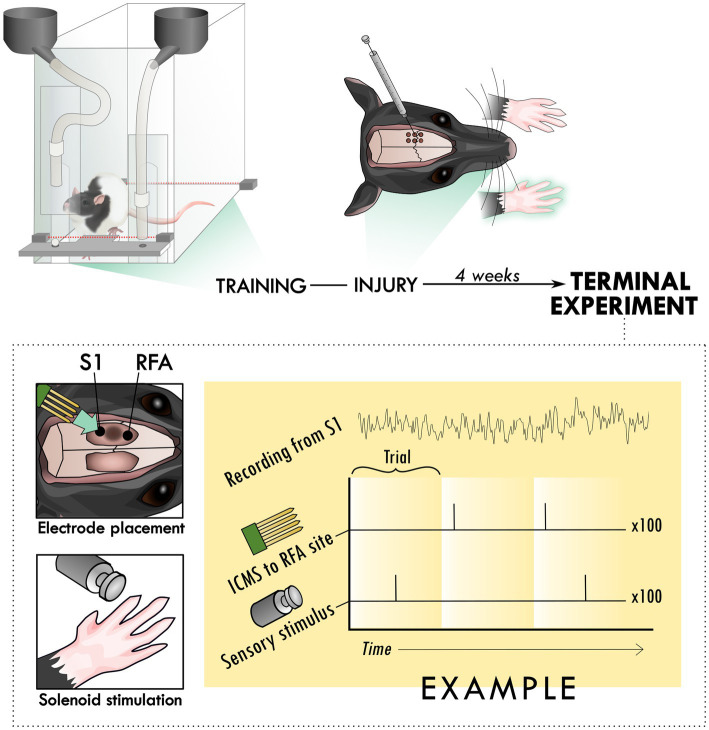
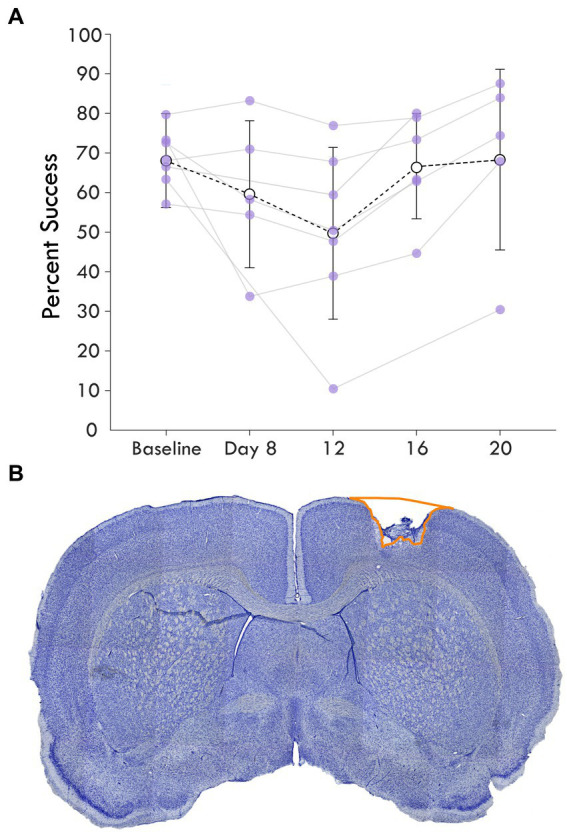
We used seven rats with an ischemic lesion of CFA. Four weeks after injury, the rats' forepaw was mechanically stimulated under anesthesia and neural activity was recorded in the cortex. In a subset of trials, a small intracortical stimulation pulse was delivered in RFA either individually or paired with peripheral sensory stimulation.
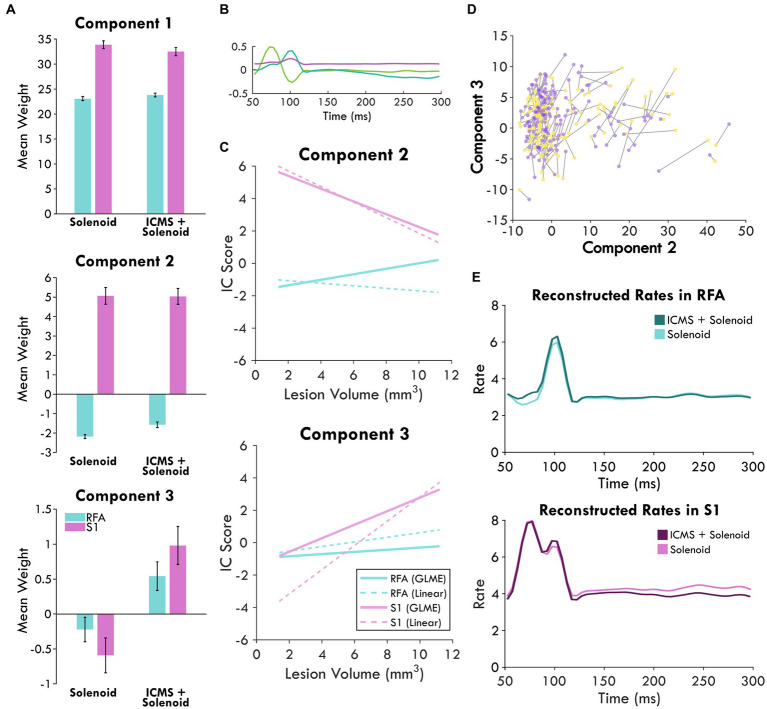
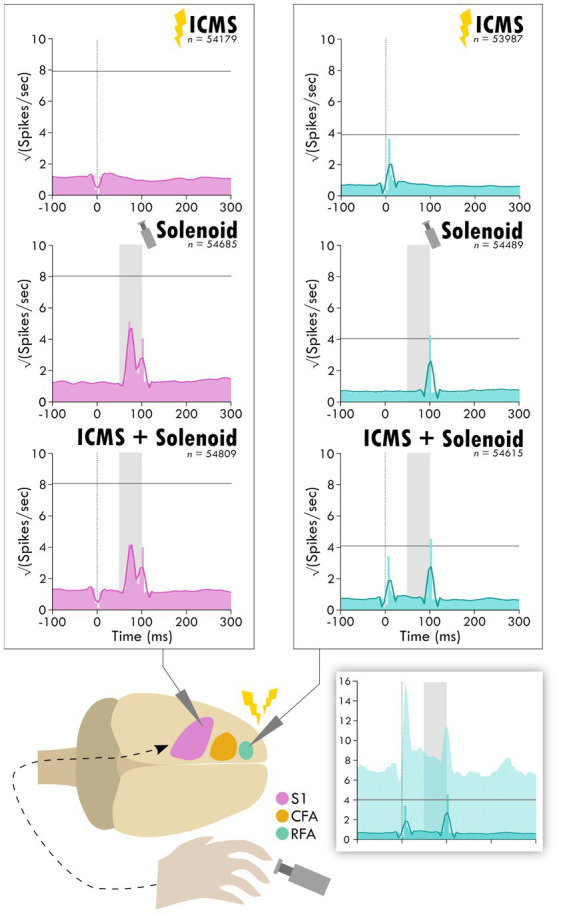
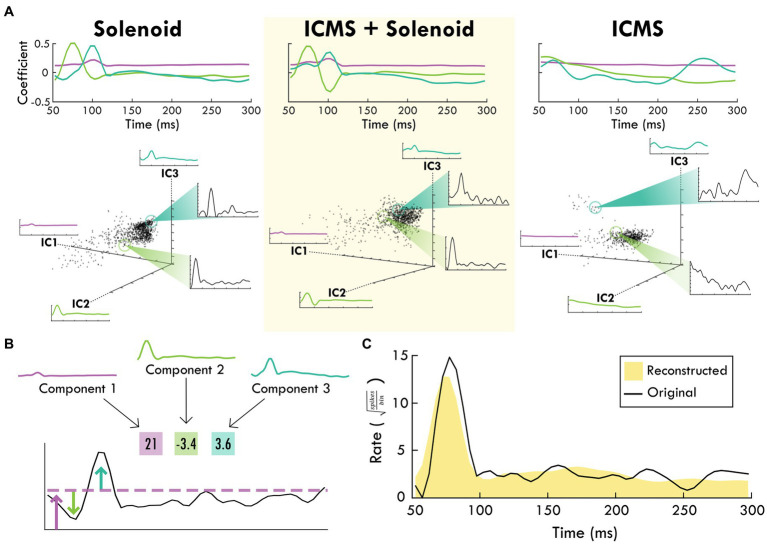
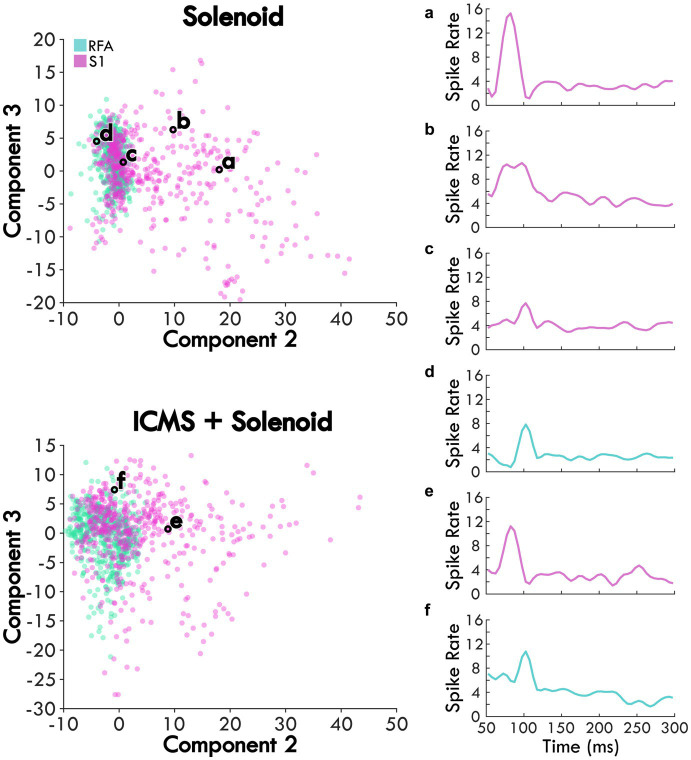
Our results point to post-ischemic connectivity between premotor and sensory cortex that may be related to functional recovery. Premotor recruitment during the sensory response was seen with a peak in spiking within RFA after the peripheral solenoid stimulation despite the damage to CFA. Furthermore, stimulation in RFA modulated and disrupted the sensory response in sensory cortex.
The presence of a sensory response in RFA and the sensitivity of S1 to modulation by intracortical stimulation provides additional evidence for functional connectivity between premotor and somatosensory cortex. The strength of the modulatory effect may be related to the extent of the injury and the subsequent reshaping of cortical connections in response to network disruption.
感觉运动整合对于产生熟练的自主运动至关重要。虽然中风往往会影响运动功能,但通常也会伴有感觉缺陷,这些缺陷会导致整体行为缺陷。由于许多参与自主运动产生的皮质 - 皮质投射要么靶向初级运动皮层(在大鼠中为尾侧前肢区;CFA),要么经过该区域,所以CFA的任何损伤都可能导致随后的信息流中断。因此,即使感觉区域未受损伤,感觉反馈的丧失也被认为会导致运动功能障碍。先前的研究表明,通过重组或神经元连接恢复感觉运动整合对于恢复功能很重要。我们的目标是确定感觉运动皮层区域之间是否存在与初级运动皮层损伤恢复相关的相互作用。首先,我们研究了外周感觉刺激是否会在前肢嘴侧区(RFA,与运动前皮层相对应的啮齿动物区域)诱发反应。然后,我们试图确定RFA中皮层内微刺激诱发的活动是否会相互改变感觉反应。
我们使用了7只患有CFA缺血性损伤的大鼠。损伤四周后,在麻醉状态下对大鼠的前爪进行机械刺激,并记录皮层中的神经活动。在一部分试验中,在RFA中单独或与外周感觉刺激配对施加一个小的皮层内刺激脉冲。
我们的结果表明,运动前皮层和感觉皮层之间存在缺血后连接,这可能与功能恢复有关。尽管CFA受损,但在外周螺线管刺激后,在感觉反应期间观察到运动前皮层的募集,RFA内的放电峰值出现。此外,RFA中的刺激调节并扰乱了感觉皮层中的感觉反应。
RFA中存在感觉反应以及初级体感皮层对皮层内刺激调节的敏感性为运动前皮层和体感皮层之间的功能连接提供了额外的证据。调节作用的强度可能与损伤程度以及随后因网络破坏而导致的皮层连接重塑程度有关。