Yee Sook Wah, Macdonald Christian, Mitrovic Darko, Zhou Xujia, Koleske Megan L, Yang Jia, Silva Dina Buitrago, Grimes Patrick Rockefeller, Trinidad Donovan, More Swati S, Kachuri Linda, Witte John S, Delemotte Lucie, Giacomini Kathleen M, Coyote-Maestas Willow
Department of Bioengineering and Therapeutic Sciences, University of California, San Francisco, United States.
Science for Life Laboratory, Department of Applied Physics, KTH Royal Institute of Technology, 12121 Solna, Sweden.
bioRxiv. 2023 Jun 7:2023.06.06.543963. doi: 10.1101/2023.06.06.543963.
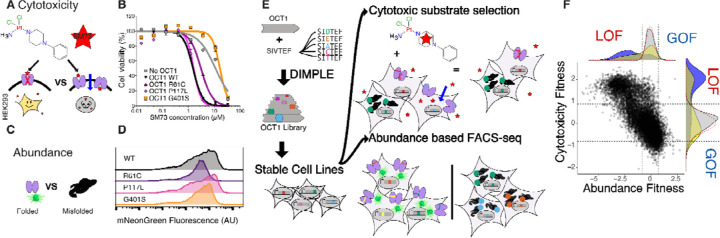
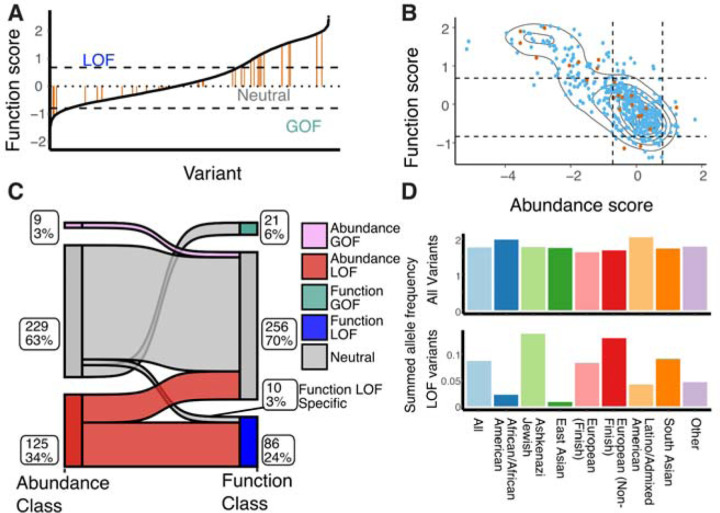
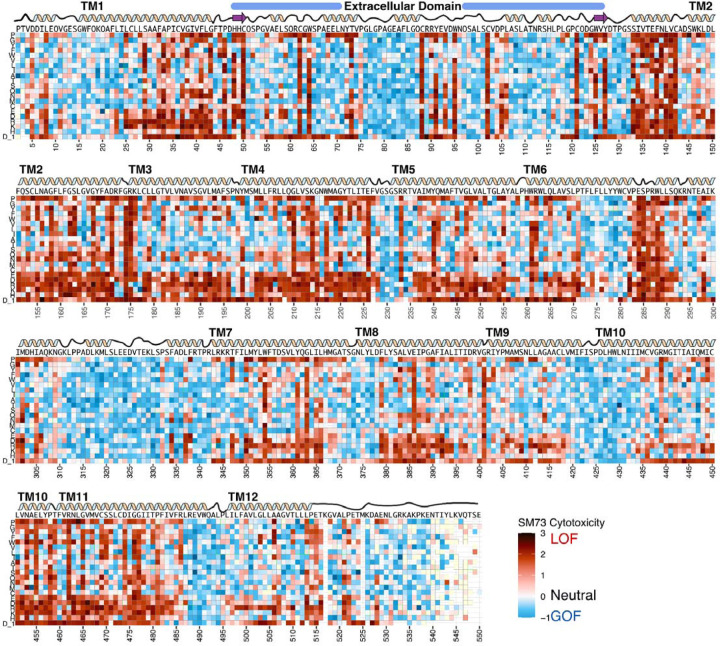
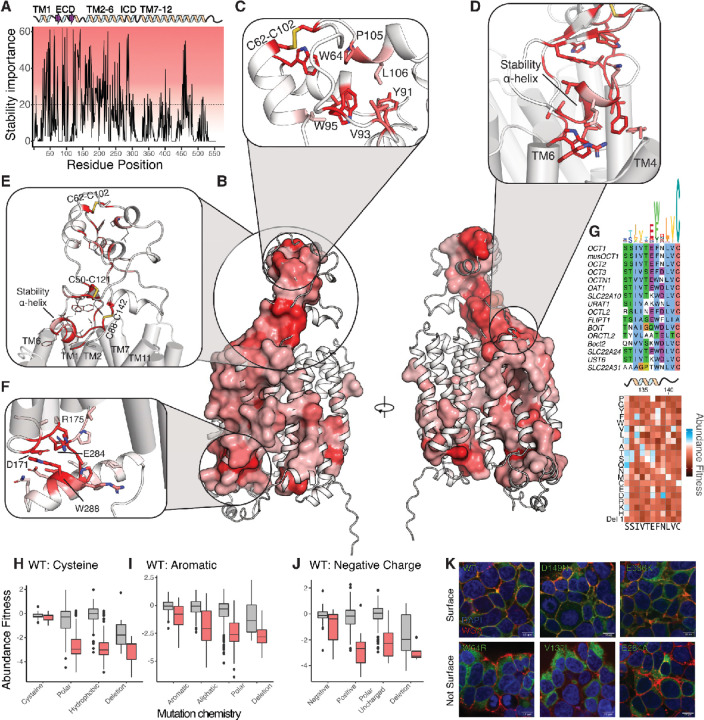
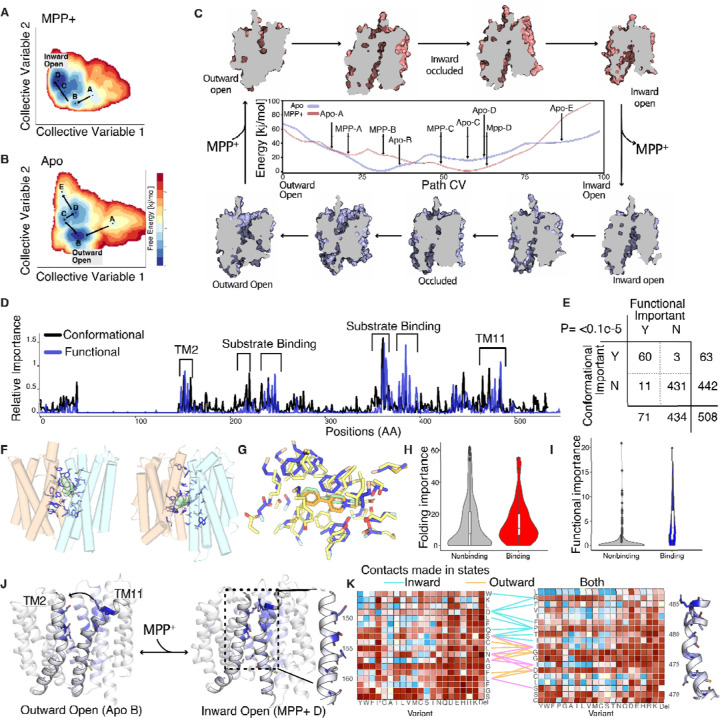
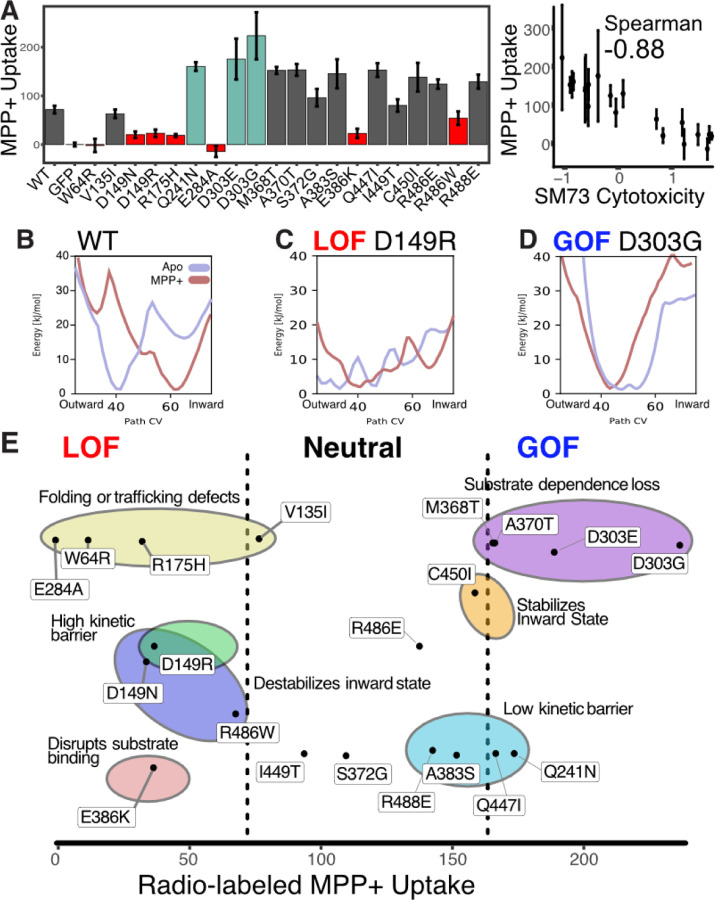
Membrane transporters play a fundamental role in the tissue distribution of endogenous compounds and xenobiotics and are major determinants of efficacy and side effects profiles. Polymorphisms within these drug transporters result in inter-individual variation in drug response, with some patients not responding to the recommended dosage of drug whereas others experience catastrophic side effects. For example, variants within the major hepatic Human organic cation transporter OCT1 (SLC22A1) can change endogenous organic cations and many prescription drug levels. To understand how variants mechanistically impact drug uptake, we systematically study how all known and possible single missense and single amino acid deletion variants impact expression and substrate uptake of OCT1. We find that human variants primarily disrupt function via folding rather than substrate uptake. Our study revealed that the major determinants of folding reside in the first 300 amino acids, including the first 6 transmembrane domains and the extracellular domain (ECD) with a stabilizing and highly conserved stabilizing helical motif making key interactions between the ECD and transmembrane domains. Using the functional data combined with computational approaches, we determine and validate a structure-function model of OCT1s conformational ensemble without experimental structures. Using this model and molecular dynamic simulations of key mutants, we determine biophysical mechanisms for how specific human variants alter transport phenotypes. We identify differences in frequencies of reduced function alleles across populations with East Asians vs European populations having the lowest and highest frequency of reduced function variants, respectively. Mining human population databases reveals that reduced function alleles of OCT1 identified in this study associate significantly with high LDL cholesterol levels. Our general approach broadly applied could transform the landscape of precision medicine by producing a mechanistic basis for understanding the effects of human mutations on disease and drug response.
膜转运蛋白在内源性化合物和外源性物质的组织分布中起着基础性作用,并且是药物疗效和副作用特征的主要决定因素。这些药物转运蛋白中的多态性导致个体间药物反应的差异,一些患者对推荐剂量的药物无反应,而另一些患者则经历灾难性的副作用。例如,主要的肝脏人有机阳离子转运体OCT1(SLC22A1)中的变体可以改变内源性有机阳离子和许多处方药的水平。为了了解变体如何在机制上影响药物摄取,我们系统地研究了所有已知和可能的单错义及单氨基酸缺失变体如何影响OCT1的表达和底物摄取。我们发现人类变体主要通过折叠而非底物摄取来破坏功能。我们的研究表明,折叠的主要决定因素位于前300个氨基酸中,包括前6个跨膜结构域和细胞外结构域(ECD),其中有一个稳定且高度保守的稳定螺旋基序,在ECD和跨膜结构域之间形成关键相互作用。结合功能数据和计算方法,我们在没有实验结构的情况下确定并验证了OCT1构象集合的结构-功能模型。使用该模型和关键突变体的分子动力学模拟,我们确定了特定人类变体改变转运表型的生物物理机制。我们发现不同人群中功能降低等位基因的频率存在差异,东亚人群和欧洲人群中功能降低变体的频率分别最低和最高。挖掘人类群体数据库发现,本研究中鉴定出的OCT1功能降低等位基因与高LDL胆固醇水平显著相关。我们广泛应用的一般方法可以通过为理解人类突变对疾病和药物反应的影响提供机制基础,从而改变精准医学的格局。