Department of Applied Physics, Science for Life Laboratory, KTH Royal Institute of Technology, Stockholm, Sweden.
Department of Biochemistry and Biophysics, Science for Life Laboratory, Stockholm University, Stockholm, Sweden.
Elife. 2023 Jul 5;12:e84805. doi: 10.7554/eLife.84805.
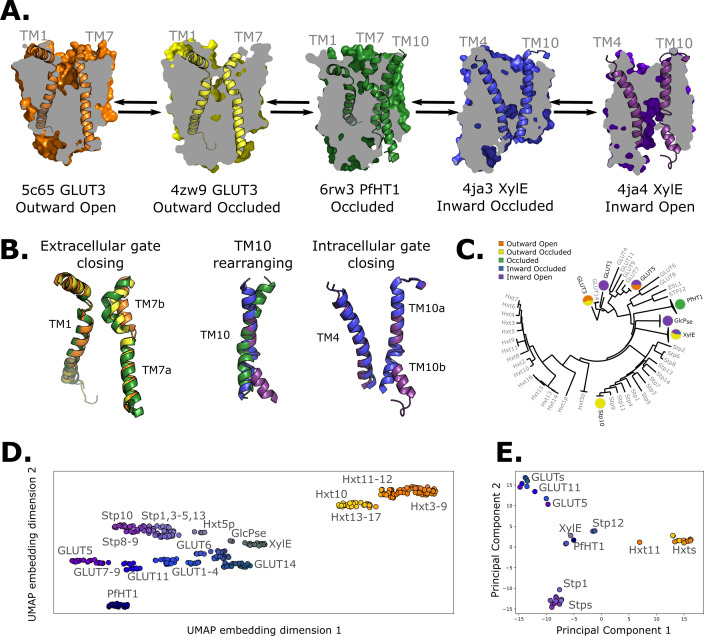
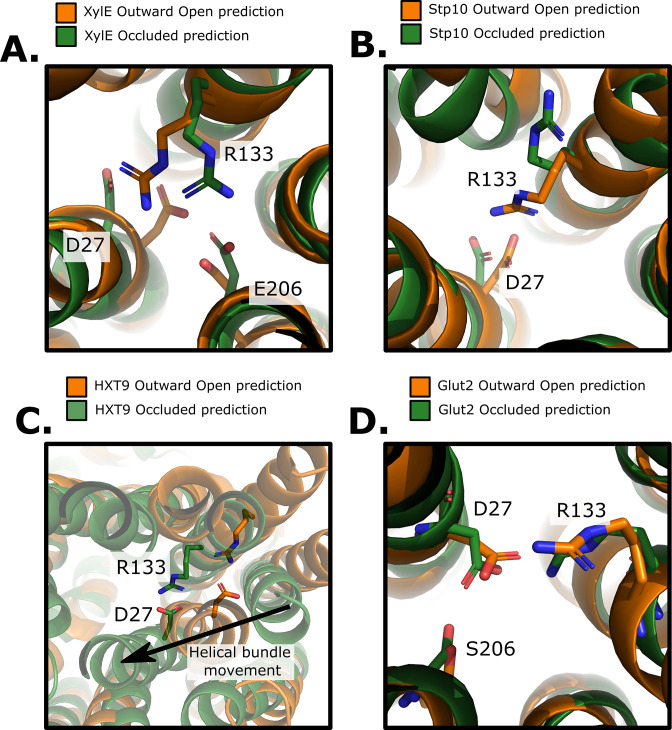
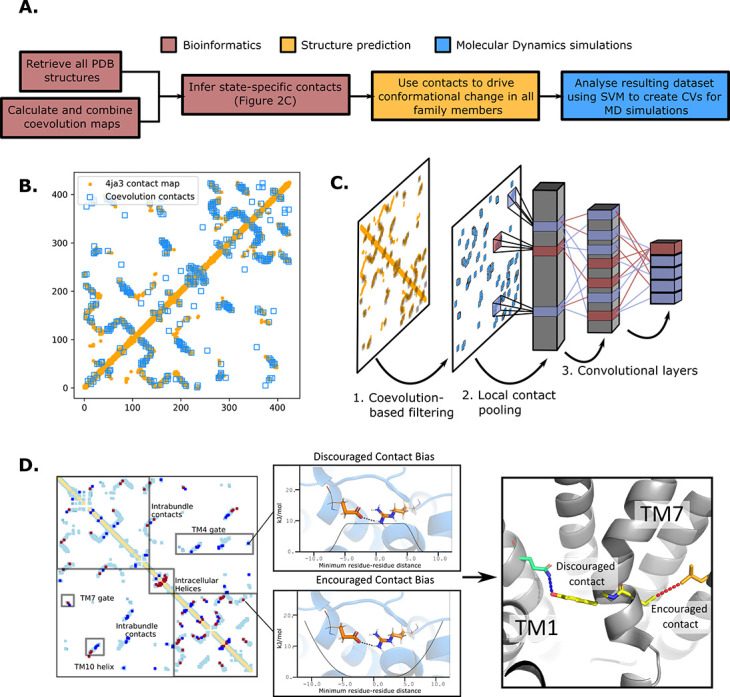
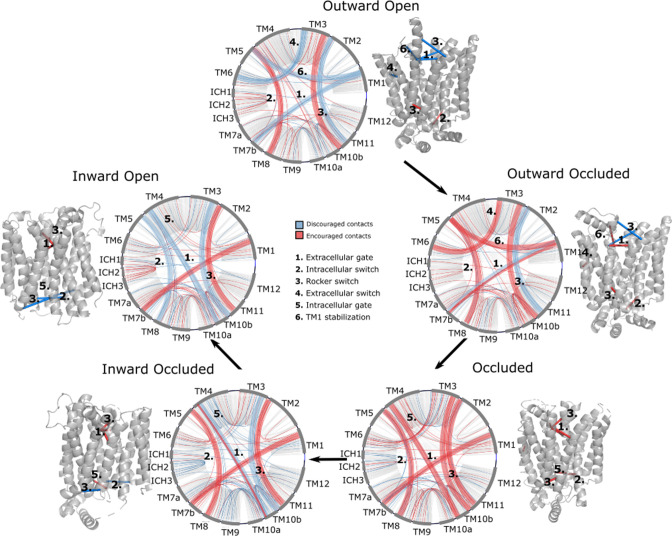
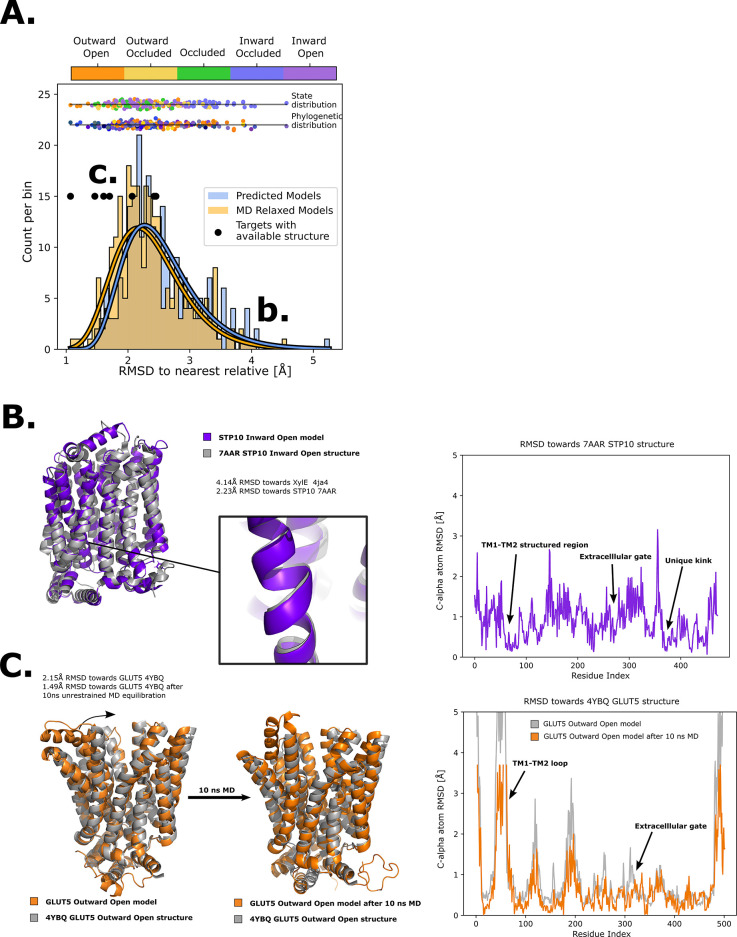
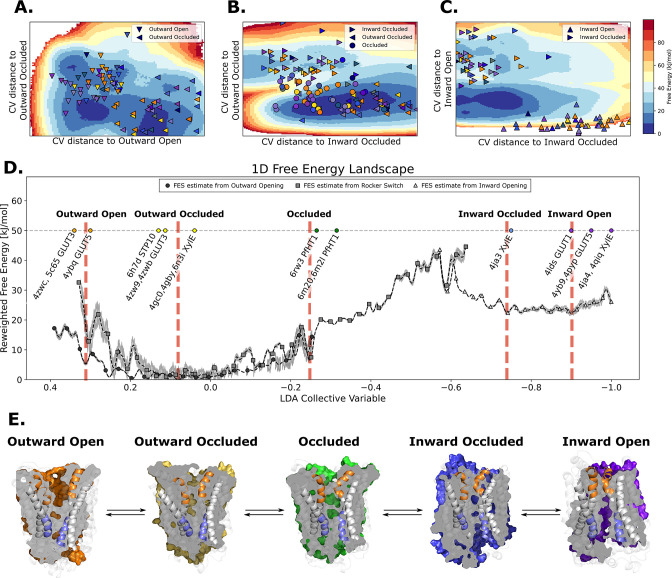
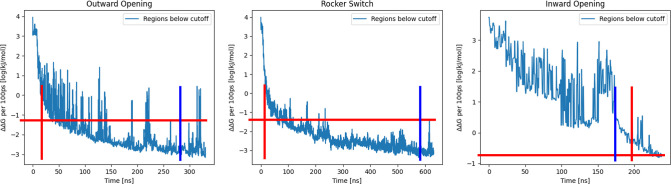
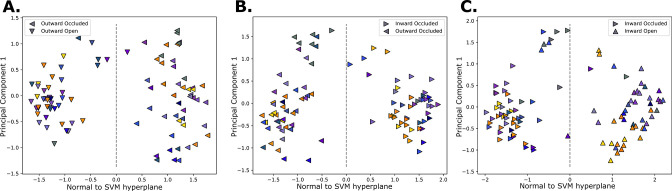
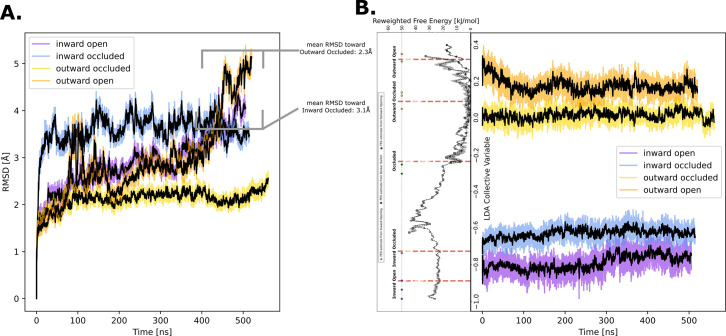
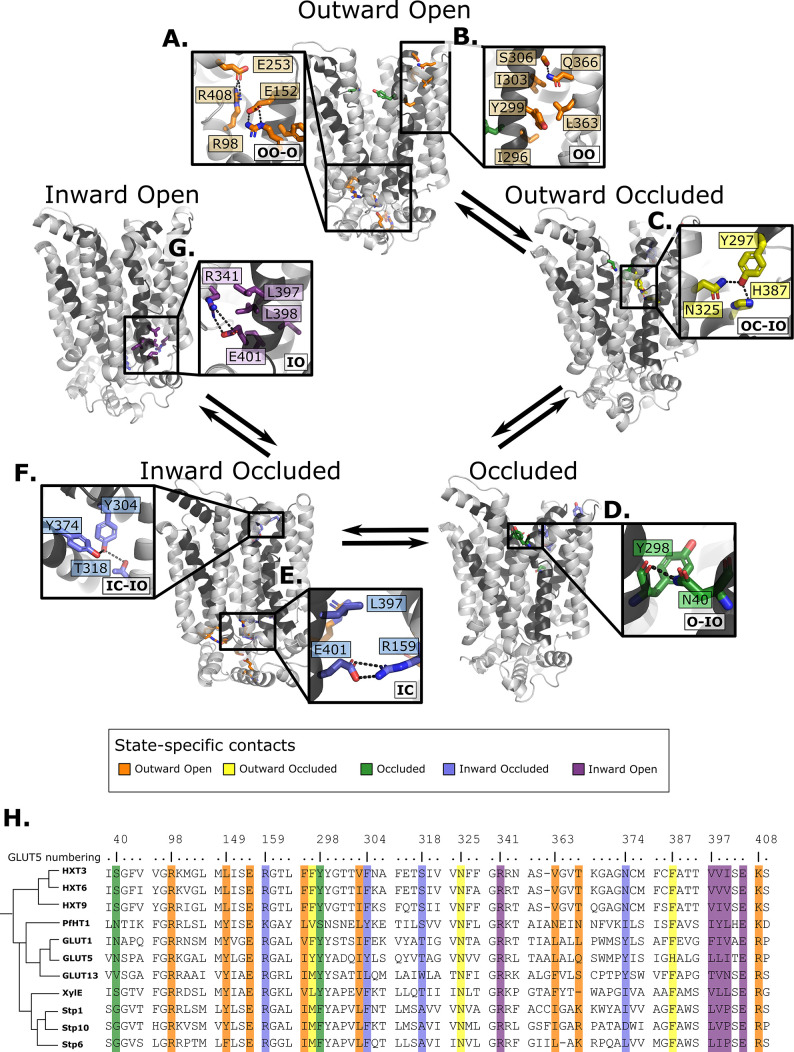
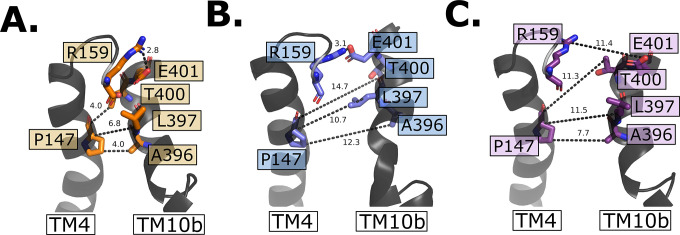
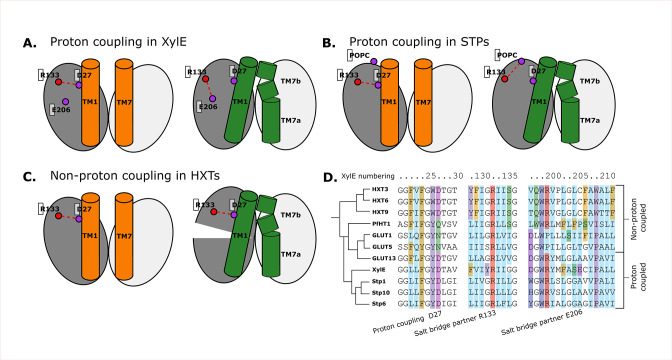
Sugar porters (SPs) represent the largest group of secondary-active transporters. Some members, such as the glucose transporters (GLUTs), are well known for their role in maintaining blood glucose homeostasis in mammals, with their expression upregulated in many types of cancers. Because only a few sugar porter structures have been determined, mechanistic models have been constructed by piecing together structural states of distantly related proteins. Current GLUT transport models are predominantly descriptive and oversimplified. Here, we have combined coevolution analysis and comparative modeling, to predict structures of the entire sugar porter superfamily in each state of the transport cycle. We have analyzed the state-specific contacts inferred from coevolving residue pairs and shown how this information can be used to rapidly generate free-energy landscapes consistent with experimental estimates, as illustrated here for the mammalian fructose transporter GLUT5. By comparing many different sugar porter models and scrutinizing their sequence, we have been able to define the molecular determinants of the transport cycle, which are conserved throughout the sugar porter superfamily. We have also been able to highlight differences leading to the emergence of proton-coupling, validating, and extending the previously proposed latch mechanism. Our computational approach is transferable to any transporter, and to other protein families in general.
糖载体蛋白(SPs)是最大的一类次级主动转运蛋白。其中一些成员,如葡萄糖转运蛋白(GLUTs),因其在维持哺乳动物血糖稳态方面的作用而广为人知,其表达在许多类型的癌症中上调。由于只有少数糖载体蛋白结构已被确定,因此通过将结构状态拼接到远缘蛋白上构建了机制模型。目前的 GLUT 转运模型主要是描述性的和过于简化的。在这里,我们将共进化分析和比较建模相结合,以预测转运循环中每个状态的整个糖载体蛋白超家族的结构。我们分析了从共进化残基对推断出的状态特异性接触,并展示了如何使用这些信息快速生成与实验估计一致的自由能景观,这里以哺乳动物果糖转运蛋白 GLUT5 为例进行说明。通过比较许多不同的糖载体蛋白模型并仔细研究它们的序列,我们能够定义贯穿整个糖载体蛋白超家族的转运循环的分子决定因素。我们还能够突出导致质子偶联出现的差异,验证并扩展了先前提出的闩锁机制。我们的计算方法可转移到任何转运蛋白,以及一般的其他蛋白质家族。