Zahedipour Fatemeh, Zamani Parvin, Mashreghi Mohammad, Astaneh Mojgan, Sankian Mojtaba, Amiri Atefeh, Jamialahmadi Khadijeh, Jaafari Mahmoud Reza
Department of Medical Biotechnology and Nanotechnology, Faculty of Medicine, Mashhad University of Medical Sciences, Mashhad, Iran.
Nanotechnology Research Center, Pharmaceutical Technology Institute, Mashhad University of Medical Sciences, Mashhad, Iran.
Cancer Nanotechnol. 2023;14(1):62. doi: 10.1186/s12645-023-00213-7. Epub 2023 Jun 14.
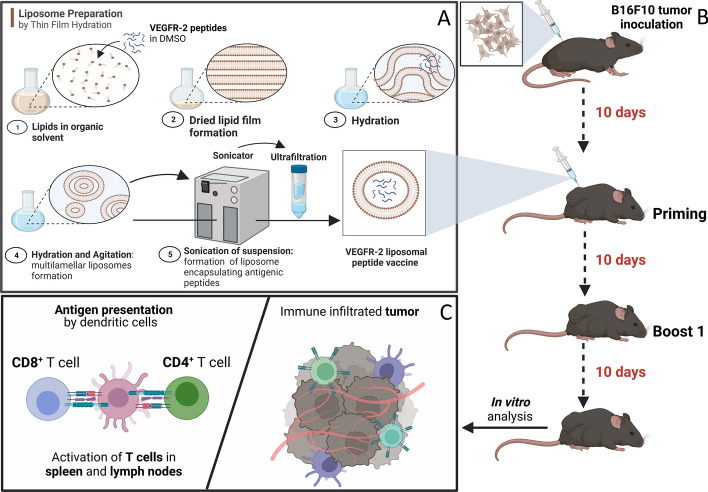
The vascular endothelial growth factor receptor-2 (VEGFR-2) plays an important role in melanoma development and progression. Peptide vaccines have shown great potential in cancer immunotherapy by targeting VEGFR-2 as a tumor-associated antigen and boosting the immune response against both tumor cells and tumor endothelial cells. Despite this, the low efficiency of peptide vaccines has resulted in moderate therapeutic results in the majority of studies. Enhancing the delivery of peptide vaccines using nanoliposomes is an important strategy for improving the efficacy of peptide vaccines. In this regard, we designed VEGFR-2-derived peptides restricted to both mouse MHC I and human HLA-A*02:01 using immunoinformatic tools and selected three peptides representing the highest binding affinities. The peptides were encapsulated in nanoliposomal formulations using the film method plus bath sonication and characterized for their colloidal properties.
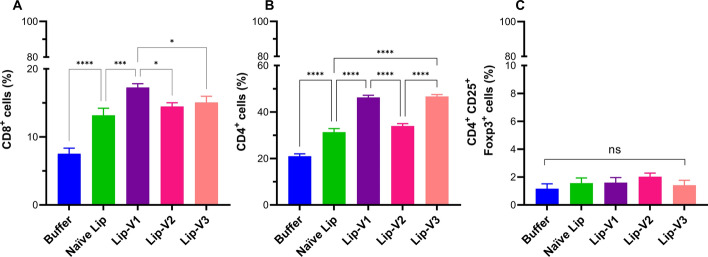
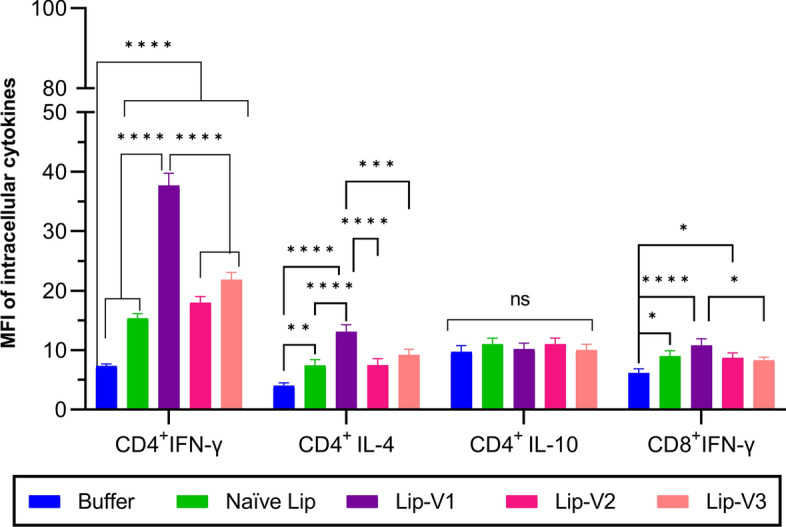
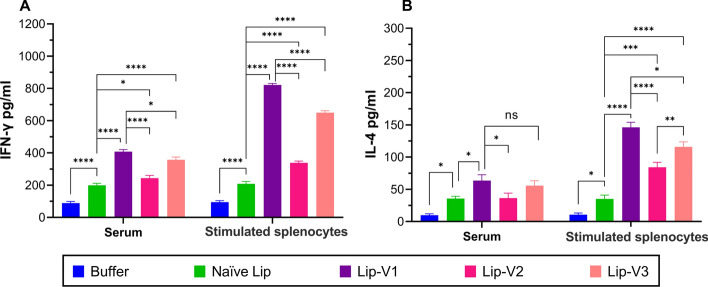
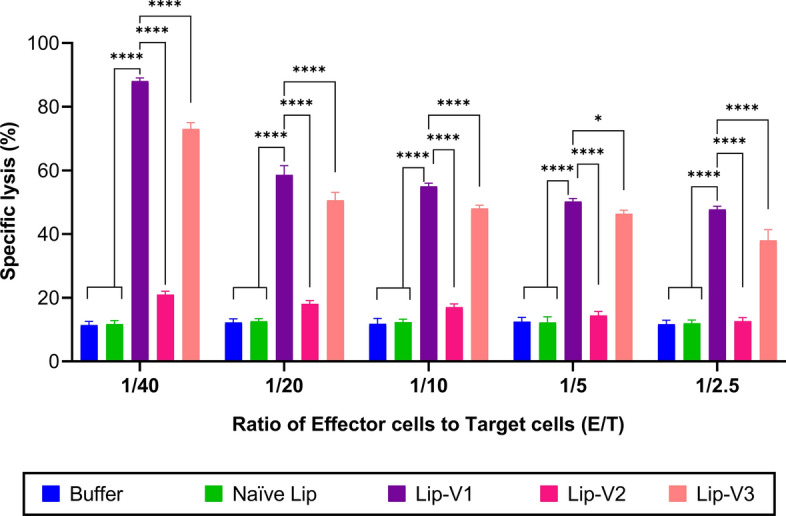
The mean diameter of peptide-encapsulated liposomes was around 135 nm, zeta potential of - 17 mV, and encapsulation efficiency of approximately 70%. Then, vaccine formulations were injected subcutaneously in mice bearing B16F10-established melanoma tumors and their efficiency in triggering immunological, and anti-tumor responses was evaluated. Our results represented that one of our designed VEGFR-2 peptide nanoliposomal formulations (Lip-V1) substantially activated CD4 ( < 0.0001) and CD8 ( < 0.001) T cell responses and significantly boosted the production of IFN-γ ( < 0.0001) and IL-4 ( < 0.0001). Furthermore, this formulation led to a significant decrease in tumor volume ( < 0.0001) and enhanced survival ( < 0.05) in mice.
Our findings suggest that the nanoliposomal formulation containing VEGFR-2 peptides could be a promising therapeutic vaccination approach capable of eliciting strong antigen-specific immunologic and anti-tumor responses.
The online version contains supplementary material available at 10.1186/s12645-023-00213-7.
血管内皮生长因子受体2(VEGFR-2)在黑色素瘤的发生和发展中起重要作用。肽疫苗通过将VEGFR-2作为肿瘤相关抗原靶向,并增强针对肿瘤细胞和肿瘤内皮细胞的免疫反应,在癌症免疫治疗中显示出巨大潜力。尽管如此,肽疫苗的低效率导致大多数研究的治疗效果中等。使用纳米脂质体增强肽疫苗的递送是提高肽疫苗疗效的重要策略。在这方面,我们使用免疫信息学工具设计了受小鼠MHC I和人HLA-A*02:01限制的VEGFR-2衍生肽,并选择了三种具有最高结合亲和力的肽。采用薄膜法加浴式超声将肽包封在纳米脂质体制剂中,并对其胶体性质进行了表征。
包封肽的脂质体平均直径约为135nm,ζ电位为-17mV,包封效率约为70%。然后,将疫苗制剂皮下注射到携带B16F10建立的黑色素瘤肿瘤的小鼠中,并评估其触发免疫和抗肿瘤反应的效率。我们的结果表明,我们设计的一种VEGFR-2肽纳米脂质体制剂(Lip-V1)显著激活了CD4(<0.0001)和CD8(<0.001)T细胞反应,并显著提高了IFN-γ(<0.0001)和IL-4(<0.0001)的产生。此外,该制剂导致小鼠肿瘤体积显著减小(<0.0001)并提高了生存率(<0.05)。
我们的研究结果表明,含有VEGFR-2肽的纳米脂质体制剂可能是一种有前途的治疗性疫苗接种方法,能够引发强烈的抗原特异性免疫和抗肿瘤反应。
在线版本包含可在10.1186/s12645-023-00213-7获取的补充材料。