Ogden Nicholas H, Turgeon Patricia, Fazil Aamir, Clark Julia, Gabriele-Rivet Vanessa, Tam Theresa, Ng Victoria
Public Health Risk Sciences Division, National Microbiology Laboratory, Public Health Agency of Canada, St-Hyacinthe, QC and Guelph, ON.
Office of the Chief Public Health Officer, Public Health Agency of Canada, Ottawa, ON.
Can Commun Dis Rep. 2022 Jul 7;48(7-8):292-302. doi: 10.14745/ccdr.v48i78a01.
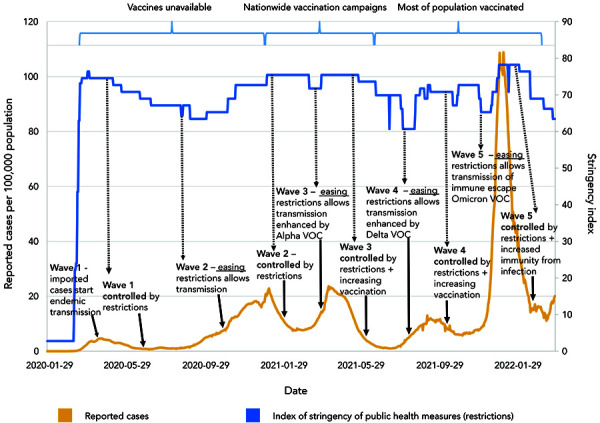
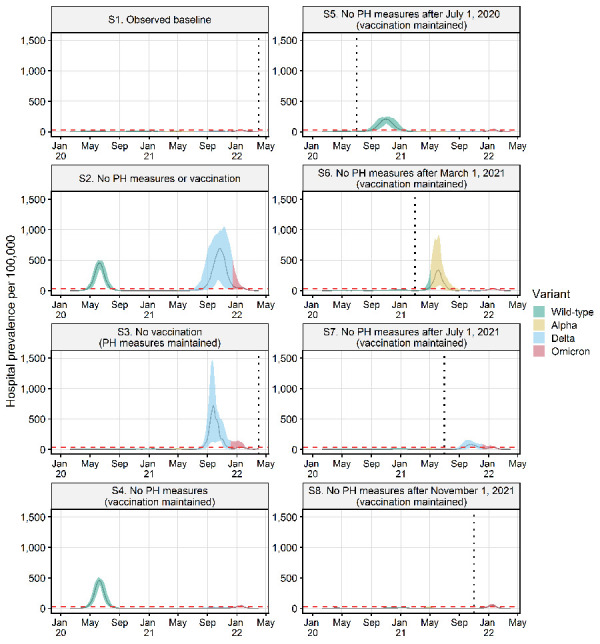
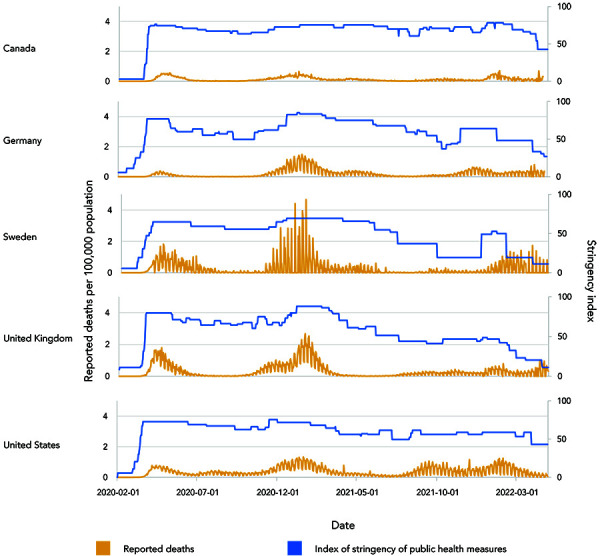
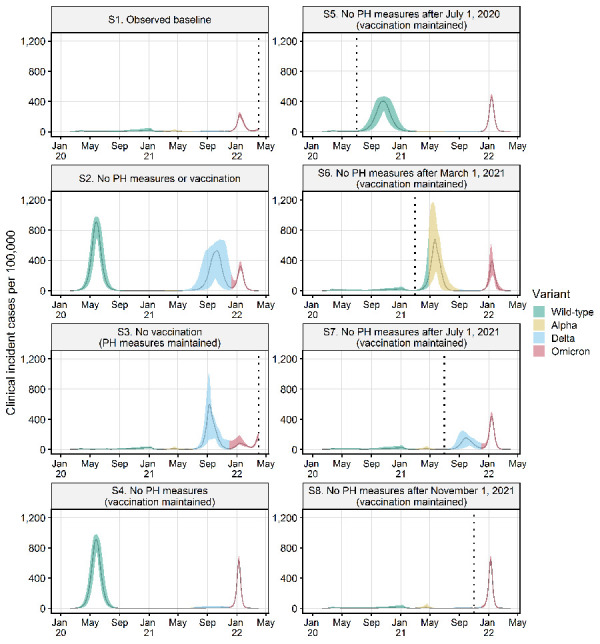
This study illustrates what may have happened, in terms of coronavirus disease 2019 (COVID-19) infections, hospitalizations and deaths in Canada, had public health measures not been used to control the COVID-19 epidemic, and had restrictions been lifted with low levels of vaccination, or no vaccination, of the Canadian population. The timeline of the epidemic in Canada, and the public health interventions used to control the epidemic, are reviewed. Comparisons against outcomes in other countries and counterfactual modelling illustrate the relative success of control of the epidemic in Canada. Together, these observations show that without the use of restrictive measures and without high levels of vaccination, Canada could have experienced substantially higher numbers of infections and hospitalizations and almost a million deaths.
本研究阐明了在加拿大,如果未采取公共卫生措施来控制2019冠状病毒病(COVID-19)疫情,且在加拿大人口疫苗接种率低或未接种疫苗的情况下就解除限制,那么在COVID-19感染、住院和死亡方面可能会发生什么情况。本文回顾了加拿大疫情的时间线以及用于控制疫情的公共卫生干预措施。与其他国家的结果进行比较以及反事实建模表明了加拿大在控制疫情方面取得的相对成功。这些观察结果共同表明,如果不采取限制性措施且没有高疫苗接种率,加拿大可能会出现数量大幅更多的感染和住院病例,以及近100万例死亡。