Department of Universal Health Coverage/Communicable Diseases Prevention and Control, Eastern Mediterranean Regional Office, World Health Organization, Cairo, Egypt.
World Health Organization, Headquarters, 1211, Geneva, Switzerland.
Malar J. 2023 Jun 19;22(1):187. doi: 10.1186/s12936-023-04545-y.
Anopheles stephensi is an efficient vector of both Plasmodium falciparum and Plasmodium vivax in South Asia and the Middle East. The spread of An. stephensi to countries within the Horn of Africa threatens progress in malaria control in this region as well as the rest of sub-Saharan Africa.
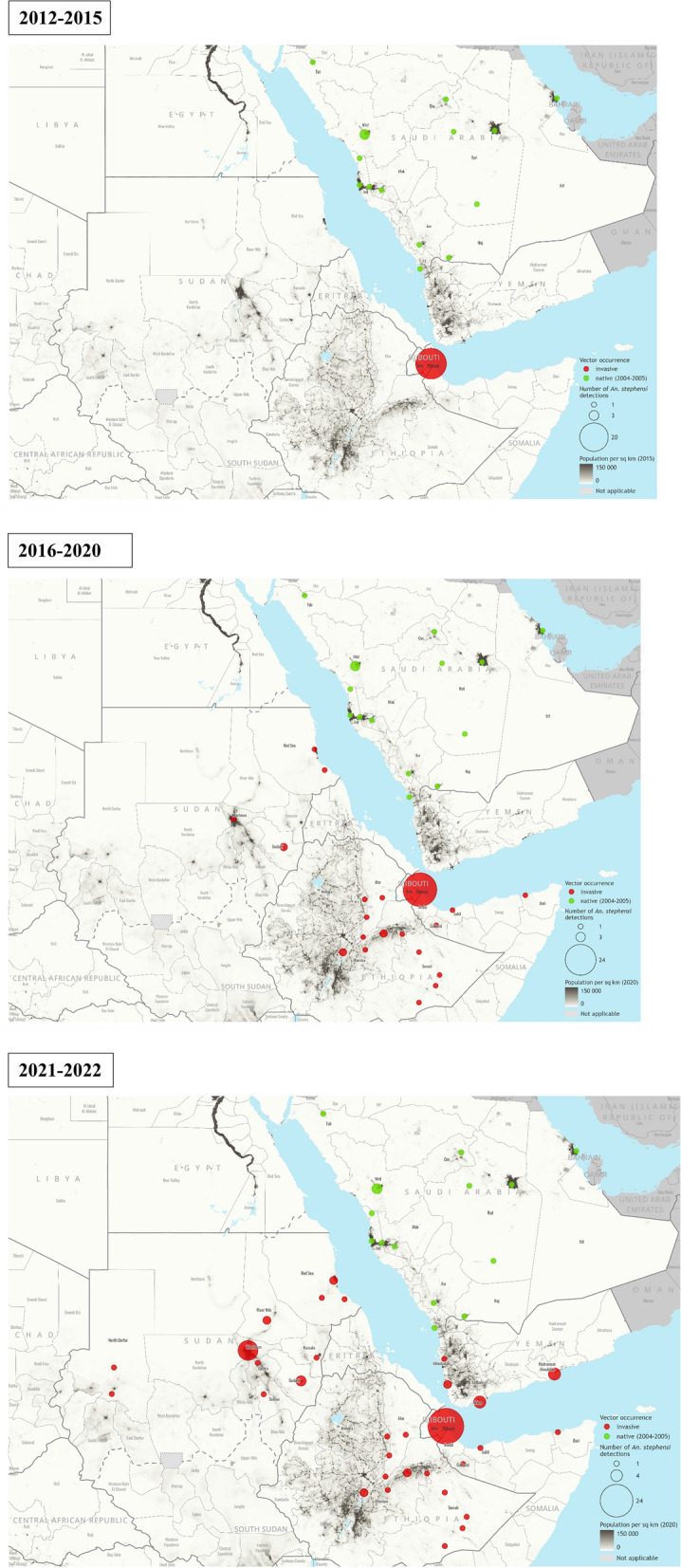
The available malaria data and the timeline for the detection of An. stephensi was reviewed to analyse the role of An. stephensi in malaria transmission in Horn of Africa of the Eastern Mediterranean Region (EMR) in Djibouti, Somalia, Sudan and Yemen.
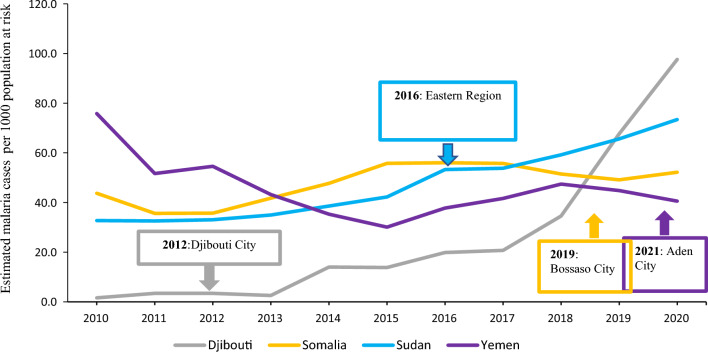
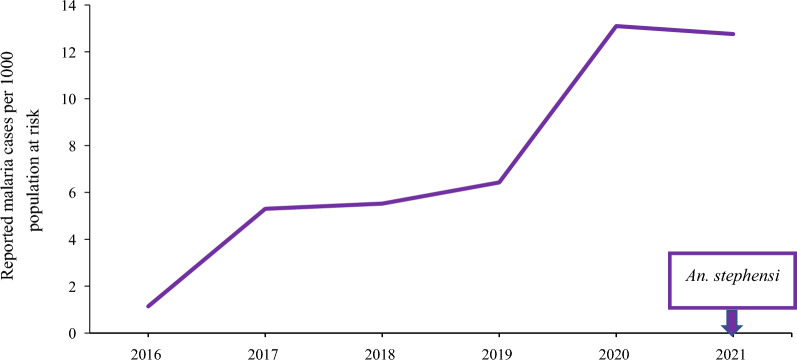
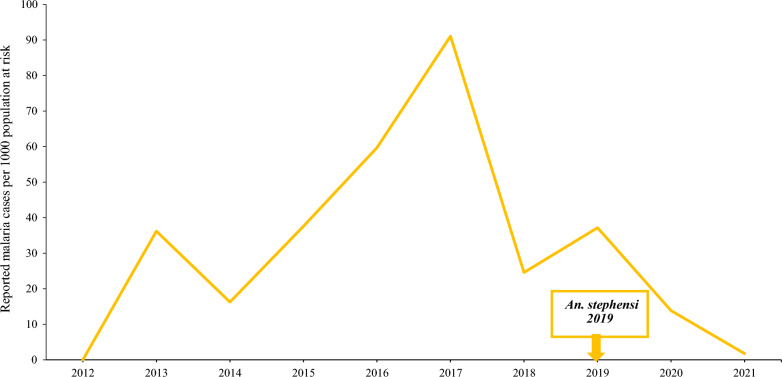
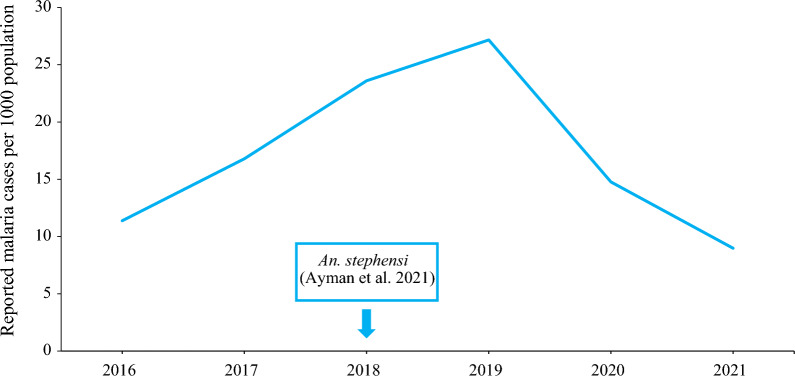
Malaria incidence in Horn of Africa of EMR and Yemen, increased from 41.6 in 2015 to 61.5 cases per 1000 in 2020. The four countries from this region, Djibouti, Somalia, Sudan and Yemen had reported the detection of An. stephensi as of 2021. In Djibouti City, following its detection in 2012, the estimated incidence increased from 2.5 cases per 1000 in 2013 to 97.6 cases per 1000 in 2020. However, its contribution to malaria transmission in other major cities and in other countries, is unclear because of other factors, quality of the urban malaria data, human mobility, uncertainty about the actual arrival time of An. stephensi and poor entomological surveillance.
While An. stephensi may explain a resurgence of malaria in Djibouti, further investigations are needed to understand its interpretation trends in urban malaria across the greater region. More investment for multisectoral approach and integrated surveillance and control should target all vectors particularly malaria and dengue vectors to guide interventions in urban areas.
在南亚和中东,致倦库蚊是恶性疟原虫和间日疟原虫的高效传播媒介。致倦库蚊向非洲之角国家的传播威胁到该地区以及撒哈拉以南非洲其他地区的疟疾控制进展。
回顾现有的疟疾数据和致倦库蚊的检测时间线,以分析致倦库蚊在东地中海区域(EMR)的非洲之角国家(吉布提、索马里、苏丹和也门)的疟疾传播中的作用。
EMR 和也门的非洲之角的疟疾发病率从 2015 年的 41.6 例/1000 人增加到 2020 年的 61.5 例/1000 人。该地区的四个国家,即吉布提、索马里、苏丹和也门,截至 2021 年已报告检测到致倦库蚊。在吉布提市,自 2012 年发现致倦库蚊以来,估计发病率从 2013 年的每 1000 人 2.5 例上升到 2020 年的每 1000 人 97.6 例。然而,由于其他因素、城市疟疾数据的质量、人口流动、致倦库蚊实际到达时间的不确定性以及较差的昆虫学监测,其对其他主要城市和其他国家的疟疾传播的贡献尚不清楚。
虽然致倦库蚊可能解释了吉布提疟疾的死灰复燃,但需要进一步调查以了解其在整个大区域城市疟疾中的流行趋势。应针对所有病媒,特别是疟疾和登革热病媒,为多部门方法和综合监测与控制提供更多投资,以指导城市地区的干预措施。