Abubakr Mustafa, Sami Hamza, Mahdi Isam, Altahir Omnia, Abdelbagi Hanadi, Mohamed Nouh Saad, Ahmed Ayman
Directorate of the Integrated Vector Management (IVM), Federal Ministry of Health, Khartoum 11111, Sudan.
Molecular Biology Unit, Sirius Training and Research Centre, Khartoum 11111, Sudan.
Biology (Basel). 2022 Mar 7;11(3):409. doi: 10.3390/biology11030409.
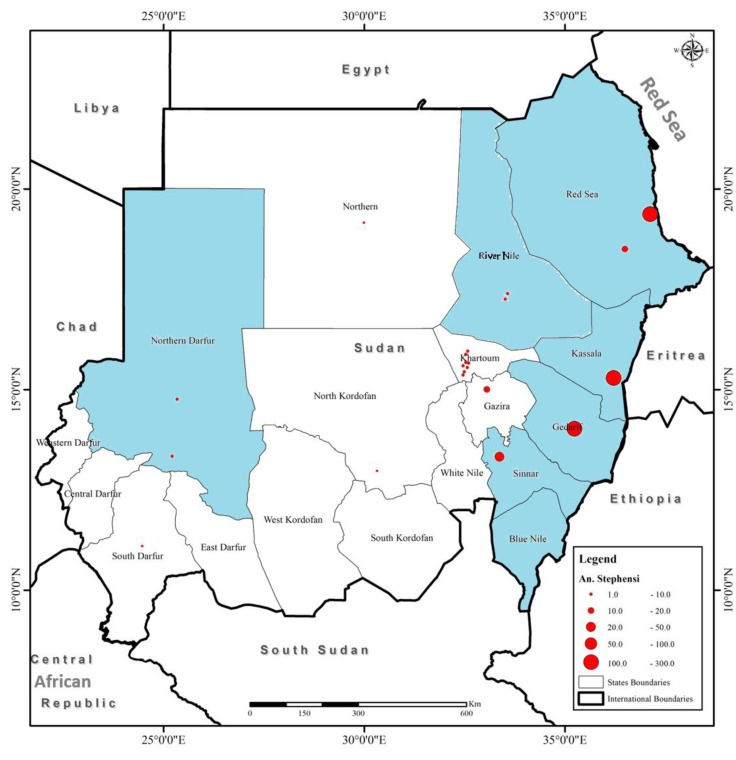
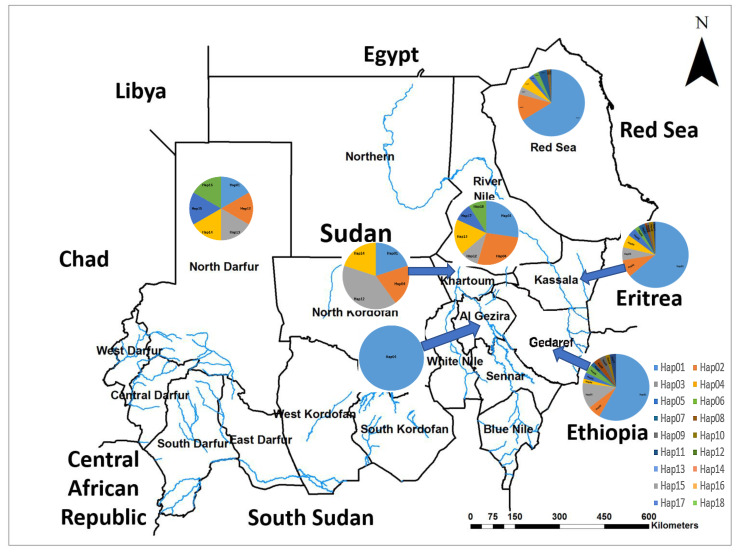
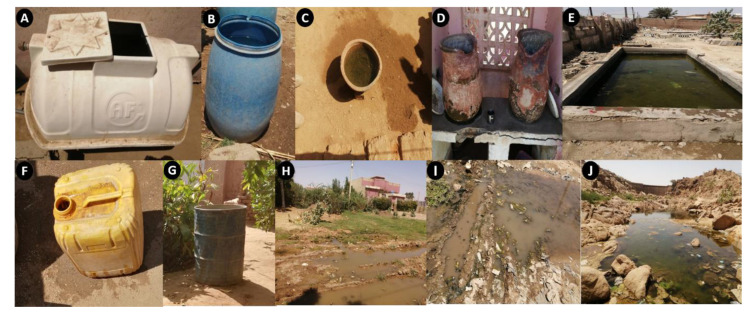
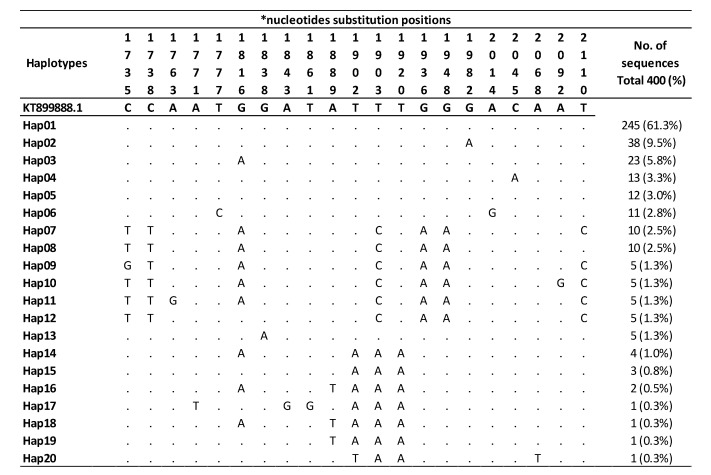
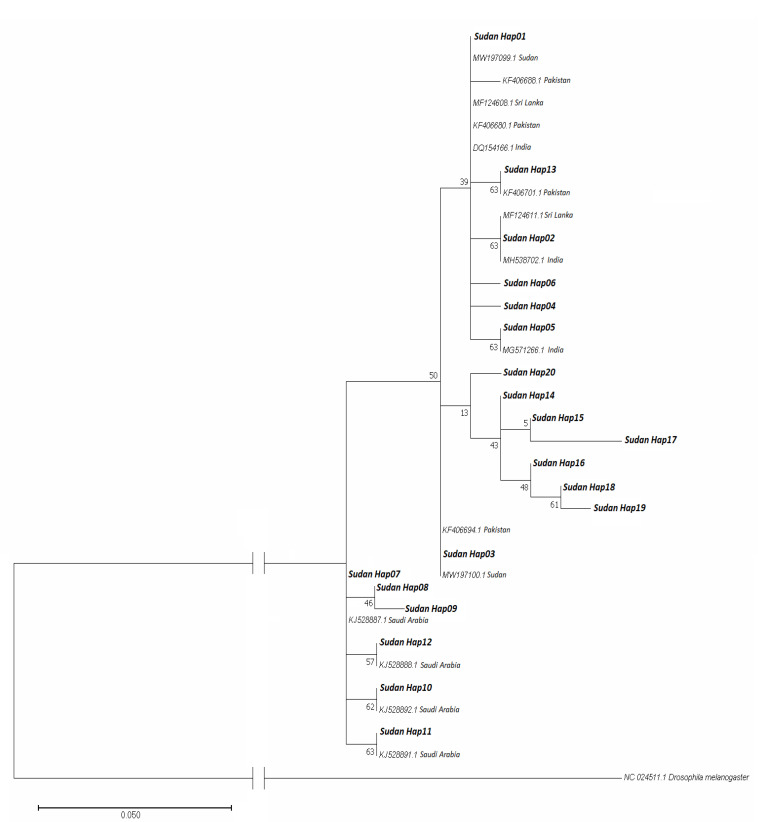
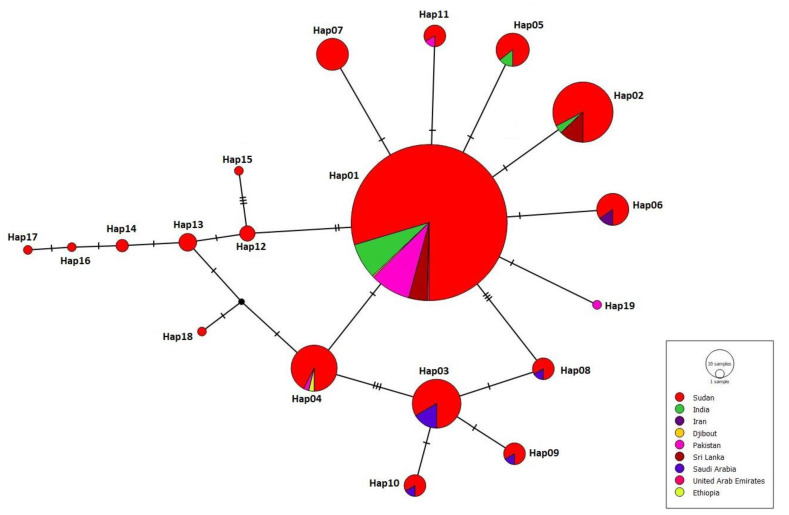
is an invasive Asian malaria vector that initially emerged in Africa in 2012 and was reported in Sudan in 2019. We investigated the distribution and population structure of throughout Sudan by using sequencing and molecular tools. We confirmed the presence of in eight border-states, identifying both natural and human-made breeding sites. Our analysis revealed the presence of 20 haplotypes with different distributions per state. This study revealed a countrywide spread of in Sudan, with confirmed presence in borders states with Chad, Egypt, Eritrea, Ethiopia, Libya, Republic of Central Africa, and South Sudan. Detection of at points of entry with these countries, particularly Chad, Libya, and South Sudan, indicates the rapid previously undetected spread of this invasive vector. Our phylogenetic and haplotype analysis suggested local establishment and evolutionary adaptation of the vector to different ecological and environmental conditions in Sudan. Urgent engagement of the global community is essential to control and prevent further spread into Africa.
是一种入侵性亚洲疟疾媒介,于2012年首次在非洲出现,并于2019年在苏丹被报告。我们通过测序和分子工具研究了其在苏丹全国的分布和种群结构。我们确认在八个边境州存在该媒介,识别出自然和人为繁殖地。我们的分析揭示了20种单倍型的存在,各州分布不同。这项研究揭示了该媒介在苏丹全国范围内的传播,在与乍得、埃及、厄立特里亚、埃塞俄比亚、利比亚、中非共和国和南苏丹接壤的边境州得到确认。在与这些国家的入境点,特别是乍得、利比亚和南苏丹检测到该媒介,表明这种入侵性媒介此前未被发现的快速传播。我们的系统发育和单倍型分析表明该媒介在苏丹当地定殖并对不同生态和环境条件进行了进化适应。全球社会的紧急参与对于控制和防止其进一步传播到非洲至关重要。