Zhu Zhijie, Tang Rui, Li Chaoran, An Xingda, He Le
Institute of Functional Nano & Soft Materials (FUNSOM), Soochow University, Suzhou, 215123, P. R. China.
Jiangsu Key Laboratory for Carbon-Based Functional Materials & Devices, Soochow University, Suzhou, Jiangsu, 215123, P. R. China.
Adv Sci (Weinh). 2023 Aug;10(24):e2302568. doi: 10.1002/advs.202302568. Epub 2023 Jun 20.
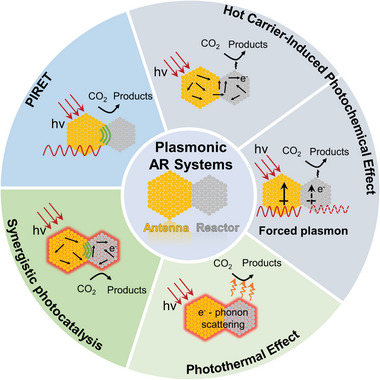
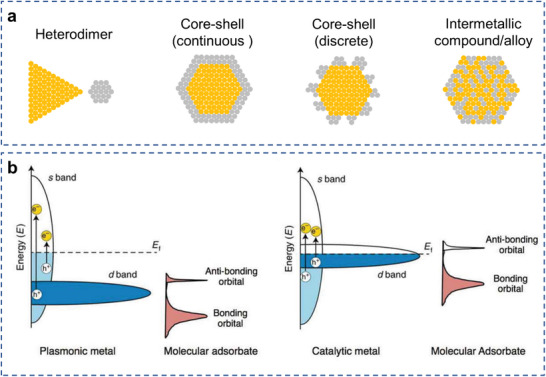
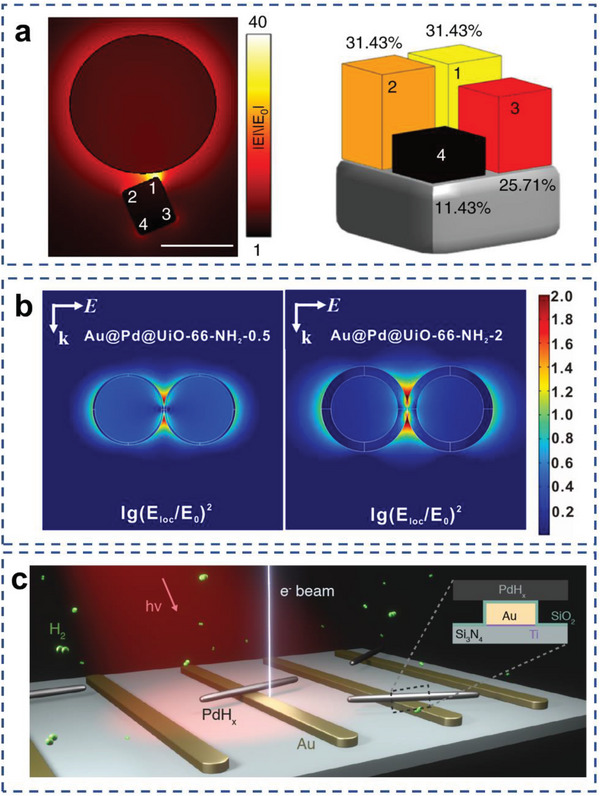
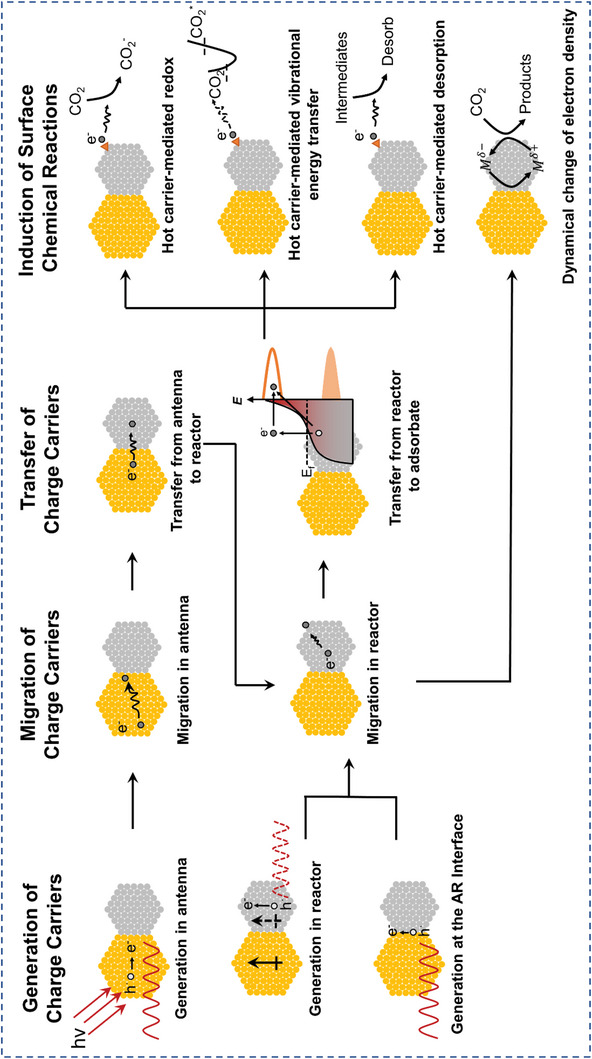
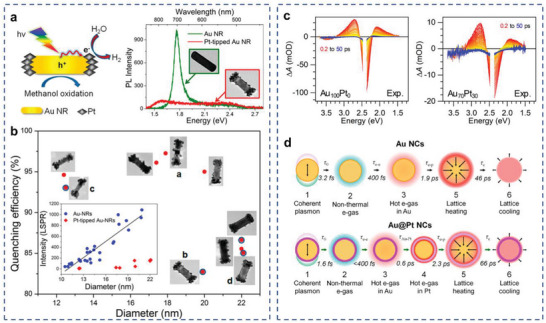
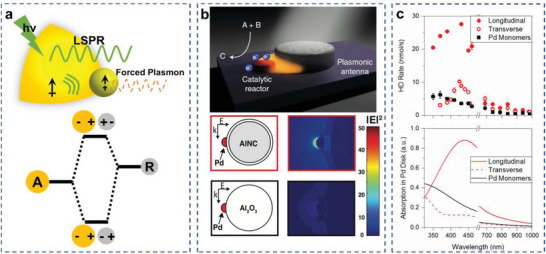
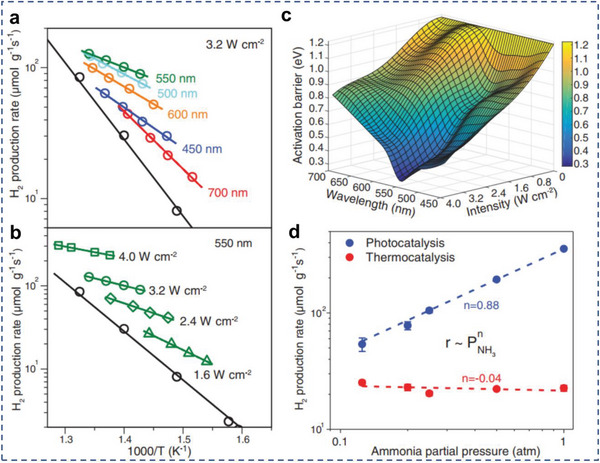
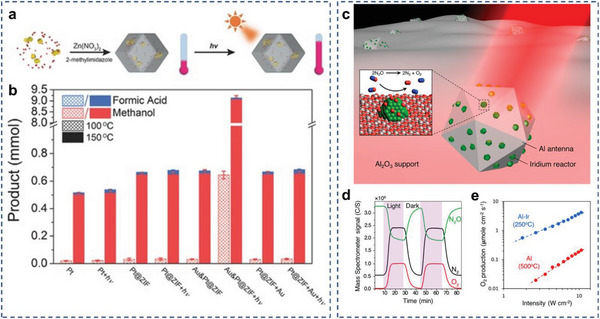
Sunlight-driven photocatalytic CO reduction provides intriguing opportunities for addressing the energy and environmental crises faced by humans. The rational combination of plasmonic antennas and active transition metal-based catalysts, known as "antenna-reactor" (AR) nanostructures, allows the simultaneous optimization of optical and catalytic performances of photocatalysts, and thus holds great promise for CO photocatalysis. Such design combines the favorable absorption, radiative, and photochemical properties of the plasmonic components with the great catalytic potentials and conductivities of the reactor components. In this review, recent developments of photocatalysts based on plasmonic AR systems for various gas-phase CO reduction reactions with emphasis on the electronic structure of plasmonic and catalytic metals, plasmon-driven catalytic pathways, and the role of AR complex in photocatalytic processes are summarized. Perspectives in terms of challenges and future research in this area are also highlighted.
阳光驱动的光催化CO还原为解决人类面临的能源和环境危机提供了引人入胜的机遇。等离子体天线与活性过渡金属基催化剂的合理组合,即所谓的“天线-反应器”(AR)纳米结构,能够同时优化光催化剂的光学和催化性能,因此在CO光催化方面具有巨大潜力。这种设计将等离子体组分的良好吸收、辐射和光化学性质与反应器组分的巨大催化潜力和电导率结合起来。在这篇综述中,总结了基于等离子体AR系统的光催化剂在各种气相CO还原反应中的最新进展,重点关注等离子体和催化金属的电子结构、等离子体驱动的催化途径以及AR复合物在光催化过程中的作用。还强调了该领域面临的挑战和未来研究的展望。