Behavioral Neuroscience Branch, National Institute On Drug Abuse Intramural Research Program, National Institutes of Health, DHHS, Baltimore, MD, 21224, USA.
Psychopharmacology (Berl). 2023 Jul;240(7):1561-1571. doi: 10.1007/s00213-023-06390-y. Epub 2023 Jun 21.
Xylazine has emerged in recent years as an adulterant in an increasing number of opioid-positive overdose deaths in the United States. Although its exact role in opioid-induced overdose deaths is largely unknown, xylazine is known to depress vital functions and cause hypotension, bradycardia, hypothermia, and respiratory depression.
In this study, we examined the brain-specific hypothermic and hypoxic effects of xylazine and its mixtures with fentanyl and heroin in freely moving rats.
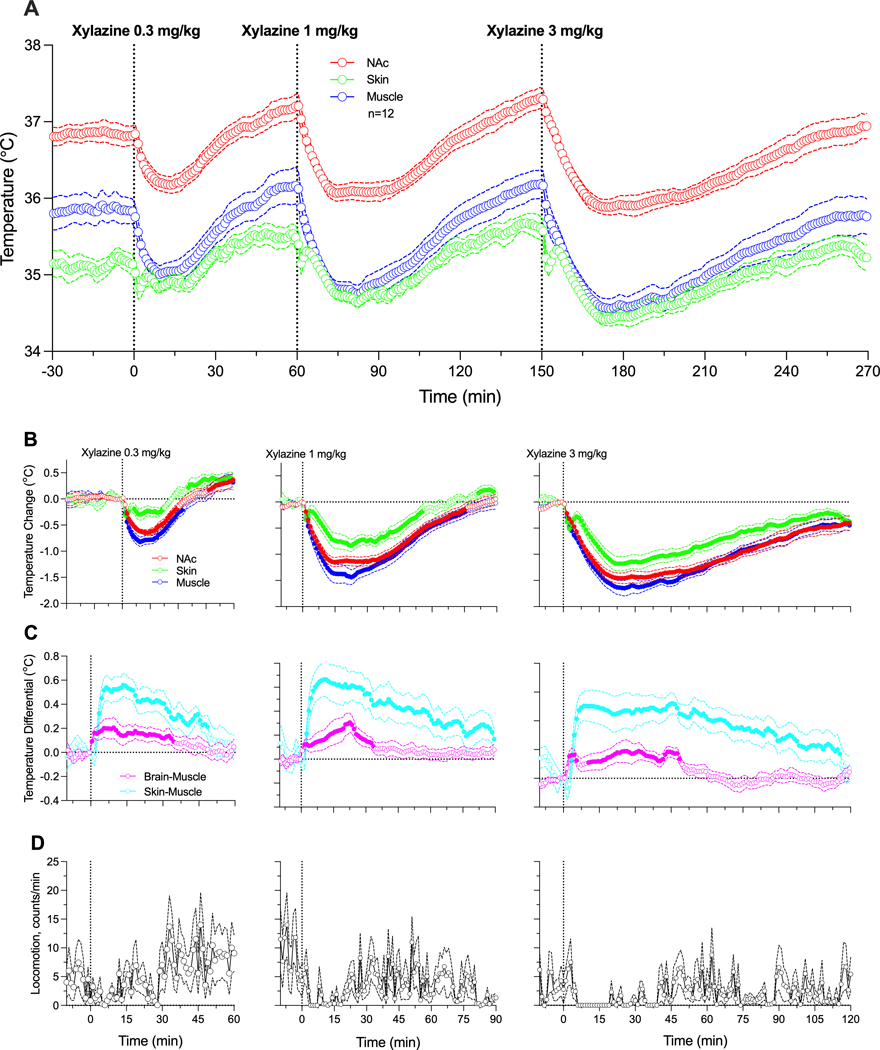
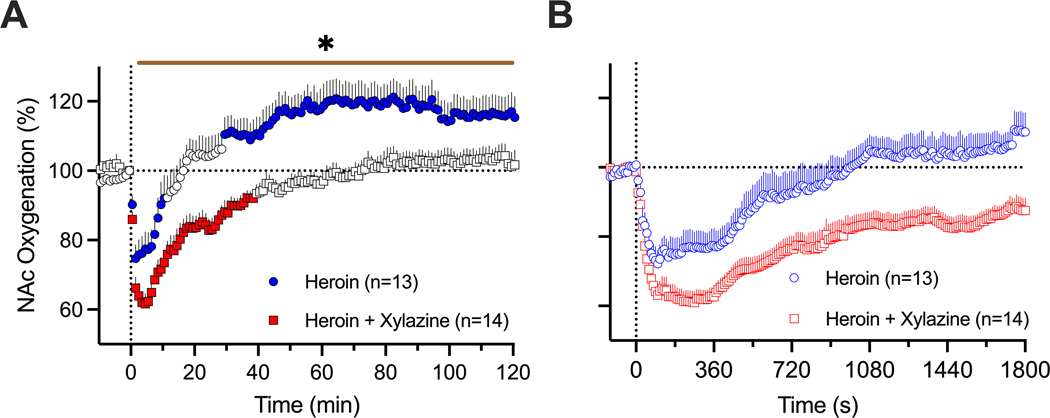
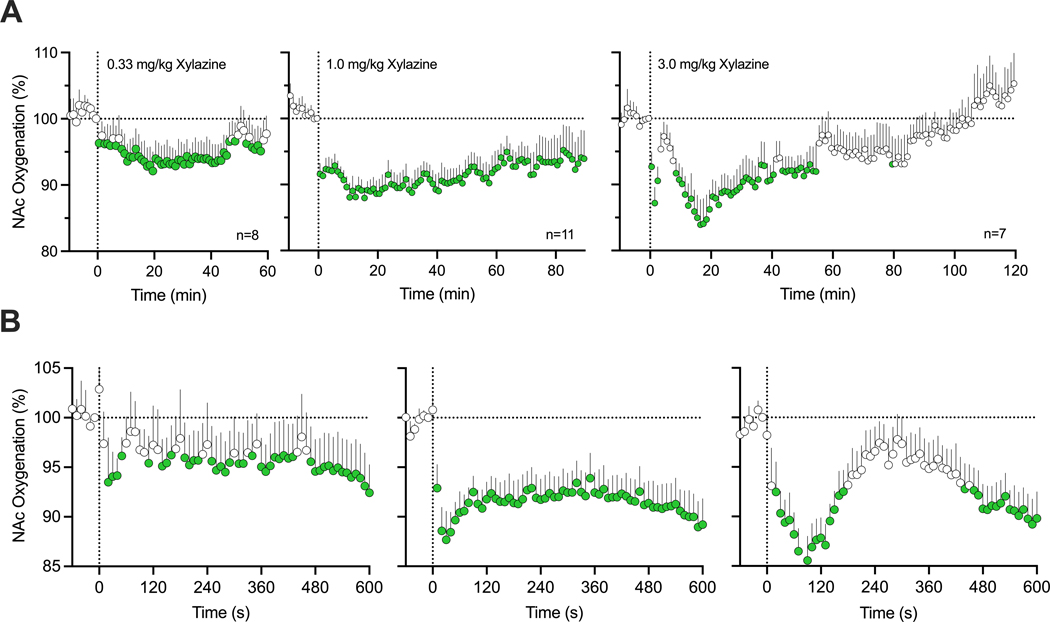
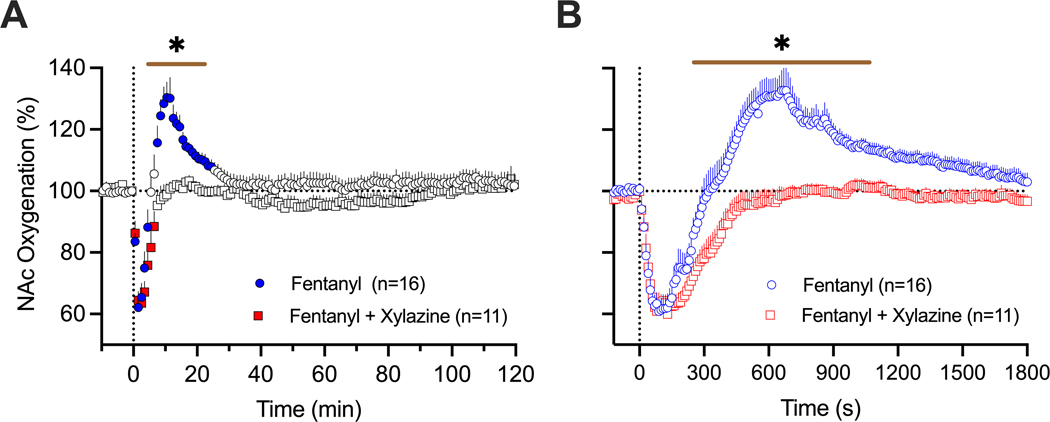
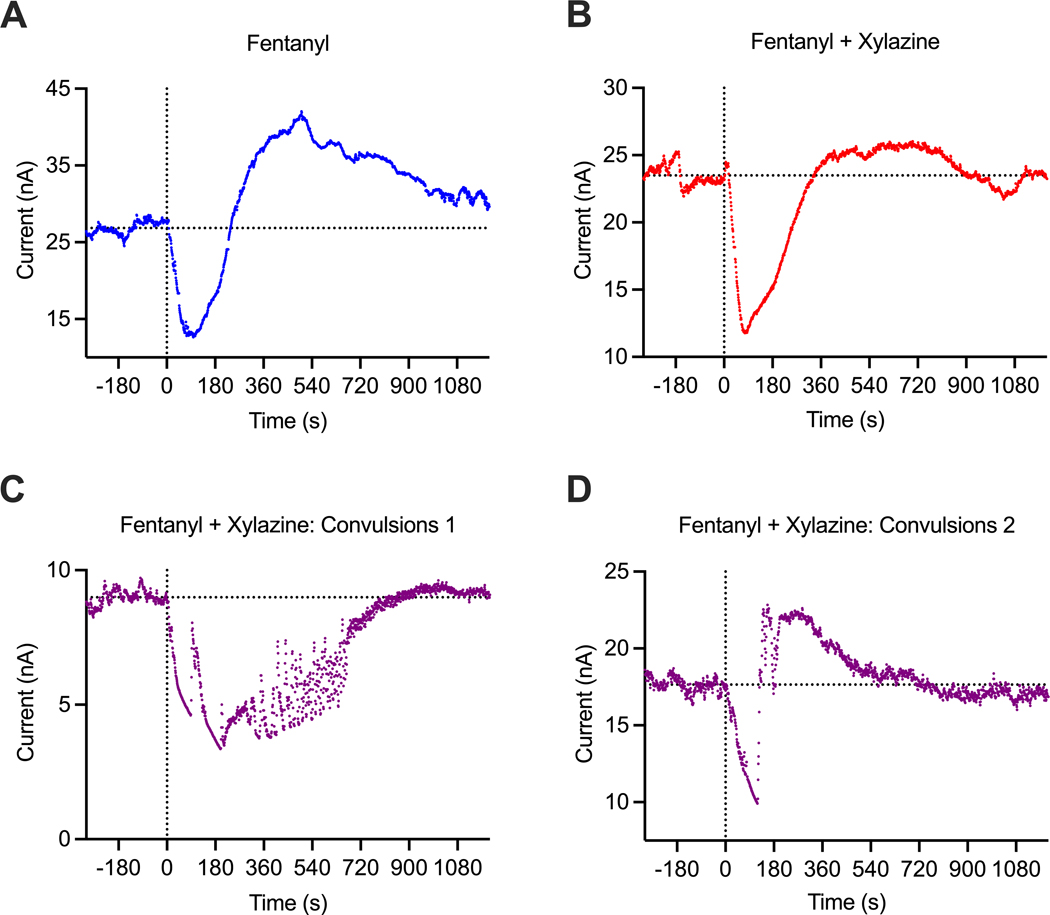
In the temperature experiment, we found that intravenous xylazine at low, human-relevant doses (0.33, 1.0, 3.0 mg/kg) dose-dependently decreases locomotor activity and induces modest but prolonged brain and body hypothermia. In the electrochemical experiment, we found that xylazine at the same doses dose-dependently decreases nucleus accumbens oxygenation. In contrast to relatively weak and prolonged decreases induced by xylazine, intravenous fentanyl (20 μg/kg) and heroin (600 μg/kg) induce stronger biphasic brain oxygen responses, with the initial rapid and strong decrease, resulting from respiratory depression, followed by a slower, more prolonged increase reflecting a post-hypoxic compensatory phase, with fentanyl acting much quicker than heroin. The xylazine-fentanyl mixture eliminated the hyperoxic phase of oxygen response and prolonged brain hypoxia, suggesting xylazine-induced attenuation of the brain's compensatory mechanisms to counteract brain hypoxia. The xylazine-heroin mixture strongly potentiated the initial oxygen decrease, and the pattern lacked the hyperoxic portion of the biphasic oxygen response, suggesting more robust and prolonged brain hypoxia.
These findings suggest that xylazine exacerbates the life-threatening effects of opioids, proposing worsened brain hypoxia as the mechanism contributing to xylazine-positive opioid-overdose deaths.
近年来,在美国,越来越多的阿片类药物阳性过量死亡案例中发现了苯环己哌啶(Xylazine)的掺杂物。尽管其在阿片类药物引起的过量死亡中的具体作用在很大程度上尚不清楚,但已知苯环己哌啶会抑制重要功能并导致低血压、心动过缓、体温过低和呼吸抑制。
在这项研究中,我们在自由活动的大鼠中检查了苯环己哌啶及其与芬太尼和海洛因混合物对大脑特异性的降温作用和缺氧作用。
在温度实验中,我们发现静脉内低剂量(0.33、1.0、3.0mg/kg)的苯环己哌啶呈剂量依赖性地降低运动活动并引起适度但持久的大脑和身体降温。在电化学实验中,我们发现相同剂量的苯环己哌啶呈剂量依赖性地降低伏隔核的氧合作用。与苯环己哌啶引起的相对较弱且持久的降低相比,静脉内芬太尼(20μg/kg)和海洛因(600μg/kg)引起更强的双相大脑氧反应,初始快速而强烈的降低是由呼吸抑制引起的,随后是较慢、更持久的增加,反映出缺氧后的代偿阶段,芬太尼的作用比海洛因快得多。苯环己哌啶-芬太尼混合物消除了氧反应的高氧相并延长了脑缺氧,表明苯环己哌啶诱导的大脑代偿机制减弱,无法对抗脑缺氧。苯环己哌啶-海洛因混合物强烈增强了初始氧减少,并且该模式缺乏双相氧反应的高氧部分,表明更严重和持久的脑缺氧。
这些发现表明苯环己哌啶加剧了阿片类药物的致命影响,提出了脑缺氧恶化作为导致苯环己哌啶阳性阿片类药物过量死亡的机制。