Heros Robert, Patterson Denis, Huygen Frank, Skaribas Ioannis, Schultz David, Wilson Derron, Fishman Michael, Falowski Steven, Moore Gregory, Kallewaard Jan Willem, Dehghan Soroush, Kyani Anahita, Mansouri Misagh
Spinal Diagnostics, Tualatin, OR, USA.
Nevada Advanced Pain Specialists, Reno, NV, USA.
Bioelectron Med. 2023 Jun 21;9(1):13. doi: 10.1186/s42234-023-00115-4.
Neurostimulation is an effective therapy for treating and management of refractory chronic pain. However, the complex nature of pain and infrequent in-clinic visits, determining subject's long-term response to the therapy remains difficult. Frequent measurement of pain in this population can help with early diagnosis, disease progression monitoring, and evaluating long-term therapeutic efficacy. This paper compares the utilization of the common subjective patient-reported outcomes with objective measures captured through a wearable device for predicting the response to neurostimulation therapy.
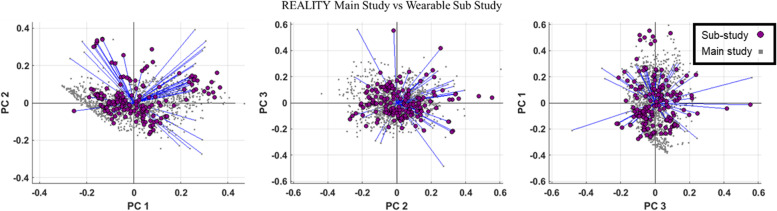
Data is from the ongoing international prospective post-market REALITY clinical study, which collects long-term patient-reported outcomes from 557 subjects implanted by Spinal Cord Stimulator (SCS) or Dorsal Root Ganglia (DRG) neurostimulators. The REALITY sub-study was designed for collecting additional wearables data on a subset of 20 participants implanted with SCS devices for up to six months post implantation. We first implemented a combination of dimensionality reduction algorithms and correlation analyses to explore the mathematical relationships between objective wearable data and subjective patient-reported outcomes. We then developed machine learning models to predict therapy outcome based on the subject's response to the numerical rating scale (NRS) or patient global impression of change (PGIC).
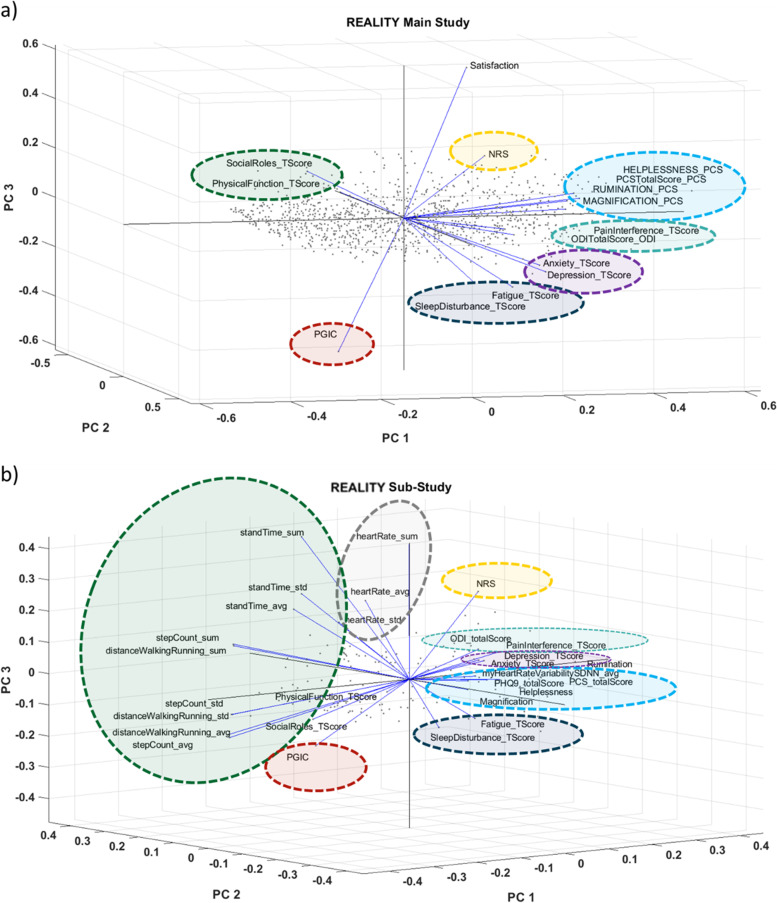
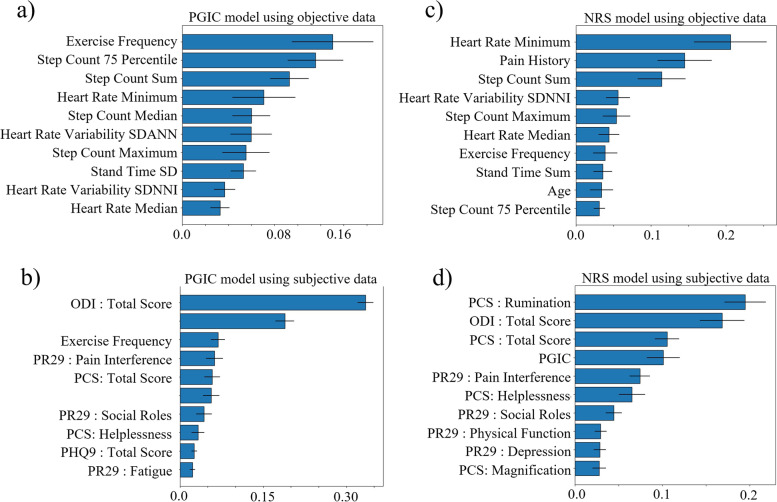
Principal component analysis showed that psychological aspects of pain were associated with heart rate variability, while movement-related measures were strongly associated with patient-reported outcomes related to physical function and social role participation. Our machine learning models using objective wearable data predicted PGIC and NRS outcomes with high accuracy without subjective data. The prediction accuracy was higher for PGIC compared with the NRS using subjective-only measures primarily driven by the patient satisfaction feature. Similarly, the PGIC questions reflect an overall change since the study onset and could be a better predictor of long-term neurostimulation therapy outcome.
The significance of this study is to introduce a novel use of wearable data collected from a subset of patients to capture multi-dimensional aspects of pain and compare the prediction power with the subjective data from a larger data set. The discovery of pain digital biomarkers could result in a better understanding of the patient's response to therapy and their general well-being.
神经刺激是治疗和管理难治性慢性疼痛的有效疗法。然而,由于疼痛的复杂性以及门诊就诊次数较少,确定患者对该疗法的长期反应仍然困难。对这一人群进行频繁的疼痛测量有助于早期诊断、疾病进展监测以及评估长期治疗效果。本文比较了常见的患者主观报告结局指标与通过可穿戴设备获取的客观测量指标在预测神经刺激治疗反应方面的应用情况。
数据来自正在进行的国际前瞻性上市后REALITY临床研究,该研究收集了557名接受脊髓刺激器(SCS)或背根神经节(DRG)神经刺激器植入的患者的长期患者报告结局。REALITY子研究旨在收集20名植入SCS设备的参与者在植入后长达六个月的额外可穿戴设备数据。我们首先实施了降维算法和相关性分析的组合,以探索客观可穿戴数据与患者主观报告结局之间的数学关系。然后,我们开发了机器学习模型,根据患者对数字评分量表(NRS)或患者总体变化印象(PGIC)的反应来预测治疗结果。
主成分分析表明,疼痛的心理方面与心率变异性相关,而与运动相关的测量指标与患者报告的与身体功能和社会角色参与相关的结局密切相关。我们使用客观可穿戴数据的机器学习模型在没有主观数据的情况下高精度地预测了PGIC和NRS结局。与仅使用主要由患者满意度特征驱动的主观测量指标的NRS相比,PGIC的预测准确性更高。同样,PGIC问题反映了自研究开始以来的总体变化,可能是长期神经刺激治疗结果的更好预测指标。
本研究的意义在于引入了从一部分患者收集的可穿戴数据的新用途,以捕捉疼痛的多维度方面,并将预测能力与来自更大数据集的主观数据进行比较。疼痛数字生物标志物的发现可能会更好地理解患者对治疗的反应及其总体健康状况。