• 文献检索
  • 文档翻译
  • 深度研究
  • 学术资讯
  • Suppr Zotero 插件Zotero 插件
  • 邀请有礼
  • 套餐&价格
  • 历史记录
应用&插件
Suppr Zotero 插件Zotero 插件浏览器插件Mac 客户端Windows 客户端微信小程序
定价
高级版会员购买积分包购买API积分包
服务
文献检索文档翻译深度研究API 文档MCP 服务
关于我们
关于 Suppr公司介绍联系我们用户协议隐私条款
关注我们

Suppr 超能文献

核心技术专利:CN118964589B侵权必究
粤ICP备2023148730 号-1Suppr @ 2026

文献检索

告别复杂PubMed语法,用中文像聊天一样搜索,搜遍4000万医学文献。AI智能推荐,让科研检索更轻松。

立即免费搜索

文件翻译

保留排版,准确专业,支持PDF/Word/PPT等文件格式,支持 12+语言互译。

免费翻译文档

深度研究

AI帮你快速写综述,25分钟生成高质量综述,智能提取关键信息,辅助科研写作。

立即免费体验

在图像卷积网络中对分类群进行排序可提高基于微生物组的机器学习准确性。

Ordering taxa in image convolution networks improves microbiome-based machine learning accuracy.

机构信息

Department of Mathematics, Bar-Ilan University, Ramat Gan, Israel.

The Azrieli Faculty of Medicine, Bar-Ilan University, Safed, Israel.

出版信息

Gut Microbes. 2023 Jan-Dec;15(1):2224474. doi: 10.1080/19490976.2023.2224474.

DOI:10.1080/19490976.2023.2224474
PMID:37345233
原文链接:https://pmc.ncbi.nlm.nih.gov/articles/PMC10288916/
Abstract

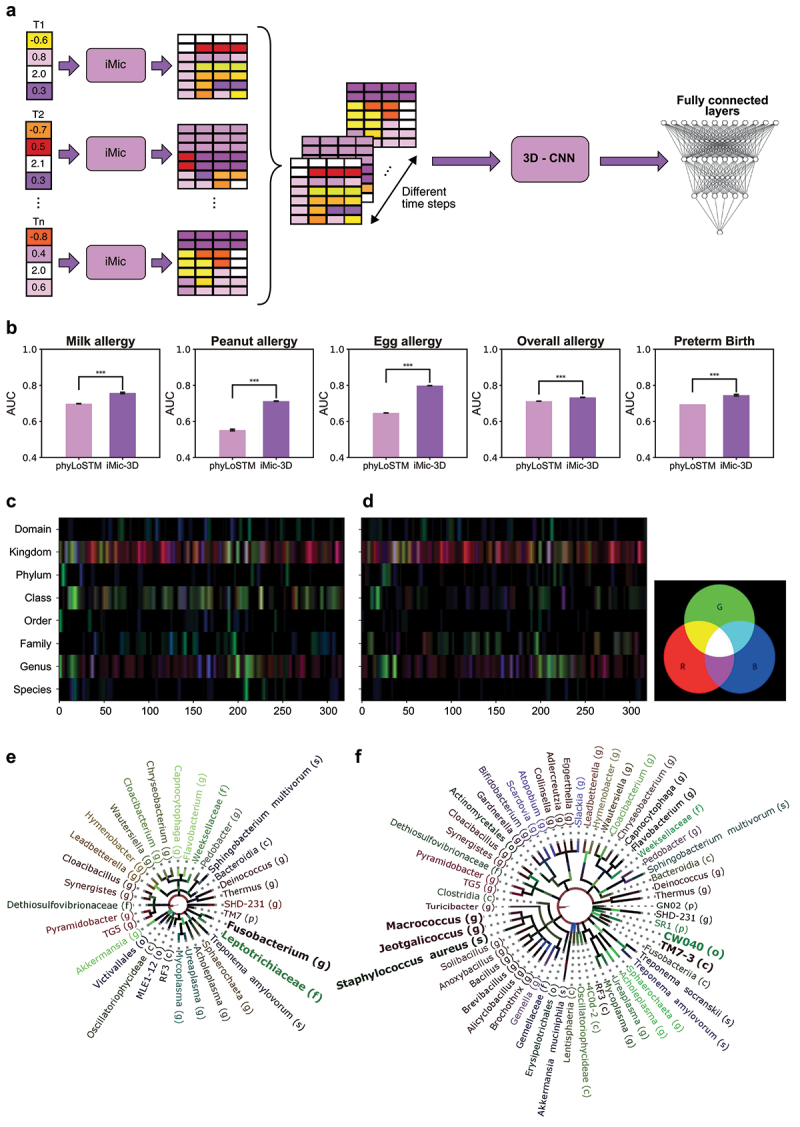
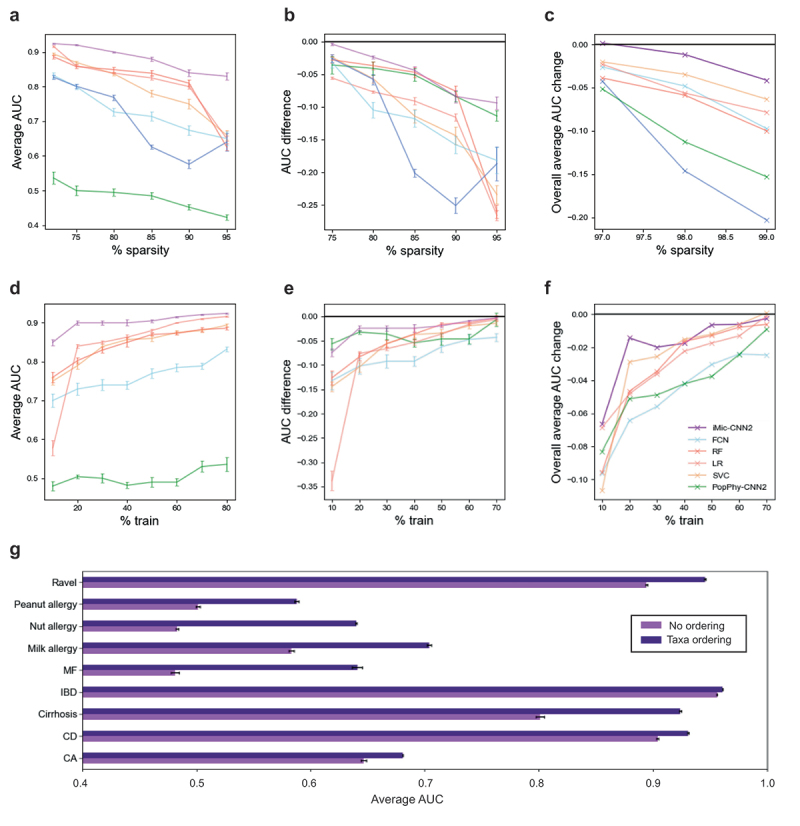
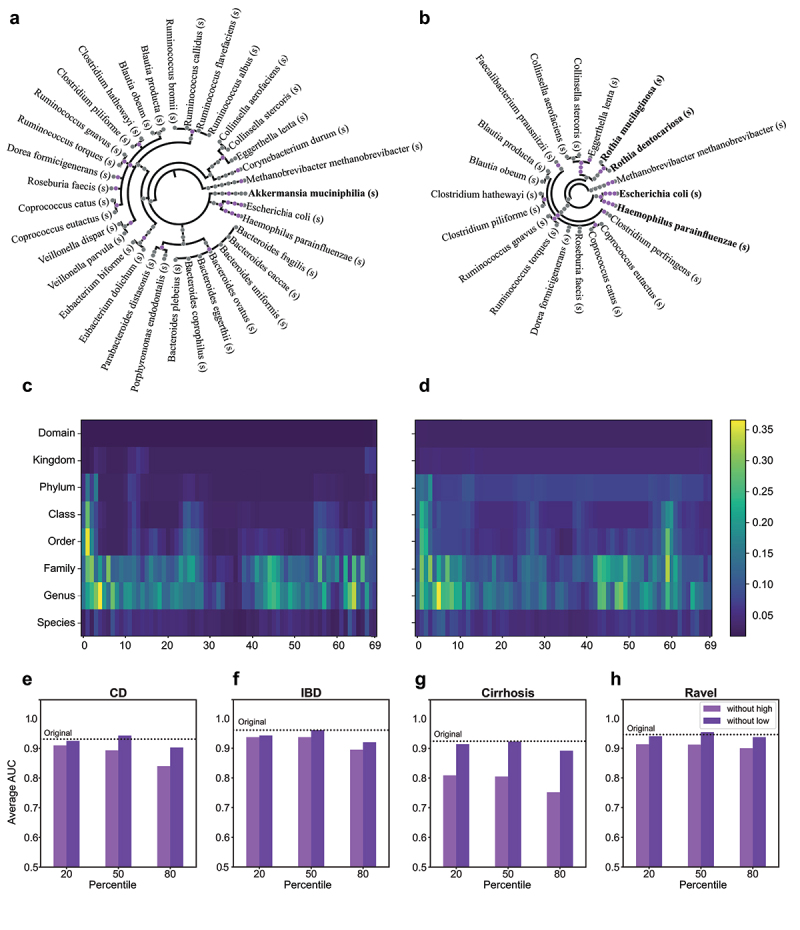
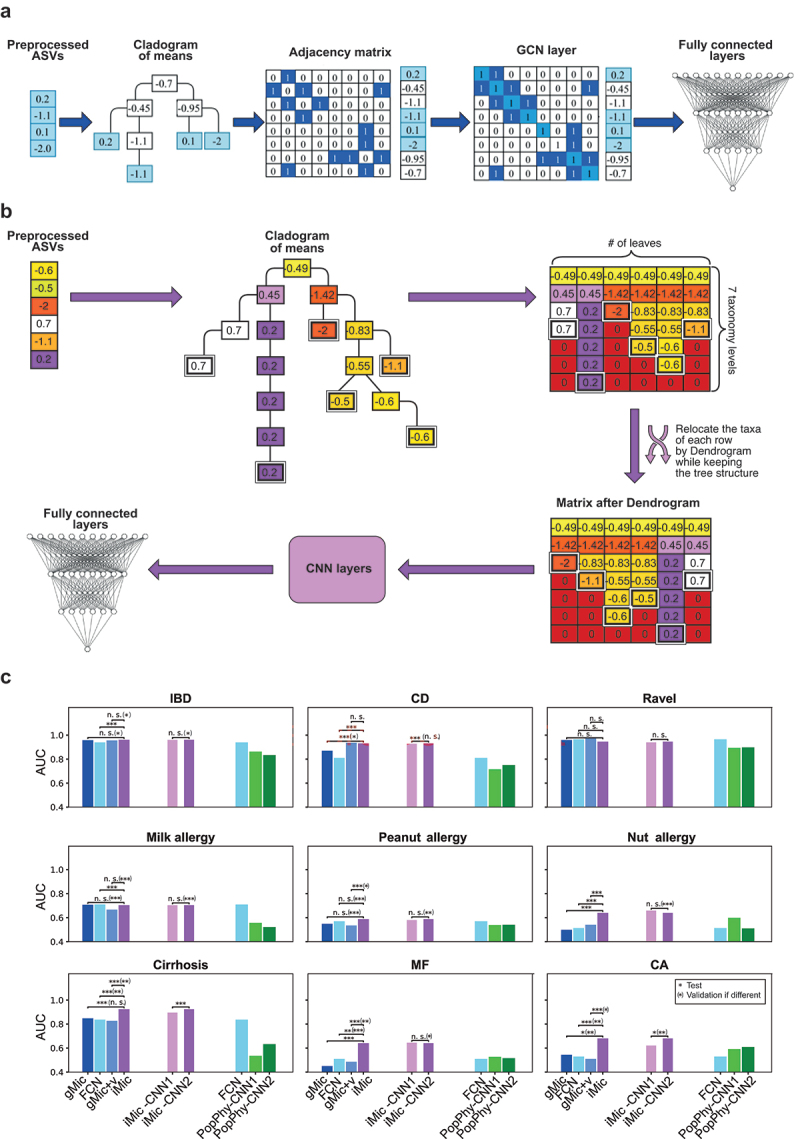
The human gut microbiome is associated with a large number of disease etiologies. As such, it is a natural candidate for machine-learning-based biomarker development for multiple diseases and conditions. The microbiome is often analyzed using 16S rRNA gene sequencing or shotgun metagenomics. However, several properties of microbial sequence-based studies hinder machine learning (ML), including non-uniform representation, a small number of samples compared with the dimension of each sample, and sparsity of the data, with the majority of taxa present in a small subset of samples. We show here using a graph representation that the cladogram structure is as informative as the taxa frequency. We then suggest a novel method to combine information from different taxa and improve data representation for ML using microbial taxonomy. iMic (image microbiome) translates the microbiome to images through an iterative ordering scheme, and applies convolutional neural networks to the resulting image. We show that iMic has a higher precision in static microbiome gene sequence-based ML than state-of-the-art methods. iMic also facilitates the interpretation of the classifiers through an explainable artificial intelligence (AI) algorithm to iMic to detect taxa relevant to each condition. iMic is then extended to dynamic microbiome samples by translating them to movies.

摘要

人类肠道微生物组与许多疾病病因有关。因此,它是基于机器学习的多种疾病和病症生物标志物开发的自然候选者。微生物组通常使用 16S rRNA 基因测序或鸟枪法宏基因组学进行分析。然而,基于微生物序列的研究的几个特性会阻碍机器学习(ML),包括非均匀表示、与每个样本的维度相比样本数量较少,以及数据稀疏,大多数分类群存在于少数样本中。我们在这里使用图表示法表明,系统发育树结构与分类群频率一样具有信息量。然后,我们建议使用一种新方法来结合来自不同分类群的信息,并使用微生物分类学来改善 ML 中的数据表示。iMic(图像微生物组)通过迭代排序方案将微生物组转换为图像,并将卷积神经网络应用于生成的图像。我们表明,iMic 在基于静态微生物组基因序列的 ML 中的精度高于最新方法。iMic 还通过可解释的人工智能(AI)算法对 iMic 进行解释,以检测与每种情况相关的分类群,从而有助于解释分类器。iMic 然后通过将其转换为电影来扩展到动态微生物组样本。
https://cdn.ncbi.nlm.nih.gov/pmc/blobs/9225/10288916/f68f663bb5e0/KGMI_A_2224474_F0004_OC.jpg
https://cdn.ncbi.nlm.nih.gov/pmc/blobs/9225/10288916/c04efe73c321/KGMI_A_2224474_F0001_OC.jpg
https://cdn.ncbi.nlm.nih.gov/pmc/blobs/9225/10288916/fb8ce476c1fd/KGMI_A_2224474_F0002_OC.jpg
https://cdn.ncbi.nlm.nih.gov/pmc/blobs/9225/10288916/84a2437b2fd2/KGMI_A_2224474_F0003_OC.jpg
https://cdn.ncbi.nlm.nih.gov/pmc/blobs/9225/10288916/f68f663bb5e0/KGMI_A_2224474_F0004_OC.jpg
https://cdn.ncbi.nlm.nih.gov/pmc/blobs/9225/10288916/c04efe73c321/KGMI_A_2224474_F0001_OC.jpg
https://cdn.ncbi.nlm.nih.gov/pmc/blobs/9225/10288916/fb8ce476c1fd/KGMI_A_2224474_F0002_OC.jpg
https://cdn.ncbi.nlm.nih.gov/pmc/blobs/9225/10288916/84a2437b2fd2/KGMI_A_2224474_F0003_OC.jpg
https://cdn.ncbi.nlm.nih.gov/pmc/blobs/9225/10288916/f68f663bb5e0/KGMI_A_2224474_F0004_OC.jpg

相似文献

1
Ordering taxa in image convolution networks improves microbiome-based machine learning accuracy.在图像卷积网络中对分类群进行排序可提高基于微生物组的机器学习准确性。
Gut Microbes. 2023 Jan-Dec;15(1):2224474. doi: 10.1080/19490976.2023.2224474.
2
Using data science for medical decision making case: role of gut microbiome in multiple sclerosis.利用数据科学进行医学决策案例分析:肠道微生物组在多发性硬化症中的作用。
BMC Med Inform Decis Mak. 2020 Oct 12;20(1):262. doi: 10.1186/s12911-020-01263-2.
3
Robust prediction of colorectal cancer via gut microbiome 16S rRNA sequencing data.通过肠道微生物组 16S rRNA 测序数据进行稳健的结直肠癌预测。
J Med Microbiol. 2024 Oct;73(10). doi: 10.1099/jmm.0.001903.
4
A robust microbiome signature for autism spectrum disorder across different studies using machine learning.使用机器学习为自闭症谱系障碍建立稳健的微生物组特征:来自不同研究的证据。
Sci Rep. 2024 Jan 8;14(1):814. doi: 10.1038/s41598-023-50601-7.
5
Understanding gut microbiome-based machine learning platforms: A review on therapeutic approaches using deep learning.理解基于肠道微生物组的机器学习平台:深度学习在治疗方法中的应用综述。
Chem Biol Drug Des. 2024 Mar;103(3):e14505. doi: 10.1111/cbdd.14505.
6
Microbiome Preprocessing Machine Learning Pipeline.微生物组预处理机器学习管道。
Front Immunol. 2021 Jun 18;12:677870. doi: 10.3389/fimmu.2021.677870. eCollection 2021.
7
Artificial intelligence and metagenomics in intestinal diseases.人工智能与肠道疾病的宏基因组学
J Gastroenterol Hepatol. 2021 Apr;36(4):841-847. doi: 10.1111/jgh.15501.
8
Predicting cancer immunotherapy response from gut microbiomes using machine learning models.利用机器学习模型从肠道微生物组预测癌症免疫疗法反应。
Oncotarget. 2022 Jul 19;13:876-889. doi: 10.18632/oncotarget.28252. eCollection 2022.
9
A comparative study of the gut microbiota in immune-mediated inflammatory diseases-does a common dysbiosis exist?免疫介导的炎症性疾病的肠道微生物组比较研究——是否存在共同的菌群失调?
Microbiome. 2018 Dec 13;6(1):221. doi: 10.1186/s40168-018-0603-4.
10
MaLiAmPi enables generalizable and taxonomy-independent microbiome features from technically diverse 16S-based microbiome studies.MaLiAmPi 能够从技术上多样化的基于 16S 的微生物组研究中提取可推广且与分类无关的微生物组特征。
Cell Rep Methods. 2023 Nov 20;3(11):100639. doi: 10.1016/j.crmeth.2023.100639. Epub 2023 Nov 7.

引用本文的文献

1
Modeling microbiome-trait associations with taxonomy-adaptive neural networks.使用分类适应性神经网络对微生物组与性状之间的关联进行建模。
Microbiome. 2025 Mar 29;13(1):87. doi: 10.1186/s40168-025-02080-3.
2
mi-Mic: a novel multi-layer statistical test for microbiota-disease associations.mi-Mic:一种用于微生物组-疾病关联的新型多层统计检验方法。
Genome Biol. 2024 May 1;25(1):113. doi: 10.1186/s13059-024-03256-0.
3
Gut microbiome-metabolome interactions predict host condition.肠道微生物组-代谢组相互作用预测宿主状况。

本文引用的文献

1
Recipient-independent, high-accuracy FMT-response prediction and optimization in mice and humans.受者非依赖的、高精度的 FMT 反应预测和优化在小鼠和人类中的应用。
Microbiome. 2023 Aug 14;11(1):181. doi: 10.1186/s40168-023-01623-w.
2
Deep ensemble learning over the microbial phylogenetic tree (DeepEn-Phy).基于微生物系统发育树的深度集成学习(DeepEn-Phy)。
Proceedings (IEEE Int Conf Bioinformatics Biomed). 2021 Dec;2021:470-477. doi: 10.1109/bibm52615.2021.9669654.
3
Gestational diabetes is driven by microbiota-induced inflammation months before diagnosis.
Microbiome. 2024 Feb 10;12(1):24. doi: 10.1186/s40168-023-01737-1.
妊娠糖尿病是由微生物群诱导的炎症引起的,这种炎症在诊断前数月就已经存在。
Gut. 2023 May;72(5):918-928. doi: 10.1136/gutjnl-2022-328406. Epub 2023 Jan 10.
4
Microbiota in mesenteric adipose tissue from Crohn's disease promote colitis in mice.肠黏膜脂肪组织中的微生物群促进克罗恩病小鼠的结肠炎
Microbiome. 2021 Nov 23;9(1):228. doi: 10.1186/s40168-021-01178-8.
5
Using the microbiome in clinical practice.在临床实践中运用微生物组。
Microb Biotechnol. 2022 Jan;15(1):129-134. doi: 10.1111/1751-7915.13971. Epub 2021 Nov 12.
6
Learning sparse log-ratios for high-throughput sequencing data.学习高通量测序数据的稀疏对数比。
Bioinformatics. 2021 Dec 22;38(1):157-163. doi: 10.1093/bioinformatics/btab645.
7
Microbiome Preprocessing Machine Learning Pipeline.微生物组预处理机器学习管道。
Front Immunol. 2021 Jun 18;12:677870. doi: 10.3389/fimmu.2021.677870. eCollection 2021.
8
phyLoSTM: a novel deep learning model on disease prediction from longitudinal microbiome data.phyLoSTM:一种基于纵向微生物组数据进行疾病预测的新型深度学习模型。
Bioinformatics. 2021 Nov 5;37(21):3707-3714. doi: 10.1093/bioinformatics/btab482.
9
Vaginal bacterial load in the second trimester is associated with early preterm birth recurrence: a nested case-control study.妊娠中期阴道细菌负荷与早产复发的关系:巢式病例对照研究。
BJOG. 2021 Dec;128(13):2061-2072. doi: 10.1111/1471-0528.16816. Epub 2021 Jul 19.
10
Projection of Gut Microbiome Pre- and Post-Bariatric Surgery To Predict Surgery Outcome.预测减肥手术前后肠道微生物群以评估手术效果
mSystems. 2021 Jun 29;6(3):e0136720. doi: 10.1128/mSystems.01367-20. Epub 2021 Jun 8.