School of Nursing, Bouvé College of Health Sciences, Northeastern University, Boston, MA, United States.
Bouvé College of Health Sciences, Northeastern University, Boston, MA, United States.
J Med Internet Res. 2023 Jun 22;25:e43303. doi: 10.2196/43303.
Therapeutic relational connection (TRC) in telehealth is a new concept that refers to the intentional use of relationship connection between health care providers and their patients as both parties work toward a therapeutic aim. It has been demonstrated that TRC positively affects patient-centered outcomes including adherence, self-management, and satisfaction with care. What is not known are best practices for establishing TRC during telehealth visits. The rapid emergence of telehealth during the COVID-19 pandemic has identified a number of challenges. These challenges include lack of human contact, distance creating mistrust, the inability to rely on nonverbal communication, and a sense of depersonalization. Training for health care providers in these interpersonal communication skills needed to establish TRC during telehealth visits is needed.
This paper aims to explore the evolutionary concept of TRC in telehealth. The purpose of this paper is to provide a concept analysis of TRC during telehealth interactions between providers and patients through a comprehensive review of the existing published literature.
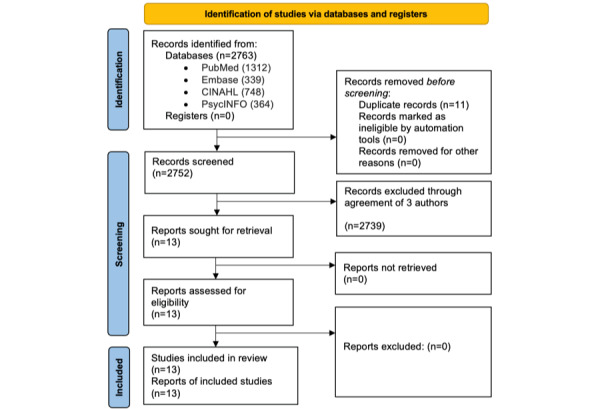
Rodgers' evolutionary concept analysis method was used to guide this study. PubMed, Embase, PsycINFO, and CINAHL were used to search for relevant publications. An integrative review strategy aided by Rayyan software was used to identify a final sample of 13 papers for analysis.
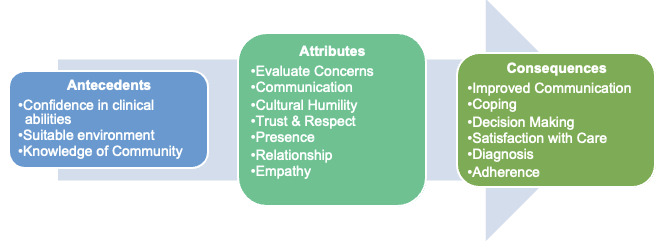
The proposed definition of TRC in telehealth is the experience of a mutually responsive patient-provider relationship that is built on mutual respect and understanding and informed by cultural humility, presence, empathy, and the ability to effectively evaluate patient concerns to work toward a therapeutic aim. The key attributes of TRC in telehealth are the provider's ability to evaluate patient concerns, interpersonal communication, cultural humility, mutual trust and respect, presence, empathy, and building relationships. Clinical presence, proper environment, knowledge about the use of technology (both patient and provider), use of verbal and nonverbal communication, and knowledge about community and culture are important antecedents of TRC. Consequences of TRC include improved communication resulting in mutual respect and caring, adherence to follow-up recommendations, increased coping, collaborative decision-making, and satisfaction with care.
Telehealth visits necessitate alternative approaches to establishing TRC as compared to in-person clinic visits. With the rapid expansion of telehealth platforms and a heightened acceptance of the technology, there is a need to integrate knowledge and provide a clear conceptualization of TRC in telehealth as TRC has been demonstrated to result in positive patient-centered outcomes. Identifying the attributes and antecedents of TRC in telehealth allows us the opportunity to develop guidelines and educational interventions aimed at training health care providers in the skills needed to establish TRC during telehealth visits.
远程医疗中的治疗性关系连接(TRC)是一个新概念,它指的是医疗保健提供者和他们的患者在朝着治疗目标努力时,有意建立关系连接。已经证明,TRC 对以患者为中心的结果产生积极影响,包括依从性、自我管理和对护理的满意度。目前尚不清楚在远程医疗访问期间建立 TRC 的最佳实践方法。在 COVID-19 大流行期间,远程医疗的迅速出现带来了许多挑战。这些挑战包括缺乏人际接触、距离造成的不信任、无法依赖非言语交流以及人格解体感。需要对医疗保健提供者进行这些建立 TRC 所需的人际沟通技巧培训。
本文旨在探讨远程医疗中 TRC 的演进概念。本文通过对现有已发表文献的全面回顾,对提供者和患者之间远程医疗互动中的 TRC 进行了概念分析。
采用罗杰斯的进化概念分析方法指导本研究。使用 PubMed、Embase、PsycINFO 和 CINAHL 搜索相关文献。使用 Rayyan 软件辅助的综合审查策略,确定了 13 篇论文的最终样本进行分析。
远程医疗中 TRC 的拟议定义是指一种相互响应的医患关系体验,这种关系建立在相互尊重和理解的基础上,并以文化谦逊、在场、同理心和有效评估患者关注为指导,以实现治疗目标。远程医疗中 TRC 的关键属性是提供者评估患者关注点的能力、人际沟通、文化谦逊、相互信任和尊重、在场、同理心和建立关系。临床存在、适当的环境、对技术使用的了解(患者和提供者)、使用言语和非言语沟通以及对社区和文化的了解是 TRC 的重要前提。TRC 的后果包括改善沟通,从而实现相互尊重和关怀、坚持随访建议、增强应对能力、协作决策以及对护理的满意度。
与面对面诊所就诊相比,远程医疗就诊需要采用不同的方法来建立 TRC。随着远程医疗平台的迅速扩展和对该技术的高度接受,有必要整合知识并清楚地概念化远程医疗中的 TRC,因为 TRC 已被证明可以带来积极的以患者为中心的结果。确定远程医疗中 TRC 的属性和前提条件使我们有机会制定指南和教育干预措施,旨在培训医疗保健提供者在远程医疗访问期间建立 TRC 所需的技能。