Research institute, Celltem Pharm Co., Ltd., Seoul, South Korea.
Skin Res Technol. 2023 Jun;29(6):e13397. doi: 10.1111/srt.13397.
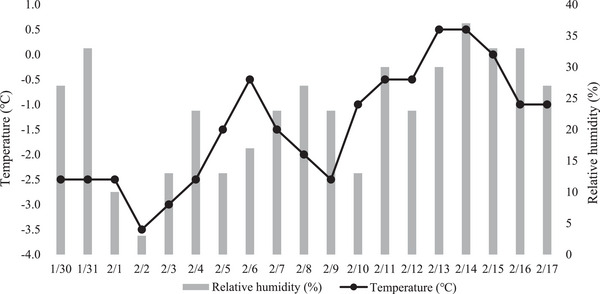
In Korea, winter can cause skin dryness due to low relative humidity (RH); moreover, indoor heating devices promote moisture loss and air pollution. If dryness persists, dead skin cells accumulate, leading to skin problems; therefore, careful skin care is required. This study aimed to compare changes in skin conditions when exposed to an indoor environment for a short period of 6 h in winter, and to suggest proper winter skin care practices.
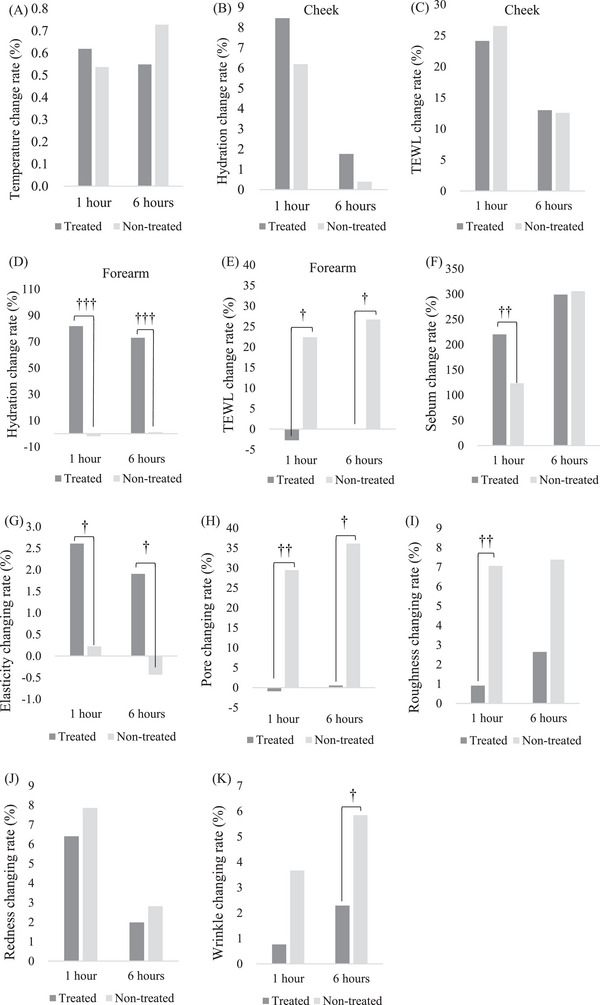
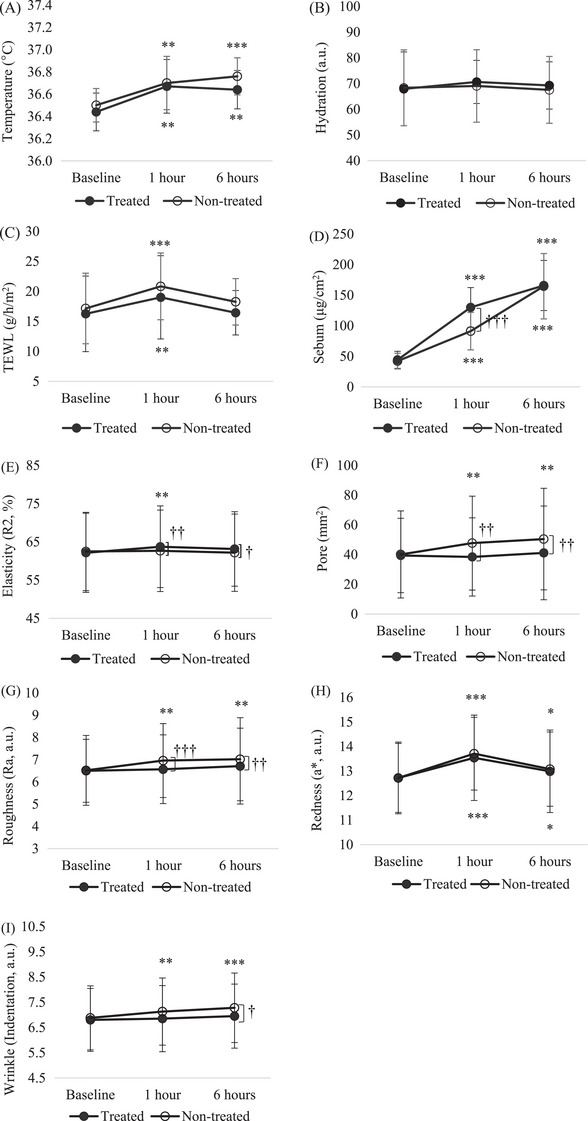
A randomized, split-face clinical study was conducted in which healthy female participants with normal skin were exposed to an indoor environment with a heater turned on for a short period at least 6 h per day in the winter season, and cream was applied to one side of the face. Skin temperature, hydration, sebum, transepidermal water loss (TEWL), elasticity, texture, pores, redness, and wrinkles were measured at the treated and nontreated sites.
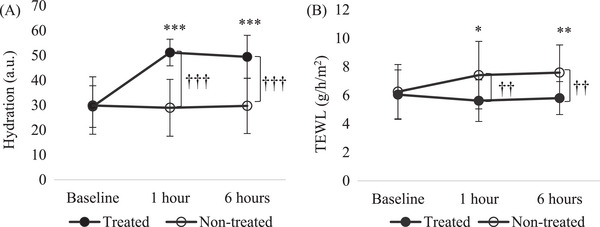
After 6 h of exposure, skin temperature, pores, roughness, redness, and wrinkles significantly increased (p < 0.05) on the face, whereas TEWL significantly increased on the forearm (p < 0.05). However, sebum secretion appeared to function as a barrier to maintain homeostasis in the facial skin. Elasticity, pores, texture, and wrinkles in the cream-treated ceramide site improved compared to those in the nontreated site (p < 0.05). The moisture content was also significantly higher in the forearm (p < 0.05).
Changes in skin parameters of participants with healthy skin were observed even after short-term exposure to an indoor environment in winter. Creams containing ceramide maintain skin homeostasis and protect the skin barrier; therefore, it is recommended to use such creams to prevent skin damage and maintain healthy skin, particularly during prolonged exposure to indoor environments during winter.
在韩国,由于相对湿度(RH)较低,冬季会导致皮肤干燥;此外,室内供暖设备会促进水分流失和空气污染。如果干燥持续存在,死皮细胞会堆积,导致皮肤问题;因此,需要仔细的皮肤护理。本研究旨在比较冬季短时间(6 小时)暴露于室内环境后皮肤状况的变化,并提出适当的冬季皮肤护理方法。
本研究采用随机、分割面部的临床试验,选择冬季每天至少暴露于开启暖气的室内环境中 6 小时的健康女性志愿者,在一侧面部涂抹乳膏。测量治疗和未治疗部位的皮肤温度、水分、皮脂、经表皮水分流失(TEWL)、弹性、纹理、毛孔、红斑和皱纹。
暴露 6 小时后,面部皮肤温度、毛孔、粗糙度、红斑和皱纹明显增加(p<0.05),而前臂 TEWL 明显增加(p<0.05)。然而,皮脂分泌似乎起到了维持面部皮肤内稳态的屏障作用。与未治疗部位相比,含有神经酰胺的乳膏处理部位的弹性、毛孔、纹理和皱纹得到改善(p<0.05)。前臂的水分含量也显著升高(p<0.05)。
即使在冬季短时间暴露于室内环境后,健康皮肤参与者的皮肤参数也会发生变化。含有神经酰胺的乳膏可维持皮肤内稳态并保护皮肤屏障;因此,建议使用此类乳膏来预防皮肤损伤并保持健康的皮肤,尤其是在冬季长时间暴露于室内环境时。