Janeiro Manuel H, Ardanaz Carlos G, Sola-Sevilla Noemí, Dong Jinya, Cortés-Erice María, Solas Maite, Puerta Elena, Ramírez María J
Department of Pharmacology and Toxicology, School of Pharmacy and Nutrition, University of Navarra, Pamplona, Spain.
IDISNA, Navarra's Health Research Institute, Pamplona, Spain.
Adv Lab Med. 2020 Nov 23;2(1):27-50. doi: 10.1515/almed-2020-0090. eCollection 2021 Mar.
Alzheimer's disease (AD) is a progressive neurodegenerative disease. AD is the main cause of dementia worldwide and aging is the main risk factor for developing the illness. AD classical diagnostic criteria rely on clinical data. However, the development of a biological definition of AD using biomarkers that reflect the underling neuropathology is needed.
The aim of this review is to describe the main outcomes when measuring classical and novel biomarkers in biological fluids or neuroimaging.
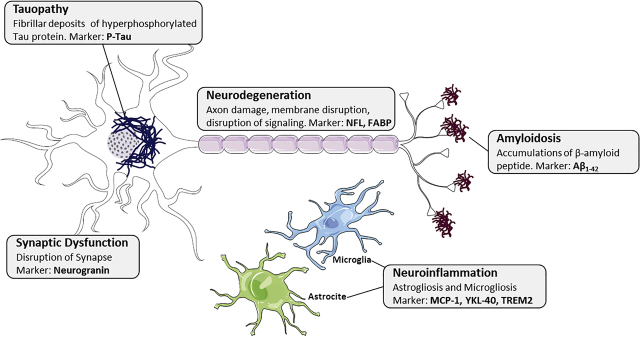
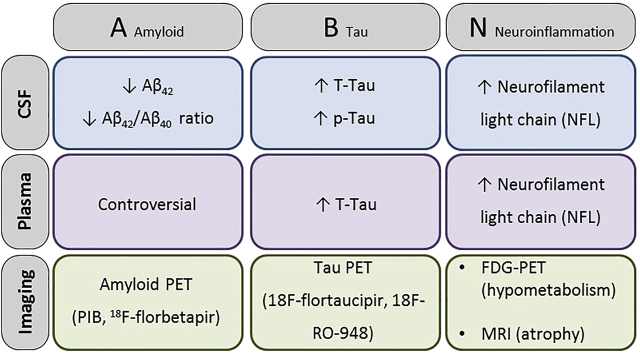
Nowadays, there are three classical biomarkers for the diagnosis of AD: Aβ42, t-Tau and p-Tau. The diagnostic use of cerebrospinal fluid biomarkers is limited due to invasive collection by lumbar puncture with potential side effects. Plasma/serum measurements are the gold standard in clinics, because they are minimally invasive and, in consequence, easily collected and processed. The two main proteins implicated in the pathological process, Aβ and Tau, can be visualized using neuroimaging techniques, such as positron emission tomography.
As it is currently accepted that AD starts decades before clinical symptoms could be diagnosed, the opportunity to detect biological alterations prior to clinical symptoms would allow early diagnosis or even perhaps change treatment possibilities.
阿尔茨海默病(AD)是一种进行性神经退行性疾病。AD是全球痴呆的主要病因,而衰老则是患此病的主要风险因素。AD的经典诊断标准依赖于临床数据。然而,需要利用反映潜在神经病理学的生物标志物来制定AD的生物学定义。
本综述的目的是描述在生物体液或神经影像学中测量经典和新型生物标志物时的主要结果。
如今,有三种用于诊断AD的经典生物标志物:β淀粉样蛋白42(Aβ42)、总tau蛋白(t-Tau)和磷酸化tau蛋白(p-Tau)。由于通过腰椎穿刺进行侵入性采集且存在潜在副作用,脑脊液生物标志物的诊断应用受到限制。血浆/血清检测是临床中的金标准,因为它们微创,因此易于采集和处理。参与病理过程的两种主要蛋白质,即Aβ和Tau,可以使用神经影像学技术,如正电子发射断层扫描进行可视化。
由于目前公认AD在临床症状能够被诊断出来的数十年前就已开始,在临床症状出现之前检测生物改变的机会将有助于早期诊断甚至可能改变治疗方案。