Phuaklikhit Chairat, Junsri Thanwarat, Maikaew Usa
Balance and Movement Research Unit, Faculty of Physical Therapy and Sports Medicine, Rangsit University, Thailand.
Sports Excellent Unit, Faculty of Physical Therapy and Sports Medicine, Rangsit University, Thailand.
Heliyon. 2023 Jun 15;9(6):e17318. doi: 10.1016/j.heliyon.2023.e17318. eCollection 2023 Jun.
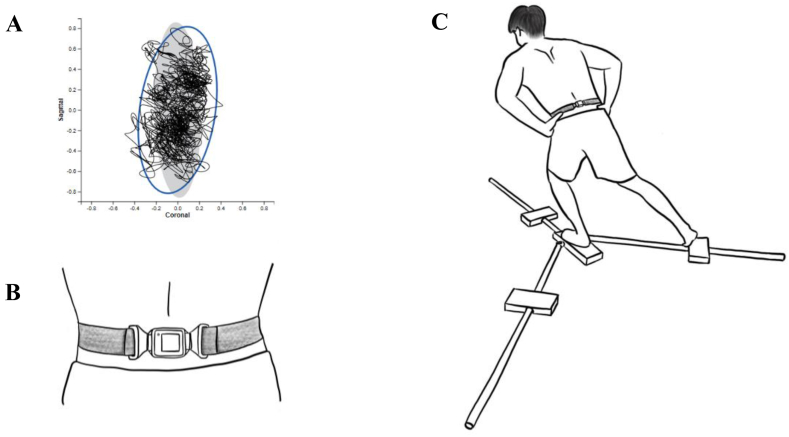
Similar to a modified star excursion balance test, the Ybalance test is recommended for use in clinical settings to evaluate dynamic balance, particularly in athletes with chronic ankle instability. However, due to the testing errors, there are certain restrictions. As a result, the modification of the centre of mass tracking system was developed in order to aid in the detection of the ability to control the dynamic balance. Therefore, the purpose of this study was to correlate the usage of an accelerometer for the shifting of the centre of mass during a dynamic balance test with a Ybalance test reach distance score.
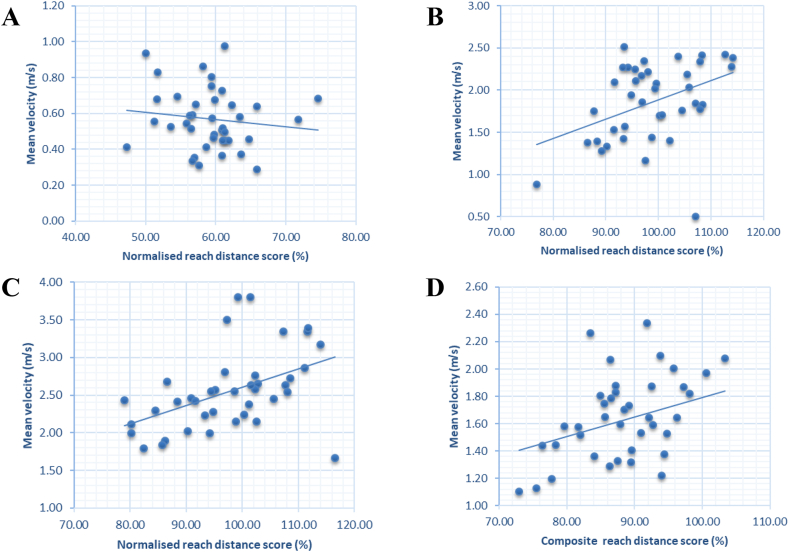
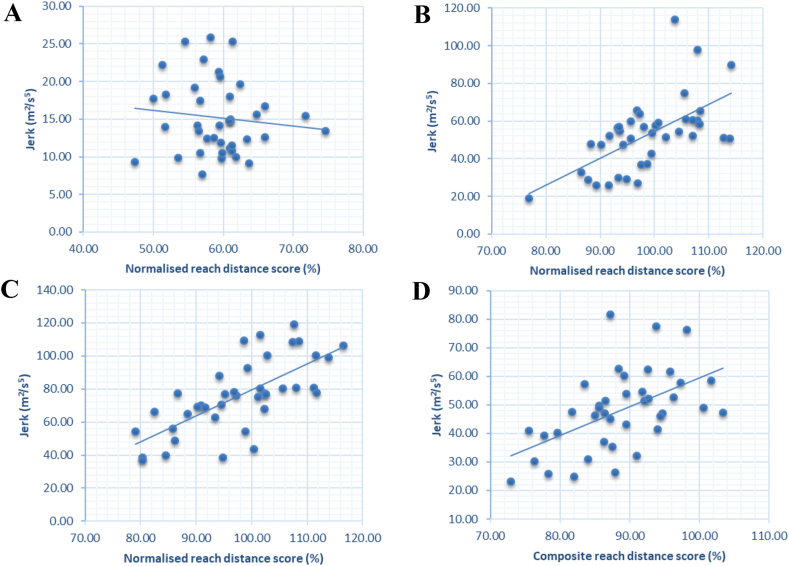
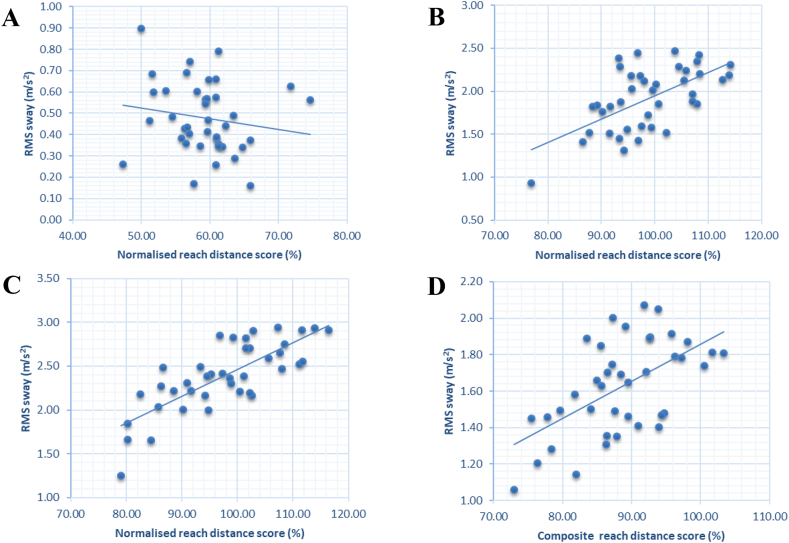
Forty professional football athletes with CAI participated in this study by performing the Y-balance test three times while wearing an accelerometer. The jerk, RMS sway amplitude, mean velocity from the time domain, and the normalised reach distance scores of the Y-balance test in the anterior, posteromedial, and posterolateral directions were all collected.
There was a strong positive correlation of jerk and RMS sway amplitude with the normalised reach distance scores in the posteromedial direction (r = 0.706 and 0.777, respectively), a moderate positive correlation of jerk and RMS sway amplitude with the normalised reach distance scores in the posterolateral direction (r = 0.609 and 0.606, respectively), a moderate positive correlation of jerk and RMS sway amplitude with the composite reach distance scores (r = 0.531 and 0.573, respectively) and significant differences in the posteromedial, posterolateral and overall directions (p-value < 0.001).
These findings indicate that the area of the centre of mass shifting as represented by the accelerometer can disclose the body's ability to control the centre of mass over the base of support when the body is moving. Furthermore, in this study, the RMS sway variable in the posteromedial direction appears to be the most prominent.
与改良的星形偏移平衡测试类似,Y平衡测试被推荐用于临床环境中评估动态平衡,特别是在患有慢性踝关节不稳的运动员中。然而,由于测试误差,存在一定限制。因此,开发了质心跟踪系统的改进版本,以帮助检测控制动态平衡的能力。因此,本研究的目的是将动态平衡测试期间用于质心转移的加速度计的使用情况与Y平衡测试的伸展距离得分相关联。
40名患有慢性踝关节不稳的职业足球运动员参与了本研究,他们在佩戴加速度计的同时进行了3次Y平衡测试。收集了Y平衡测试在前、后内侧和后外侧方向上的急动度、均方根摆动幅度、时域平均速度以及标准化伸展距离得分。
急动度和均方根摆动幅度与后内侧方向的标准化伸展距离得分呈强正相关(分别为r = 0.706和0.777),与后外侧方向的标准化伸展距离得分呈中度正相关(分别为r = 0.609和0.606),与综合伸展距离得分呈中度正相关(分别为r = 0.531和0.573),并且在后内侧、后外侧和整体方向上存在显著差异(p值<0.001)。
这些发现表明,加速度计所代表的质心转移区域可以揭示身体在运动时在支撑面上控制质心的能力。此外,在本研究中,后内侧方向的均方根摆动变量似乎最为突出。