Moura Nádia, Vidal Marc, Aguilera Ana M, Vilas-Boas João Paulo, Serra Sofia, Leman Marc
Research Centre for Science and Technology of the Arts, School of Arts, Universidade Católica Portuguesa, Rua de Diogo Botelho 1327, 4169-005, Porto, Portugal.
Institute for Psychoacoustics and Electronic Music, Ghent University, Miriam Makebaplein 1, 9000, Ghent, Belgium.
NPJ Sci Learn. 2023 Jun 27;8(1):22. doi: 10.1038/s41539-023-00172-z.
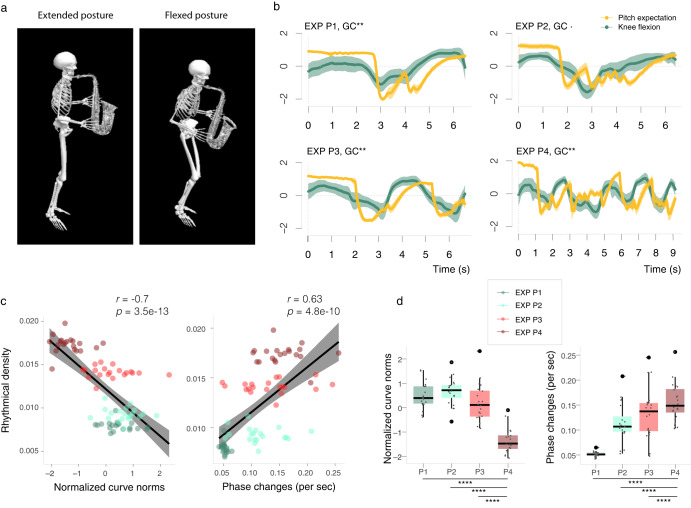
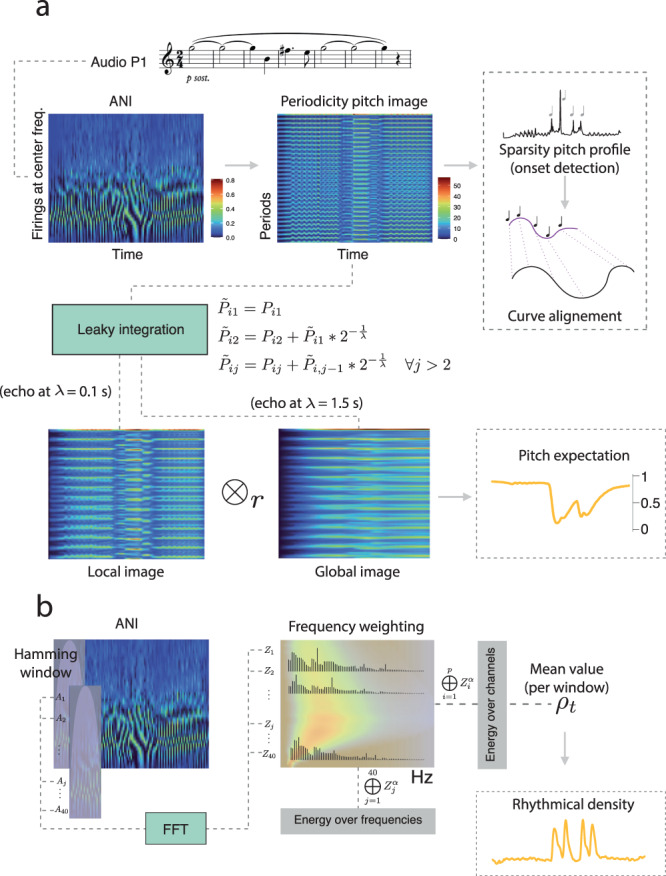
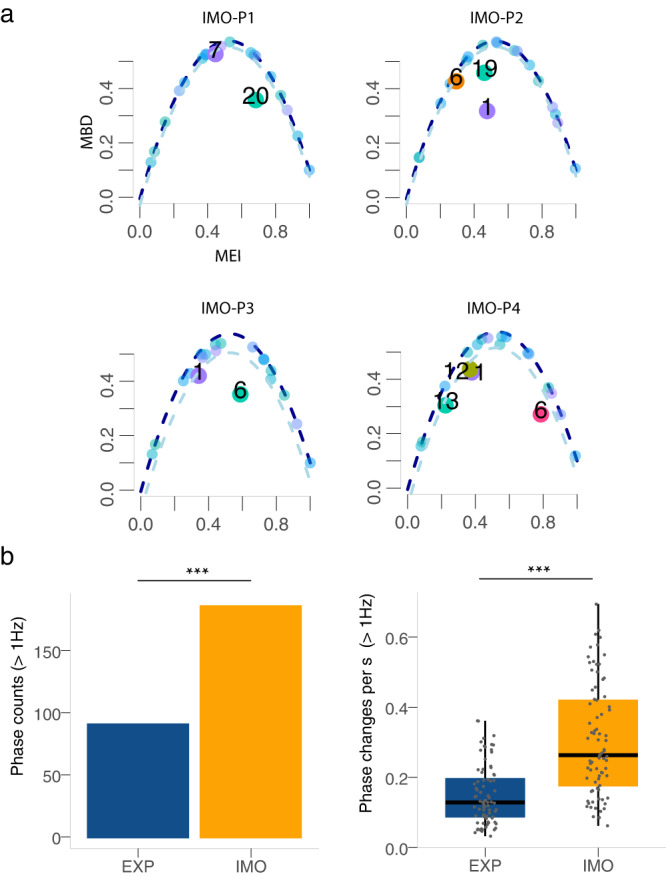
Music performance requires high levels of motor control. Professional musicians use body movements not only to accomplish and help technical efficiency, but to shape expressive interpretation. Here, we recorded motion and audio data of twenty participants performing four musical fragments varying in the degree of technical difficulty to analyze how knee flexion is employed by expert saxophone players. Using a computational model of the auditory periphery, we extracted emergent acoustical properties of sound to inference critical cognitive patterns of music processing and relate them to motion data. Results showed that knee flexion is causally linked to tone expectations and correlated to rhythmical density, suggesting that this gesture is associated with expressive and facilitative purposes. Furthermore, when instructed to play immobile, participants tended to microflex (>1 Hz) more frequently compared to when playing expressively, possibly indicating a natural urge to move to the music. These results underline the robustness of body movement in musical performance, providing valuable insights for the understanding of communicative processes, and development of motor learning cues.
音乐演奏需要高水平的运动控制。专业音乐家运用身体动作不仅是为了完成演奏并提高技术效率,还为了塑造富有表现力的诠释。在此,我们记录了20名参与者演奏四个技术难度各异的音乐片段时的动作和音频数据,以分析专业萨克斯管演奏者如何运用膝盖弯曲。我们使用听觉外周的计算模型,提取声音的涌现声学特性,以推断音乐处理的关键认知模式,并将其与动作数据相关联。结果表明,膝盖弯曲与音高预期存在因果联系,且与节奏密度相关,这表明该手势与表达性和辅助性目的相关。此外,当被指示静止演奏时,与富有表现力地演奏相比,参与者更频繁地出现微弯曲(>1赫兹),这可能表明存在随着音乐而动的自然冲动。这些结果强调了身体动作在音乐表演中的稳健性,为理解交流过程和发展运动学习线索提供了有价值的见解。