Manoharan Ganesh Babu, Laurini Christina, Bottone Sara, Ben Fredj Nesrine, Abankwa Daniel Kwaku
Cancer Cell Biology and Drug Discovery Group, Department of Life Sciences and Medicine, University of Luxembourg, L-4362 Esch-sur-Alzette, Luxembourg.
Cancers (Basel). 2023 Jun 7;15(12):3087. doi: 10.3390/cancers15123087.
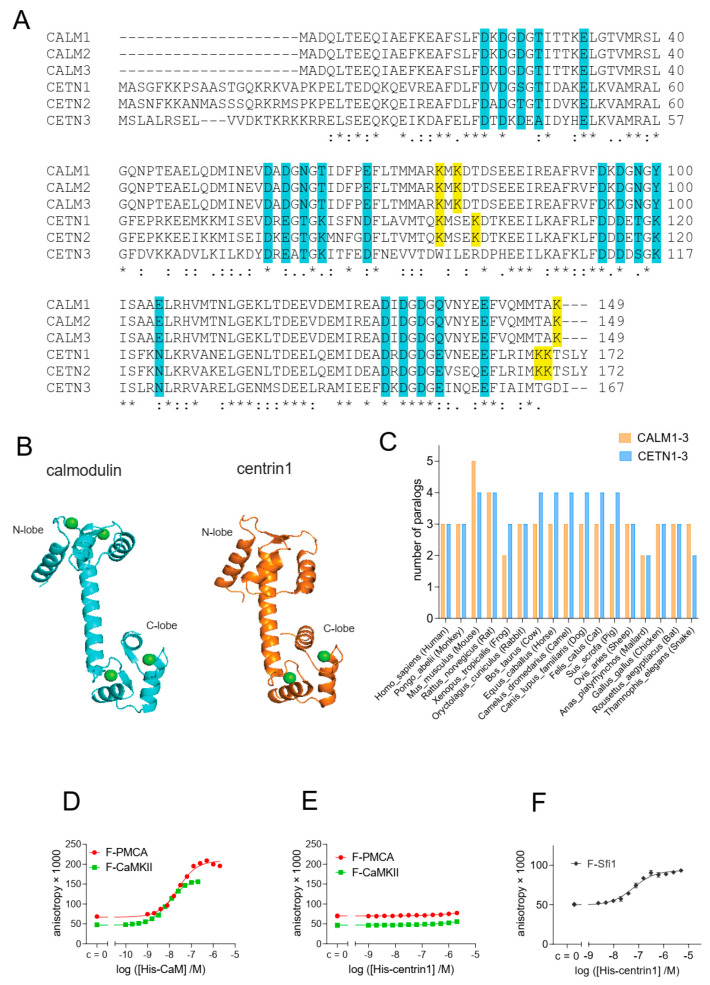
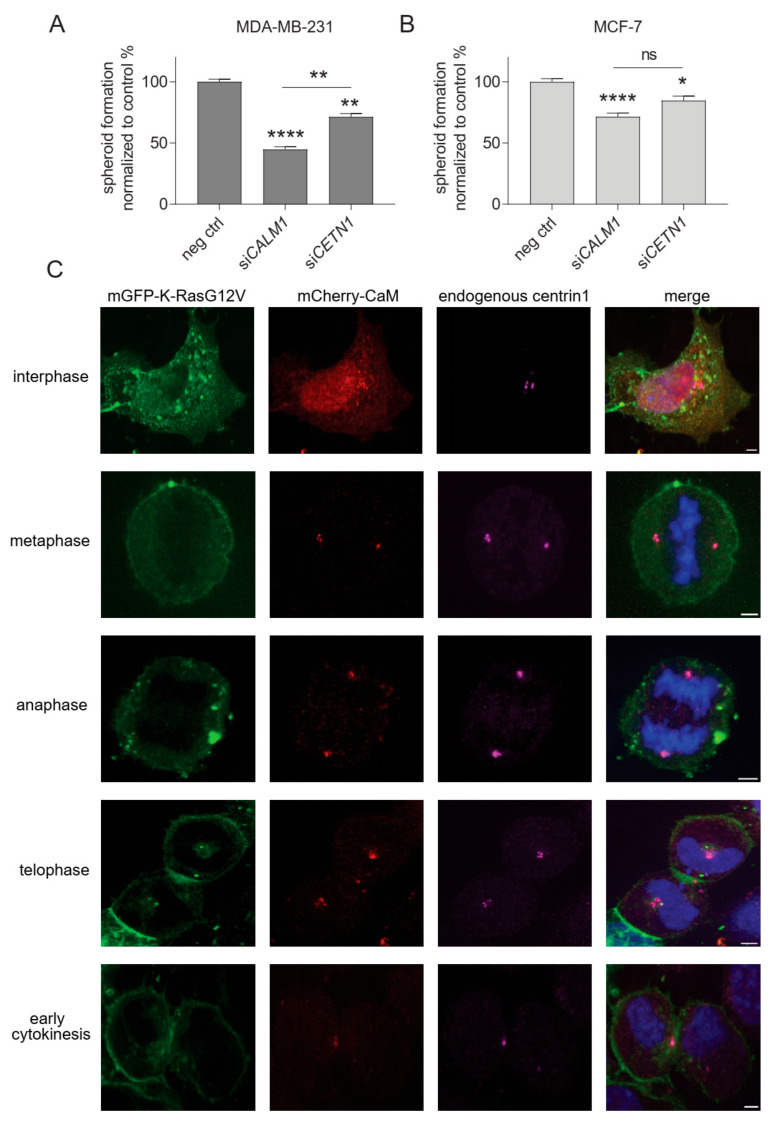
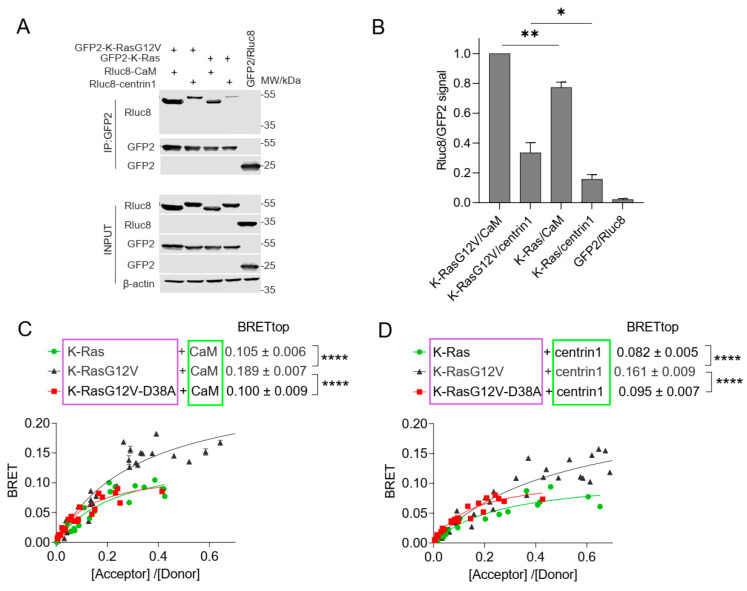
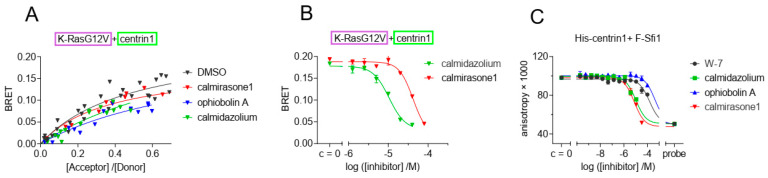
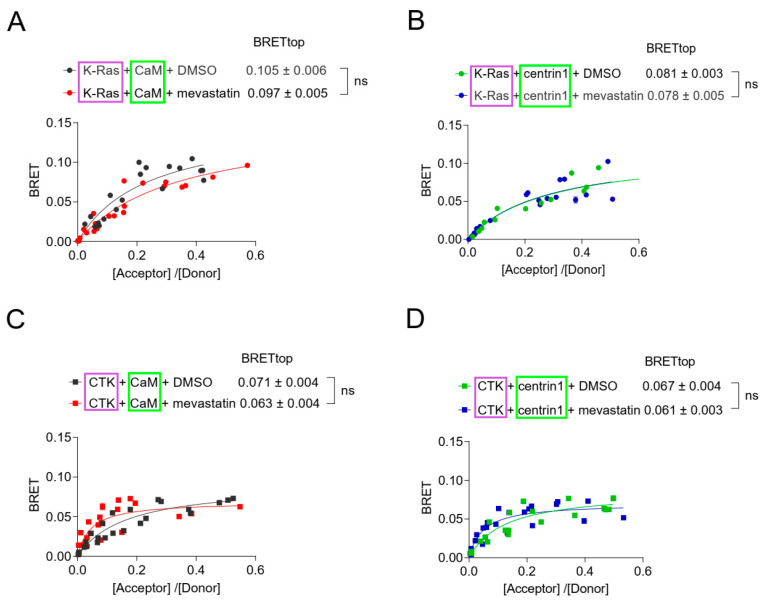
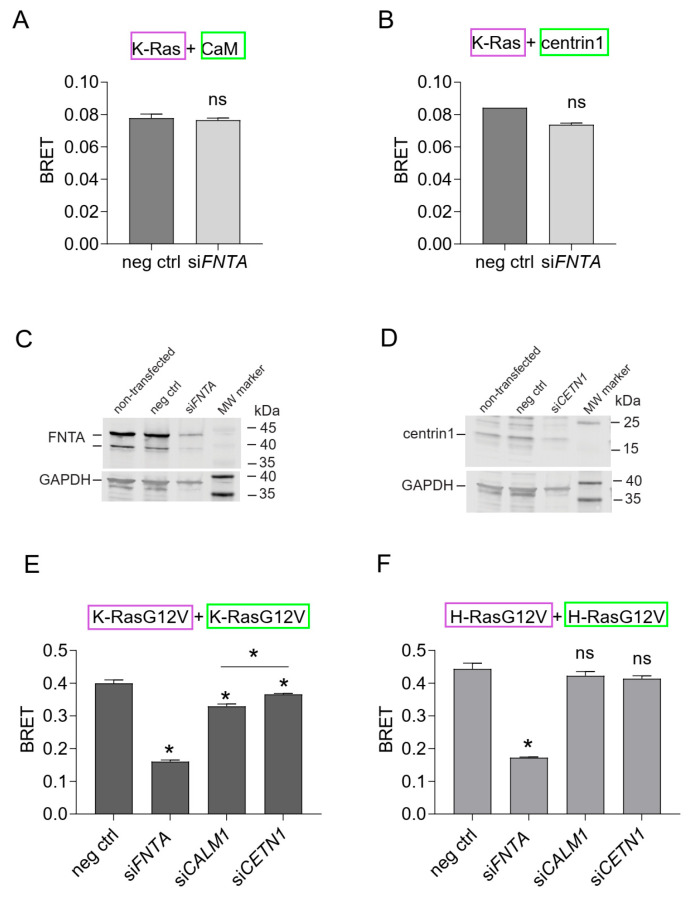
Recent data suggest that K-Ras4B (hereafter K-Ras) can drive cancer cell stemness via calmodulin (CaM)-dependent, non-canonical Wnt-signalling. Here we examined whether another Ca-binding protein, the CaM-related centrin1, binds to K-Ras and could mediate some K-Ras functions that were previously ascribed to CaM. While CaM and centrin1 appear to distinguish between peptides that were derived from their classical targets, they both bind to K-Ras in cells. Cellular BRET- and immunoprecipitation data suggest that CaM engages more with K-Ras than centrin1 and that the interaction with the C-terminal membrane anchor of K-Ras is sufficient for this. Surprisingly, binding of neither K-Ras nor its membrane anchor alone to CaM or centrin1 is sensitive to inhibition of prenylation. In support of an involvement of the G-domain of K-Ras in cellular complexes with these Ca-binding proteins, we find that oncogenic K-RasG12V displays increased engagement with both CaM and centrin1. This is abrogated by addition of the D38A effector-site mutation, suggesting that K-RasG12V is held together with CaM or centrin1 in complexes with effectors. When treated with CaM inhibitors, the BRET-interaction of K-RasG12V with centrin1 was also disrupted in the low micromolar range, comparable to that with CaM. While CaM predominates in regulating functional membrane anchorage of K-Ras, it has a very similar co-distribution with centrin1 on mitotic organelles. Given these results, a significant overlap of the CaM- and centrin1-dependent functions of K-Ras is suggested.
近期数据表明,K-Ras4B(以下简称K-Ras)可通过钙调蛋白(CaM)依赖的非经典Wnt信号传导驱动癌细胞干性。在此,我们研究了另一种钙结合蛋白,即与CaM相关的中心体蛋白1(centrin1),是否与K-Ras结合,并介导一些先前归因于CaM的K-Ras功能。虽然CaM和centrin1似乎能区分源自其经典靶点的肽段,但它们在细胞中均与K-Ras结合。细胞内生物发光共振能量转移(BRET)和免疫沉淀数据表明,CaM与K-Ras的结合比centrin1更紧密,且与K-Ras的C末端膜锚定的相互作用足以实现这一点。令人惊讶的是,单独的K-Ras或其膜锚定与CaM或centrin1的结合对异戊二烯化抑制均不敏感。为支持K-Ras的G结构域参与与这些钙结合蛋白的细胞复合物,我们发现致癌性K-RasG12V与CaM和centrin1的结合均增加。添加D38A效应位点突变可消除这种增加,这表明K-RasG12V在与效应器的复合物中与CaM或centrin1结合在一起。用CaM抑制剂处理时,K-RasG12V与centrin1的BRET相互作用在低微摩尔浓度范围内也会被破坏,与和CaM的相互作用相当。虽然CaM在调节K-Ras的功能性膜锚定中起主要作用,但它与centrin1在有丝分裂细胞器上具有非常相似的共分布。鉴于这些结果,提示K-Ras的CaM依赖性功能和centrin1依赖性功能存在显著重叠。