Horgos Maur Sebastian, Pop Ovidiu Laurean, Sandor Mircea, Borza Ioan Lucian, Negrean Rodica Anamaria, Cote Adrian, Neamtu Andreea-Adriana, Grierosu Carmen, Sachelarie Liliana, Huniadi Anca
Department of Surgical Disciplines, Faculty of Medicine and Pharmacy, University of Oradea, 1st December Square No. 10, 410073 Oradea, Romania.
Department of Pathology, County Clinical Emergency Hospital, Faculty of Medicine and Pharmacy, University of Oradea, 1st December Square No. 10, 410087 Oradea, Romania.
J Clin Med. 2023 Jun 7;12(12):3890. doi: 10.3390/jcm12123890.
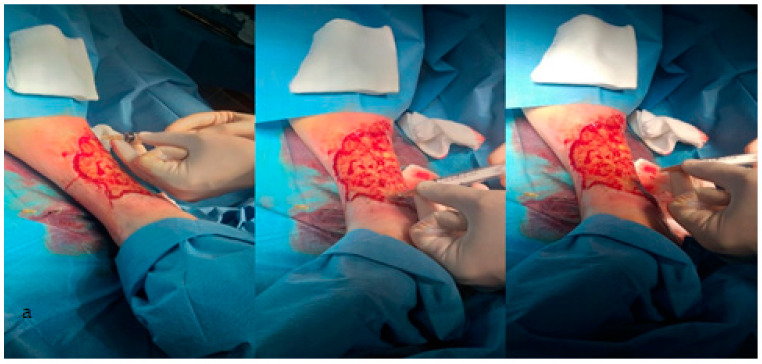
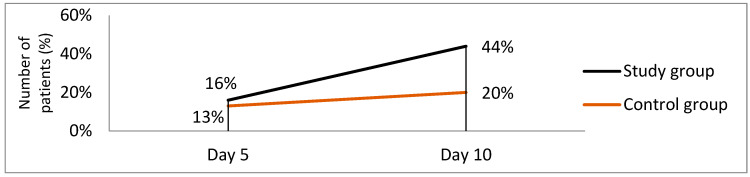
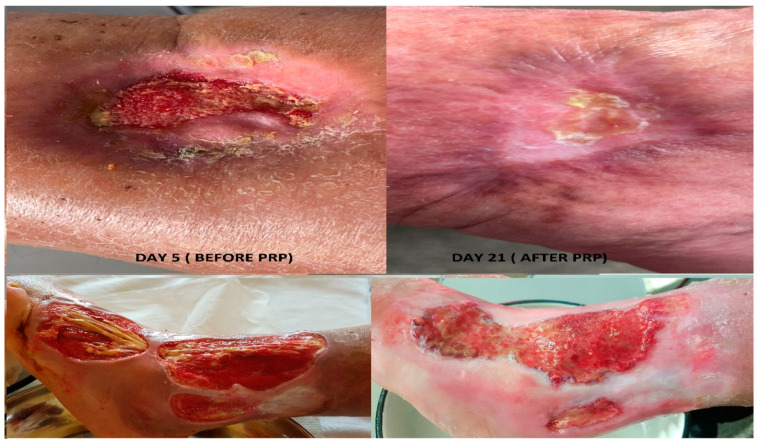
(1) Background: Patients suffering from chronic wounds report physical, mental, and social consequences due to their existence and care. There is a global need for tissue repair strategies and, in our case, for chronic wound healing. PRP therapy is based on the fact that platelet-derived growth factors (PGF) support the three phases of the wound healing and repair cascade (inflammation, proliferation, and remodeling); (2) Methods: A comparative study was carried out on two groups of patients with atonic wounds totaling a total of 80 cases as follows: a study group in which the PRP procedure was applied and a control group in which the biological product was not injected. The study was carried out in the surgery clinic of the Clinical Hospital C.F. Oradea City; (3) Results: A much faster healing was achieved in the case of patients who benefited from the platelet-rich plasma injection therapy compared to the group of patients in whom this therapy was not used. Three weeks after the plasma injection, a considerable reduction of the wound was evident, with some of the patients presenting with a closed wound; (4) Conclusions: The effect of PRP on the healing of chronic wounds is promising in most cases. A positive effect was also highlighted in terms of reducing treatment costs by considerably reducing the materials used as well as the number of hospitalizations for the same pathology.
(1) 背景:患有慢性伤口的患者因其伤口的存在及护理而报告有身体、心理和社会方面的后果。全球都需要组织修复策略,就我们的情况而言,需要慢性伤口愈合策略。富血小板血浆(PRP)疗法基于血小板衍生生长因子(PGF)支持伤口愈合和修复级联反应的三个阶段(炎症、增殖和重塑)这一事实;(2) 方法:对两组共80例弛缓性伤口患者进行了一项对比研究,具体如下:一组为应用PRP程序的研究组,另一组为未注射生物制品的对照组。该研究在奥拉迪亚市C.F. 临床医院的外科诊所进行;(3) 结果:与未使用该疗法的患者组相比,接受富血小板血浆注射治疗的患者伤口愈合速度快得多。血浆注射三周后,伤口明显大幅缩小,部分患者伤口已愈合;(4) 结论:PRP对慢性伤口愈合的效果在大多数情况下很有前景。在通过大幅减少所用材料以及同一病症的住院次数来降低治疗成本方面也凸显出了积极效果。