Serrano-Castañeda Pablo, Ochoa Loyo Miguel Alejandro, Tinoco Hernández Cristian Ezequiel, Anaya-Ortega Brian Miguel, Guadarrama-Escobar Omar Rodrigo, Anguiano-Almazán Ericka, Rodríguez-Pérez Betsabé, Peña-Juárez Ma Concepción, Vázquez-Durán Alma, Méndez-Albores Abraham, Rodríguez-Cruz Isabel Marlen, Morales-Florido Miriam Isabel, Escobar-Chávez José Juan
Unidad de Investigación Multidisciplinaria-Lab 12, Facultad de Estudios Superiores Cuautitlán, Universidad Nacional Autónoma de México, Carretera Cuautitlán-Teoloyucan, km 2.5 San Sebastián Xhala, Cuautitlán Izcalli 54714, Mexico.
Laboratorio de Servicio de Análisis de Propóleos (LASAP), Unidad de Investigación Multidisciplinaria (UIM), Facultad de Estudios Superiores Cuautitlán, Universidad Nacional Autónoma de México, Cuautitlán Izcalli 54714, Mexico.
Polymers (Basel). 2023 Jun 8;15(12):2610. doi: 10.3390/polym15122610.
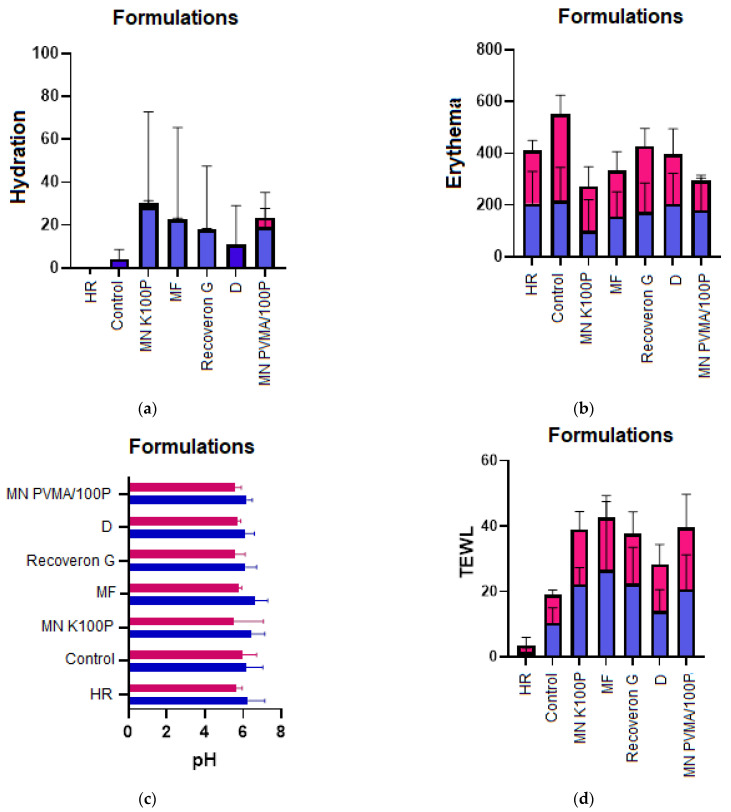
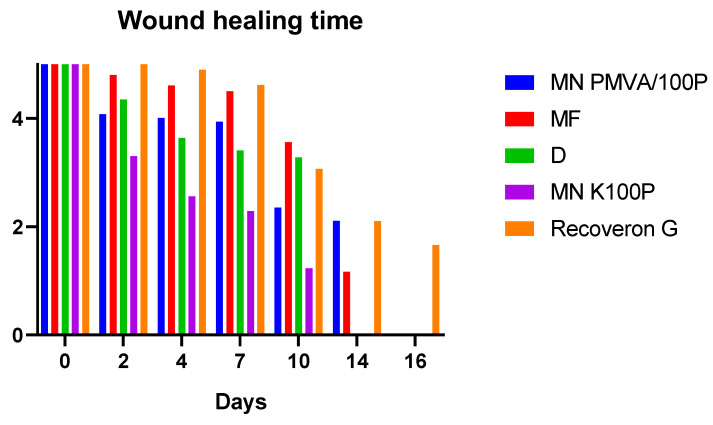
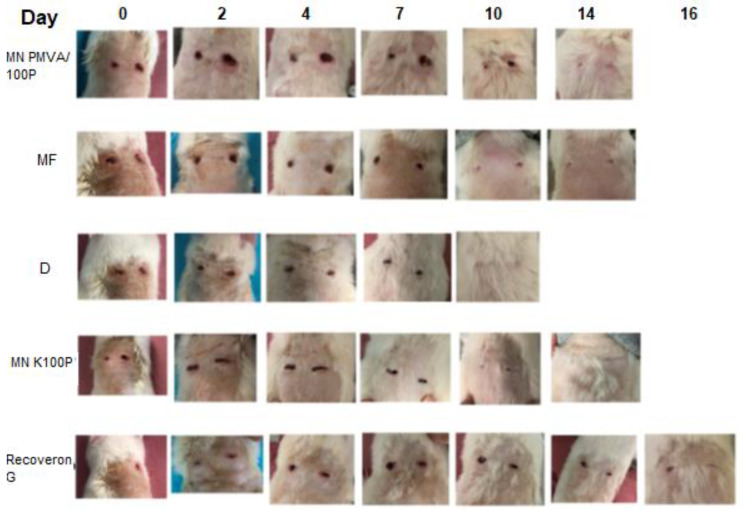
The objective of this study was to create polymeric dressings, microfibers, and microneedles (MN) loaded with ceftriaxone, using PMVA (Poly (Methyl vinyl ether-alt-maleic acid), Kollicoat 100P, and Kollicoat Protect as polymers to treat diabetic wounds and accelerate their recovery. These formulations were optimized through a series of experiments and were subsequently subjected to physicochemical tests. The results of the characterization of the dressings, microfibers, and microneedles (PMVA and 100P) were, respectively, a bioadhesion of 281.34, 720, 720, 2487, and 510.5 gf; a post-humectation bioadhesion of 186.34, 831.5, 2380, and 630.5 gf, tear strength of 2200, 1233, 1562, and 385 gf, erythema of 358, 8.4, 227, and 188; transepidermal water loss (TEWL) of 2.6, 4.7, 1.9, and 5.2 g/h·m; hydration of 76.1, 89.9, 73.5, and 83.5%; pH of 4.85, 5.40, 5.85, and 4.85; and drug release (Peppas kinetics release) of n: 0.53, n: 0.62, n: 0.62, and n: 0.66). In vitro studies were performed on Franz-type diffusion cells and indicated flux of 57.1, 145.4, 718.7, and 2.7 µg/cm; permeation coefficient (Kp) of 13.2, 19.56, 42, and 0.00015 cm/h; and time lag (t) of 6.29, 17.61, 27. 49, and 22.3 h, respectively, in wounded skin. There was no passage of ceftriaxone from dressings and microfibers to healthy skin, but that was not the case for PMVA/100P and Kollicoat 100P microneedles, which exhibited flux of 194 and 0.4 µg/cm, Kp of 11.3 and 0.00002 cm/h, and t of 5.2 and 9.7 h, respectively. The healing time of the formulations in vivo (tests carried out using diabetic Wistar rats) was under 14 days. In summary, polymeric dressings, microfibers, and microneedles loaded with ceftriaxone were developed. These formulations have the potential to address the challenges associated with chronic wounds, such as diabetic foot, improving the outcomes.
本研究的目的是制备负载头孢曲松的聚合物敷料、微纤维和微针,使用聚(甲基乙烯基醚-alt-马来酸)(PMVA)、聚丙烯酸树脂100P和聚丙烯酸树脂保护膜作为聚合物来治疗糖尿病伤口并加速其愈合。这些制剂通过一系列实验进行了优化,随后进行了理化测试。敷料、微纤维和微针(PMVA和100P)的表征结果分别为:生物粘附力为281.34、720、720、2487和510.5 gf;湿后生物粘附力为186.34、831.5、2380和630.5 gf;撕裂强度为2200、1233、1562和385 gf;红斑为358、8.4、227和188;经表皮水分流失(TEWL)为2.6、4.7、1.9和5.2 g/h·m;水合作用为76.1、89.9、73.5和83.5%;pH值为4.85、5.40、5.85和4.85;药物释放(Peppas动力学释放)n分别为0.53、0.62、0.62和0.66。在Franz型扩散池中进行的体外研究表明,在伤口皮肤中的通量分别为57.1、145.4、718.7和2.7 μg/cm;渗透系数(Kp)分别为13.2、19.56、42和0.00015 cm/h;时间滞后(t)分别为6.29、17.61、27.49和22.3 h。头孢曲松没有从敷料和微纤维转移到健康皮肤,但PMVA/100P和聚丙烯酸树脂保护膜微针的情况并非如此,它们的通量分别为194和0.4 μg/cm,Kp分别为11.3和0.00002 cm/h,t分别为5.2和9.7 h。体内制剂的愈合时间(使用糖尿病Wistar大鼠进行的测试)在14天以内。总之,开发了负载头孢曲松的聚合物敷料、微纤维和微针。这些制剂有潜力应对与慢性伤口相关的挑战,如糖尿病足,改善治疗效果。