Department of Chemistry, University of Kentucky, 506 Library Drive, 125 Chemistry-Physics Building, Lexington, KY, 40506, USA.
Department of Cell and Molecular Physiology, Loyola University Chicago, Chicago, IL, USA.
Adv Healthc Mater. 2023 Oct;12(27):e2301163. doi: 10.1002/adhm.202301163. Epub 2023 Jul 9.
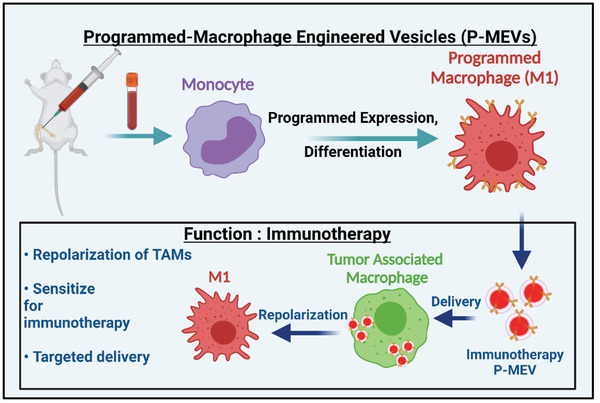
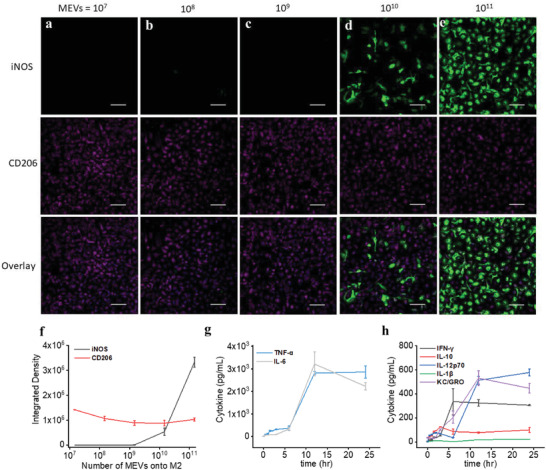
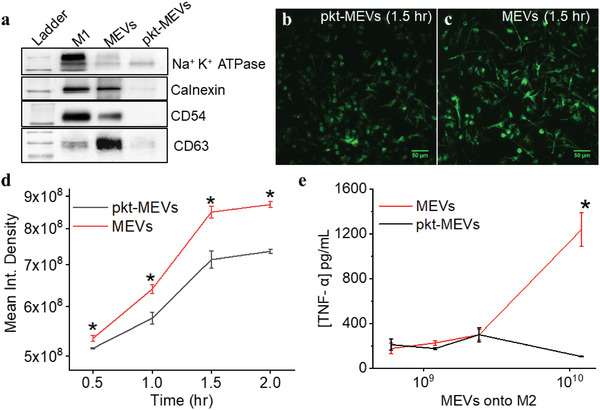
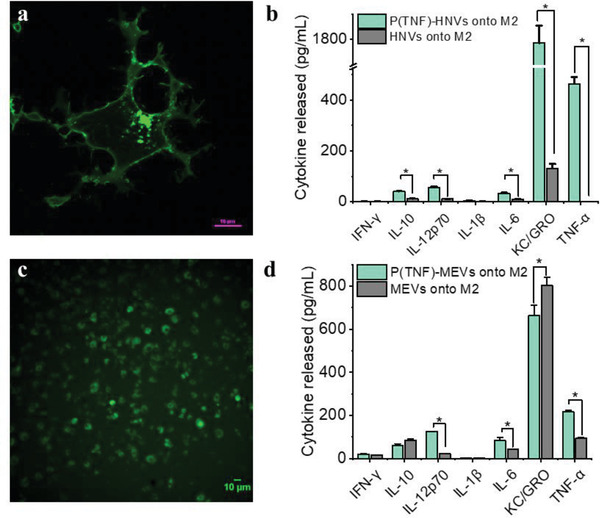
Tumor-associated macrophages are the predominant immune cells present in the tumor microenvironment and mostly exhibit a pro-tumoral M2-like phenotype. However, macrophage biology is reversible allowing them to acquire an anti-tumoral M1-like phenotype in response to external stimuli. A potential therapeutic strategy for treating cancer may be achieved by modulating macrophages from an M2 to an M1-like phenotype with the tumor microenvironment. Here, programmed nanovesicles are generated as an immunomodulatory therapeutic platform with the capability to re-polarize M2 macrophages toward a proinflammatory phenotype. Programmed nanovesicles are engineered from cellular membranes to have specific immunomodulatory properties including the capability to bidirectionally modulate immune cell polarization. These programmed nanovesicles decorated with specific membrane-bound ligands can be targeted toward specific cell types including immune cells. Macrophage-derived vesicles are engineered to enhance immune cell reprogramming toward a proinflammatory phenotype.
肿瘤相关巨噬细胞是肿瘤微环境中主要存在的免疫细胞,大多表现出促肿瘤的 M2 样表型。然而,巨噬细胞的生物学特性是可逆的,它们可以在外部刺激下获得抗肿瘤的 M1 样表型。通过调节肿瘤微环境中的巨噬细胞从 M2 样表型向 M1 样表型转化,可能成为治疗癌症的一种潜在治疗策略。在这里,程序性纳米囊泡被用作一种具有免疫调节治疗作用的平台,能够将 M2 巨噬细胞重新极化为促炎表型。程序性纳米囊泡是由细胞膜工程化而来的,具有特定的免疫调节特性,包括双向调节免疫细胞极化的能力。这些带有特定膜结合配体的程序性纳米囊泡可以靶向特定的细胞类型,包括免疫细胞。巨噬细胞衍生的囊泡被设计用于增强免疫细胞向促炎表型的重编程。