Group of Translational Research in Respiratory Medicine, Institut de Recerca Biomedica de Lleida, Hospital Universitari Arnau de Vilanova-Santa Maria, Lleida, Spain.
Center for Biomedical Network Research in Respiratory Diseases, Madrid, Spain.
J Med Internet Res. 2023 Jun 28;25:e42187. doi: 10.2196/42187.
The World Health Organization's strategy toward healthy aging fosters person-centered integrated care sustained by eHealth systems. However, there is a need for standardized frameworks or platforms accommodating and interconnecting multiple of these systems while ensuring secure, relevant, fair, trust-based data sharing and use. The H2020 project GATEKEEPER aims to implement and test an open-source, European, standard-based, interoperable, and secure framework serving broad populations of aging citizens with heterogeneous health needs.
We aim to describe the rationale for the selection of an optimal group of settings for the multinational large-scale piloting of the GATEKEEPER platform.
The selection of implementation sites and reference use cases (RUCs) was based on the adoption of a double stratification pyramid reflecting the overall health of target populations and the intensity of proposed interventions; the identification of a principles guiding implementation site selection; and the elaboration of guidelines for RUC selection, ensuring clinical relevance and scientific excellence while covering the whole spectrum of citizen complexities and intervention intensities.
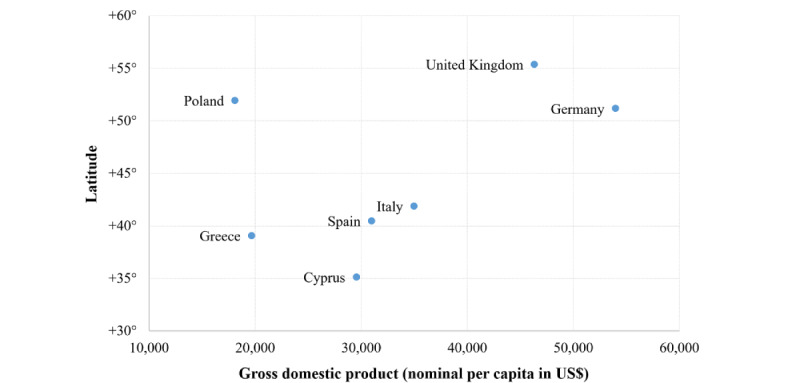
Seven European countries were selected, covering Europe's geographical and socioeconomic heterogeneity: Cyprus, Germany, Greece, Italy, Poland, Spain, and the United Kingdom. These were complemented by the following 3 Asian pilots: Hong Kong, Singapore, and Taiwan. Implementation sites consisted of local ecosystems, including health care organizations and partners from industry, civil society, academia, and government, prioritizing the highly rated European Innovation Partnership on Active and Healthy Aging reference sites. RUCs covered the whole spectrum of chronic diseases, citizen complexities, and intervention intensities while privileging clinical relevance and scientific rigor. These included lifestyle-related early detection and interventions, using artificial intelligence-based digital coaches to promote healthy lifestyle and delay the onset or worsening of chronic diseases in healthy citizens; chronic obstructive pulmonary disease and heart failure decompensations management, proposing integrated care management based on advanced wearable monitoring and machine learning (ML) to predict decompensations; management of glycemic status in diabetes mellitus, based on beat to beat monitoring and short-term ML-based prediction of glycemic dynamics; treatment decision support systems for Parkinson disease, continuously monitoring motor and nonmotor complications to trigger enhanced treatment strategies; primary and secondary stroke prevention, using a coaching app and educational simulations with virtual and augmented reality; management of multimorbid older patients or patients with cancer, exploring novel chronic care models based on digital coaching, and advanced monitoring and ML; high blood pressure management, with ML-based predictions based on different intensities of monitoring through self-managed apps; and COVID-19 management, with integrated management tools limiting physical contact among actors.
This paper provides a methodology for selecting adequate settings for the large-scale piloting of eHealth frameworks and exemplifies with the decisions taken in GATEKEEPER the current views of the WHO and European Commission while moving forward toward a European Data Space.
世界卫生组织的健康老龄化战略促进了以人为中心的整合护理,由电子健康系统提供支持。然而,需要有标准化的框架或平台来容纳和互联多个系统,同时确保安全、相关、公平、基于信任的数据共享和使用。H2020 项目 GATEKEEPER 的目标是实施和测试一个开源的、欧洲的、基于标准的、可互操作的和安全的框架,为具有不同健康需求的老龄化公民提供广泛的服务。
我们旨在描述为多国大规模试点 GATEKEEPER 平台选择最佳设置组的基本原理。
实施地点和参考用例(RUC)的选择基于采用反映目标人群总体健康状况和拟议干预措施强度的双重分层金字塔;确定指导实施地点选择的原则;并制定 RUC 选择指南,确保临床相关性和科学卓越性,同时涵盖公民复杂性和干预强度的整个范围。
选择了七个欧洲国家,涵盖了欧洲的地理和社会经济异质性:塞浦路斯、德国、希腊、意大利、波兰、西班牙和英国。此外,还包括三个亚洲试点:中国香港、新加坡和中国台湾。实施地点包括包括卫生保健组织和来自工业、民间社会、学术界和政府的合作伙伴在内的当地生态系统,优先考虑高评级的欧洲积极健康老龄化创新伙伴关系参考地点。RUC 涵盖了整个慢性疾病、公民复杂性和干预强度范围,同时优先考虑临床相关性和科学严谨性。这些包括与生活方式相关的早期检测和干预,使用基于人工智能的数字教练来促进健康的生活方式,并延迟健康公民慢性疾病的发作或恶化;慢性阻塞性肺疾病和心力衰竭失代偿管理,提出基于先进可穿戴监测和机器学习(ML)的综合护理管理,以预测失代偿;糖尿病患者的血糖状态管理,基于实时监测和基于短期 ML 的血糖动态预测;帕金森病治疗决策支持系统,持续监测运动和非运动并发症,触发增强的治疗策略;原发性和继发性中风预防,使用教练应用程序和具有虚拟现实和增强现实的教育模拟;管理多病老年患者或癌症患者,探索基于数字教练、先进监测和 ML 的新型慢性护理模式;高血压管理,基于自我管理应用程序的不同监测强度的基于 ML 的预测;以及 COVID-19 管理,通过集成管理工具限制参与者之间的身体接触。
本文提供了一种为电子健康框架的大规模试点选择适当设置的方法,并通过 GATEKEEPER 中的决策示例说明了世界卫生组织和欧盟委员会的当前观点,同时朝着建立欧洲数据空间迈进。