Department of Veterinary Medicine, University of Cambridge, Cambridge, United Kingdom.
PLoS One. 2023 Jun 29;18(6):e0287902. doi: 10.1371/journal.pone.0287902. eCollection 2023.
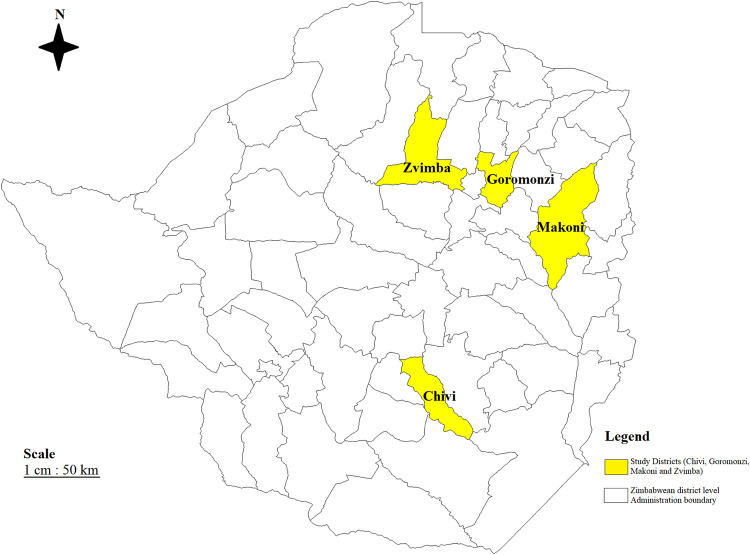
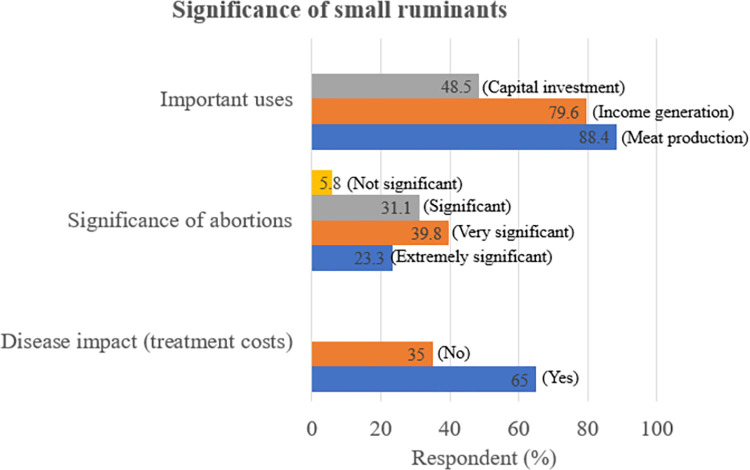
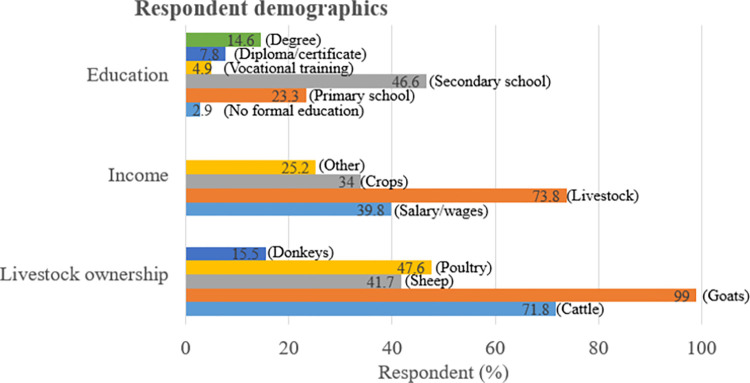
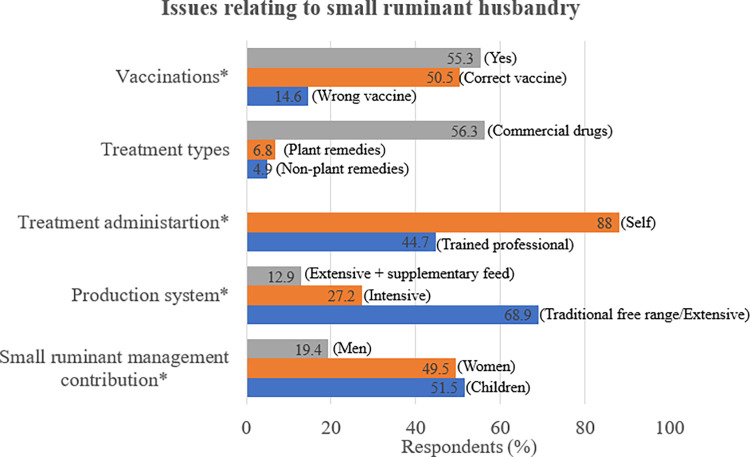
Brucella spp., Toxoplasma gondii, and Chlamydia abortus have long been recognized as zoonoses and significant causes of reproductive failure in small ruminants globally. A cross-sectional study was conducted in August 2020 to determine the seroprevalences of Brucella spp., Toxoplasma gondii and Chlamydia abortus in 398 small ruminants from four districts of Zimbabwe (Chivi, Makoni, Zvimba, and Goromonzi) using Indirect-ELISAs. A structured questionnaire was used to assess the knowledge, attitudes, and practices of 103 smallholder farmers towards small ruminant abortions, Brucella spp., T. gondii and C. abortus, and to obtain a general overview of the significance of small ruminant reproductive failure(s) on their livelihoods. The overall seroprevalences were: 9.1% (95% CI: 6.4-12.3) for Brucella spp., 6.8% (95% CI: 4.5-9.7) for T. gondii and 2.0% (95% CI: 0.9-3.9) for C. abortus. Location, age, parity, and abortion history were associated with Brucella spp. seropositivity. Location was also associated with both T. gondii and C. abortus seropositivity. The questionnaire survey established that 44% of respondents had recently faced reproductive disease challenges within their flocks, with 34% correctly identifying abortion causes and only 10%, 6% and 4% having specific knowledge of Brucella spp., C. abortus and T. gondii, respectively. This study provides the first serological evidence of Brucella spp. in small ruminants since 1996 and builds the evidence on small ruminant toxoplasmosis and chlamydiosis in Zimbabwe. Evidence of these zoonoses in small ruminants and the paucity of knowledge shows the need for a coordinated One Health approach to increase public awareness of these diseases, and to establish effective surveillance and control measures. Further studies are required to establish the role these diseases play in small ruminant reproductive failure(s), to identify the Brucella spp. detected here to species/subspecies level, and to assess the socio-economic impact of reproductive failure in livestock among marginalised rural communities.
布氏杆菌属、刚地弓形虫和衣原体流产亚种长期以来一直被认为是全球小反刍动物的人畜共患病和生殖失败的重要原因。2020 年 8 月,进行了一项横断面研究,使用间接酶联免疫吸附试验(Indirect-ELISAs)检测来自津巴布韦四个地区(奇维、马科尼、齐文巴和戈罗蒙齐)的 398 只小反刍动物的布氏杆菌属、刚地弓形虫和衣原体流产亚种的血清流行率。使用结构化问卷评估了 103 名小农户对小反刍动物流产、布氏杆菌属、刚地弓形虫和衣原体流产亚种的知识、态度和实践,并概述了小反刍动物生殖失败对他们生计的重要性。总体血清流行率为:布氏杆菌属 9.1%(95%CI:6.4-12.3),刚地弓形虫 6.8%(95%CI:4.5-9.7),衣原体流产亚种 2.0%(95%CI:0.9-3.9)。地点、年龄、胎次和流产史与布氏杆菌属血清阳性相关。地点也与刚地弓形虫和衣原体流产亚种血清阳性相关。问卷调查确定,44%的受访者最近在其羊群中面临生殖疾病挑战,34%的人正确识别了流产原因,只有 10%、6%和 4%的人分别对布氏杆菌属、衣原体流产亚种和刚地弓形虫有具体的了解。本研究提供了自 1996 年以来小反刍动物中布氏杆菌属血清学的首次证据,并为津巴布韦小反刍动物弓形虫病和衣原体病提供了证据。这些人畜共患病在小反刍动物中的存在和知识的匮乏表明,需要采取协调一致的“同一健康”方法来提高公众对这些疾病的认识,并建立有效的监测和控制措施。需要进一步的研究来确定这些疾病在小反刍动物生殖失败中的作用,确定在这里检测到的布氏杆菌属到种/亚种水平,并评估生殖失败在边缘化农村社区牲畜中的社会经济影响。