Institute of Microbiology, Department of Biology, ETH Zurich, Zurich, Switzerland.
Science for Life Laboratory, Department of Medical Biochemistry and Microbiology, Uppsala University, Uppsala, Sweden.
PLoS Pathog. 2023 Jun 29;19(6):e1011235. doi: 10.1371/journal.ppat.1011235. eCollection 2023 Jun.
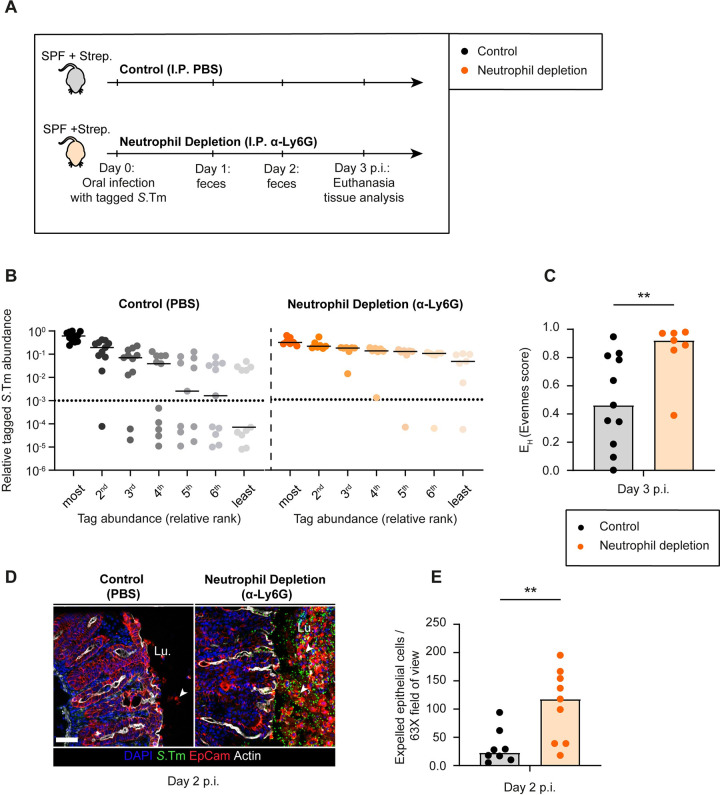
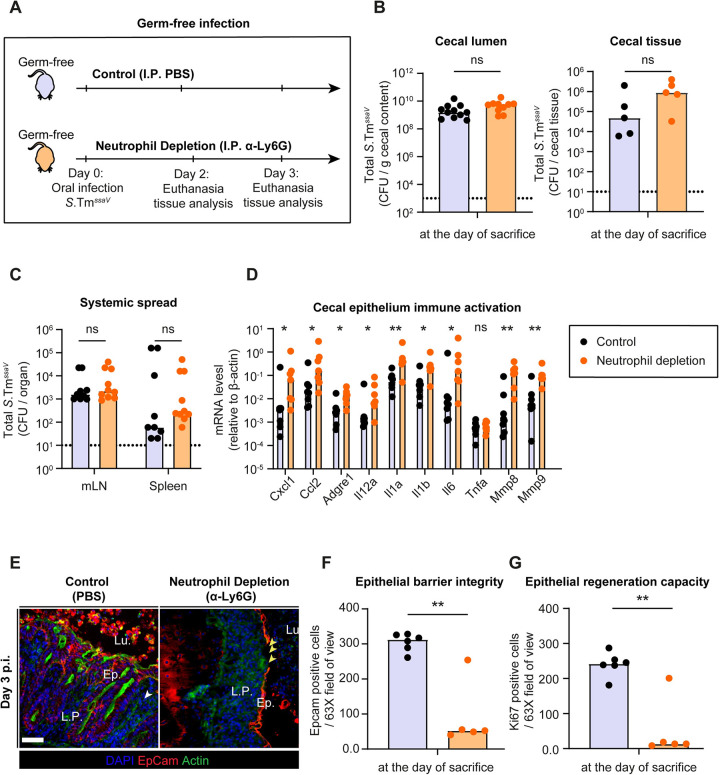
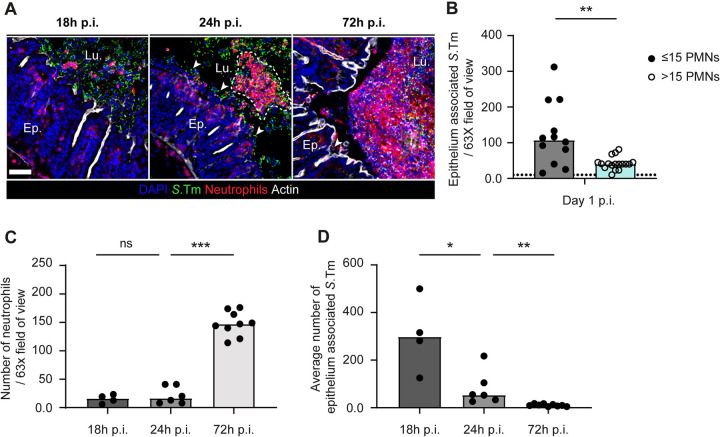
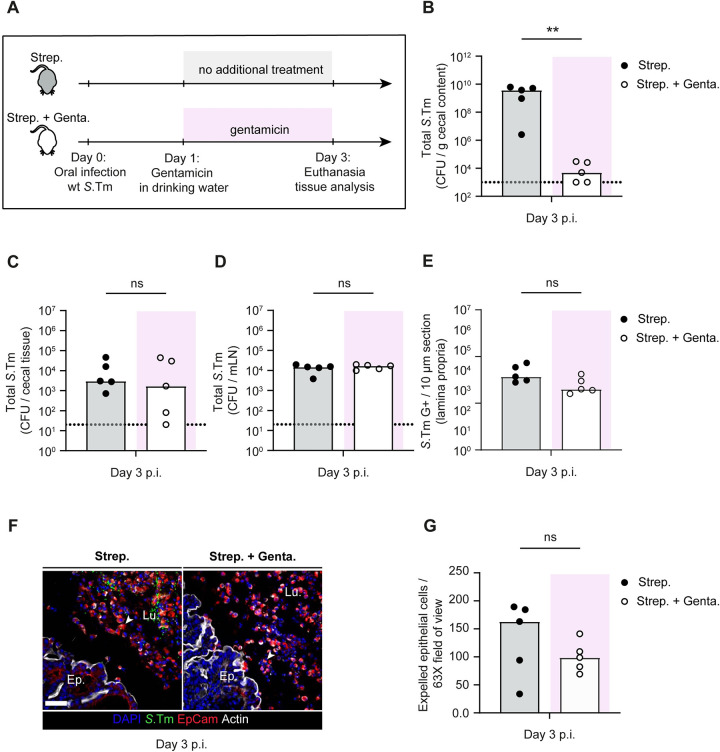
Recruitment of neutrophils into and across the gut mucosa is a cardinal feature of intestinal inflammation in response to enteric infections. Previous work using the model pathogen Salmonella enterica serovar Typhimurium (S.Tm) established that invasion of intestinal epithelial cells by S.Tm leads to recruitment of neutrophils into the gut lumen, where they can reduce pathogen loads transiently. Notably, a fraction of the pathogen population can survive this defense, re-grow to high density, and continue triggering enteropathy. However, the functions of intraluminal neutrophils in the defense against enteric pathogens and their effects on preventing or aggravating epithelial damage are still not fully understood. Here, we address this question via neutrophil depletion in different mouse models of Salmonella colitis, which differ in their degree of enteropathy. In an antibiotic pretreated mouse model, neutrophil depletion by an anti-Ly6G antibody exacerbated epithelial damage. This could be linked to compromised neutrophil-mediated elimination and reduced physical blocking of the gut-luminal S.Tm population, such that the pathogen density remained high near the epithelial surface throughout the infection. Control infections with a ssaV mutant and gentamicin-mediated elimination of gut-luminal pathogens further supported that neutrophils are protecting the luminal surface of the gut epithelium. Neutrophil depletion in germ-free and gnotobiotic mice hinted that the microbiota can modulate the infection kinetics and ameliorate epithelium-disruptive enteropathy even in the absence of neutrophil-protection. Together, our data indicate that the well-known protective effect of the microbiota is augmented by intraluminal neutrophils. After antibiotic-mediated microbiota disruption, neutrophils are central for maintaining epithelial barrier integrity during acute Salmonella-induced gut inflammation, by limiting the sustained pathogen assault on the epithelium in a critical window of the infection.
中性粒细胞募集到肠道黏膜并穿过肠道黏膜是肠道黏膜对肠道感染发生炎症反应的一个主要特征。先前使用病原体鼠伤寒沙门氏菌(S.Tm)的模型进行的研究工作表明,S.Tm 对肠道上皮细胞的侵袭会导致中性粒细胞募集到肠道腔中,在那里它们可以暂时减少病原体负荷。值得注意的是,一部分病原体种群可以抵御这种防御,重新生长到高密度,并继续引发肠病。然而,腔内中性粒细胞在防御肠道病原体中的作用及其防止或加重上皮损伤的效果仍不完全清楚。在这里,我们通过在不同的沙门氏菌结肠炎小鼠模型中耗尽中性粒细胞来解决这个问题,这些模型在肠病的严重程度上有所不同。在抗生素预处理的小鼠模型中,抗 Ly6G 抗体耗尽中性粒细胞会加剧上皮损伤。这可能与中性粒细胞介导的消除作用受损以及对肠道腔 S.Tm 种群的物理阻挡减少有关,因此在整个感染过程中,病原体密度在靠近上皮表面的部位仍然很高。用 ssaV 突变体进行对照感染和用庆大霉素消除肠道腔中的病原体进一步支持了这样的观点,即中性粒细胞正在保护肠道上皮的腔面。在无菌和无菌小鼠中耗尽中性粒细胞表明,即使在没有中性粒细胞保护的情况下,微生物群也可以调节感染动力学并改善破坏上皮的肠病。总之,我们的数据表明,微生物群的众所周知的保护作用因腔内中性粒细胞而增强。在抗生素介导的微生物群破坏后,中性粒细胞在急性沙门氏菌诱导的肠道炎症期间对于维持上皮屏障完整性至关重要,通过在感染的关键窗口限制对上皮的持续病原体攻击。