• 文献检索
  • 文档翻译
  • 深度研究
  • 学术资讯
  • Suppr Zotero 插件Zotero 插件
  • 邀请有礼
  • 套餐&价格
  • 历史记录
应用&插件
Suppr Zotero 插件Zotero 插件浏览器插件Mac 客户端Windows 客户端微信小程序
定价
高级版会员购买积分包购买API积分包
服务
文献检索文档翻译深度研究API 文档MCP 服务
关于我们
关于 Suppr公司介绍联系我们用户协议隐私条款
关注我们

Suppr 超能文献

核心技术专利:CN118964589B侵权必究
粤ICP备2023148730 号-1Suppr @ 2026

文献检索

告别复杂PubMed语法,用中文像聊天一样搜索,搜遍4000万医学文献。AI智能推荐,让科研检索更轻松。

立即免费搜索

文件翻译

保留排版,准确专业,支持PDF/Word/PPT等文件格式,支持 12+语言互译。

免费翻译文档

深度研究

AI帮你快速写综述,25分钟生成高质量综述,智能提取关键信息,辅助科研写作。

立即免费体验

蛇毒 l-氨基酸氧化酶的作用机制及其在癌症治疗中的双刃剑效应:Pannexin 1 介导体细胞因子 6 表达的作用。

Action mechanism of snake venom l-amino acid oxidase and its double-edged sword effect on cancer treatment: Role of pannexin 1-mediated interleukin-6 expression.

机构信息

Institute of Bioinformatics and Structural Biology, College of Life Science, National Tsing Hua University, Hsinchu, 300044, Taiwan, ROC.

Institute of Molecular and Cellular Biology, College of Life Science, National Tsing Hua University, Hsinchu, 300044, Taiwan, ROC.

出版信息

Redox Biol. 2023 Aug;64:102791. doi: 10.1016/j.redox.2023.102791. Epub 2023 Jun 22.

DOI:10.1016/j.redox.2023.102791
PMID:37385076
原文链接:https://pmc.ncbi.nlm.nih.gov/articles/PMC10331595/
Abstract

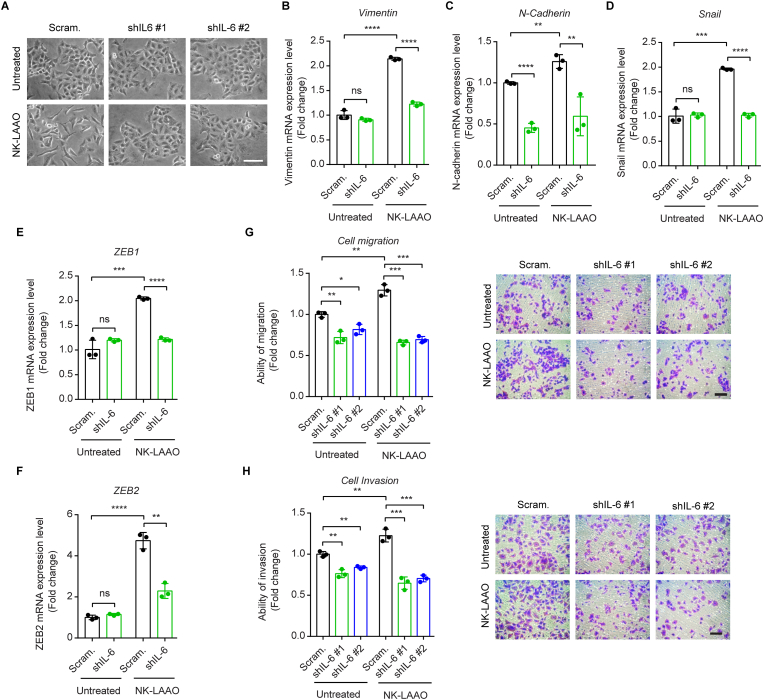
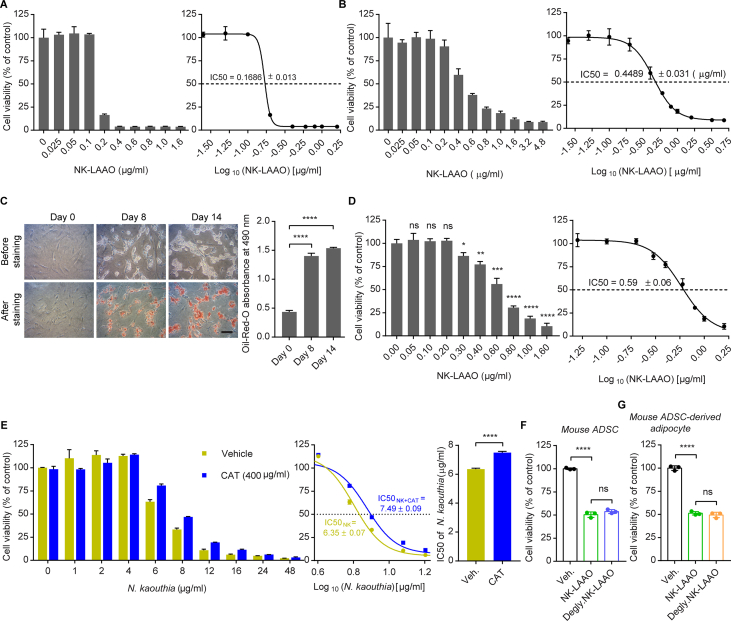
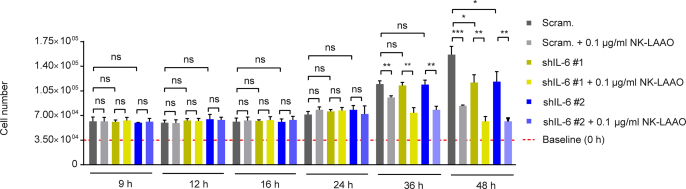
Snake venom l-amino acid oxidases (svLAAOs) have been recognized as promising candidates for anticancer therapeutics. However, multiple aspects of their catalytic mechanism and the overall responses of cancer cells to these redox enzymes remain ambiguous. Here, we present an analysis of the phylogenetic relationships and active site-related residues among svLAAOs and reveal that the previously proposed critical catalytic residue His 223 is highly conserved in the viperid but not the elapid svLAAO clade. To gain further insight into the action mechanism of the elapid svLAAOs, we purify and characterize the structural, biochemical, and anticancer therapeutic potentials of the Thailand elapid snake Naja kaouthia LAAO (NK-LAAO). We find that NK-LAAO, with Ser 223, exhibits high catalytic activity toward hydrophobic l-amino acid substrates. Moreover, NK-LAAO induces substantial oxidative stress-mediated cytotoxicity with the magnitude relying on both the levels of extracellular hydrogen peroxide (HO) and intracellular reactive oxygen species (ROS) generated during the enzymatic redox reactions, but not being influenced by the N-linked glycans on its surface. Unexpectedly, we discover a tolerant mechanism deployed by cancer cells to dampen the anticancer activities of NK-LAAO. NK-LAAO treatment amplifies interleukin (IL)-6 expression via the pannexin 1 (Panx1)-directed intracellular calcium (iCa) signaling pathway to confer adaptive and aggressive phenotypes on cancer cells. Accordingly, IL-6 silencing renders cancer cells vulnerable to NK-LAAO-induced oxidative stress together with abrogating NK-LAAO-stimulated metastatic acquisition. Collectively, our study urges caution when using svLAAOs in cancer treatment and identifies the Panx1/iCa/IL-6 axis as a therapeutic target for improving the effectiveness of svLAAOs-based anticancer therapies.

摘要

蛇毒 L-氨基酸氧化酶(svLAAOs)已被认为是有前途的抗癌治疗候选药物。然而,它们的催化机制的多个方面以及癌细胞对这些氧化还原酶的整体反应仍然不清楚。在这里,我们分析了 svLAAOs 的系统发育关系和活性位点相关残基,并揭示了先前提出的关键催化残基 His223 在蝰蛇科而非眼镜蛇科 svLAAO 分支中高度保守。为了更深入地了解眼镜蛇科 svLAAOs 的作用机制,我们纯化并表征了泰国眼镜蛇 Naja kaouthia LAAO(NK-LAAO)的结构、生化和抗癌治疗潜力。我们发现 NK-LAAO 具有 Ser223,对疏水性 L-氨基酸底物表现出高催化活性。此外,NK-LAAO 诱导大量氧化应激介导的细胞毒性,其程度既依赖于细胞外过氧化氢(HO)的水平,也依赖于酶促氧化还原反应过程中产生的细胞内活性氧(ROS)水平,但不受其表面 N-连接糖基的影响。出乎意料的是,我们发现癌细胞采用了一种耐受机制来抑制 NK-LAAO 的抗癌活性。NK-LAAO 通过连接蛋白 1(Panx1)介导的细胞内钙(iCa)信号通路增加白细胞介素(IL)-6 的表达,从而赋予癌细胞适应性和侵袭性表型。因此,IL-6 沉默使癌细胞对 NK-LAAO 诱导的氧化应激敏感,并消除 NK-LAAO 刺激的转移获得。总的来说,我们的研究告诫在癌症治疗中使用 svLAAOs 时要谨慎,并确定 Panx1/iCa/IL-6 轴作为提高基于 svLAAOs 的抗癌疗法有效性的治疗靶点。

https://cdn.ncbi.nlm.nih.gov/pmc/blobs/45b6/10331595/7319c00d82c0/mmcfigs9.jpg
https://cdn.ncbi.nlm.nih.gov/pmc/blobs/45b6/10331595/315fbbf20425/ga1.jpg
https://cdn.ncbi.nlm.nih.gov/pmc/blobs/45b6/10331595/51cd115dc382/gr1.jpg
https://cdn.ncbi.nlm.nih.gov/pmc/blobs/45b6/10331595/4866c82f2c86/gr2.jpg
https://cdn.ncbi.nlm.nih.gov/pmc/blobs/45b6/10331595/654232e930d4/gr3.jpg
https://cdn.ncbi.nlm.nih.gov/pmc/blobs/45b6/10331595/928109583a85/gr4.jpg
https://cdn.ncbi.nlm.nih.gov/pmc/blobs/45b6/10331595/ea52c5eb8eeb/gr5.jpg
https://cdn.ncbi.nlm.nih.gov/pmc/blobs/45b6/10331595/b1fd08b520e8/gr6.jpg
https://cdn.ncbi.nlm.nih.gov/pmc/blobs/45b6/10331595/84d527aa6975/mmcfigs1.jpg
https://cdn.ncbi.nlm.nih.gov/pmc/blobs/45b6/10331595/06b81eba2d69/mmcfigs2.jpg
https://cdn.ncbi.nlm.nih.gov/pmc/blobs/45b6/10331595/dc41d4ceb79c/mmcfigs3.jpg
https://cdn.ncbi.nlm.nih.gov/pmc/blobs/45b6/10331595/ba56ab6bb751/mmcfigs4.jpg
https://cdn.ncbi.nlm.nih.gov/pmc/blobs/45b6/10331595/39e81c9f01dd/mmcfigs5.jpg
https://cdn.ncbi.nlm.nih.gov/pmc/blobs/45b6/10331595/c644905095ed/mmcfigs6.jpg
https://cdn.ncbi.nlm.nih.gov/pmc/blobs/45b6/10331595/c4b545579c40/mmcfigs7.jpg
https://cdn.ncbi.nlm.nih.gov/pmc/blobs/45b6/10331595/d02b3a9b0cfe/mmcfigs8.jpg
https://cdn.ncbi.nlm.nih.gov/pmc/blobs/45b6/10331595/7319c00d82c0/mmcfigs9.jpg
https://cdn.ncbi.nlm.nih.gov/pmc/blobs/45b6/10331595/315fbbf20425/ga1.jpg
https://cdn.ncbi.nlm.nih.gov/pmc/blobs/45b6/10331595/51cd115dc382/gr1.jpg
https://cdn.ncbi.nlm.nih.gov/pmc/blobs/45b6/10331595/4866c82f2c86/gr2.jpg
https://cdn.ncbi.nlm.nih.gov/pmc/blobs/45b6/10331595/654232e930d4/gr3.jpg
https://cdn.ncbi.nlm.nih.gov/pmc/blobs/45b6/10331595/928109583a85/gr4.jpg
https://cdn.ncbi.nlm.nih.gov/pmc/blobs/45b6/10331595/ea52c5eb8eeb/gr5.jpg
https://cdn.ncbi.nlm.nih.gov/pmc/blobs/45b6/10331595/b1fd08b520e8/gr6.jpg
https://cdn.ncbi.nlm.nih.gov/pmc/blobs/45b6/10331595/84d527aa6975/mmcfigs1.jpg
https://cdn.ncbi.nlm.nih.gov/pmc/blobs/45b6/10331595/06b81eba2d69/mmcfigs2.jpg
https://cdn.ncbi.nlm.nih.gov/pmc/blobs/45b6/10331595/dc41d4ceb79c/mmcfigs3.jpg
https://cdn.ncbi.nlm.nih.gov/pmc/blobs/45b6/10331595/ba56ab6bb751/mmcfigs4.jpg
https://cdn.ncbi.nlm.nih.gov/pmc/blobs/45b6/10331595/39e81c9f01dd/mmcfigs5.jpg
https://cdn.ncbi.nlm.nih.gov/pmc/blobs/45b6/10331595/c644905095ed/mmcfigs6.jpg
https://cdn.ncbi.nlm.nih.gov/pmc/blobs/45b6/10331595/c4b545579c40/mmcfigs7.jpg
https://cdn.ncbi.nlm.nih.gov/pmc/blobs/45b6/10331595/d02b3a9b0cfe/mmcfigs8.jpg
https://cdn.ncbi.nlm.nih.gov/pmc/blobs/45b6/10331595/7319c00d82c0/mmcfigs9.jpg

相似文献

1
Action mechanism of snake venom l-amino acid oxidase and its double-edged sword effect on cancer treatment: Role of pannexin 1-mediated interleukin-6 expression.蛇毒 l-氨基酸氧化酶的作用机制及其在癌症治疗中的双刃剑效应:Pannexin 1 介导体细胞因子 6 表达的作用。
Redox Biol. 2023 Aug;64:102791. doi: 10.1016/j.redox.2023.102791. Epub 2023 Jun 22.
2
Structural and functional properties of Bp-LAAO, a new L-amino acid oxidase isolated from Bothrops pauloensis snake venom.从保罗矛头蝮蛇毒中分离出的一种新型L-氨基酸氧化酶Bp-LAAO的结构和功能特性
Biochimie. 2009 Apr;91(4):490-501. doi: 10.1016/j.biochi.2008.12.004. Epub 2008 Dec 24.
3
Cytotoxicity and inhibition of platelet aggregation caused by an l-amino acid oxidase from Bothrops leucurus venom.矛头蝮蛇毒L-氨基酸氧化酶引起的细胞毒性及对血小板聚集的抑制作用。
Biochim Biophys Acta. 2011 Jul;1810(7):683-94. doi: 10.1016/j.bbagen.2011.04.003. Epub 2011 Apr 22.
4
L-amino acid oxidase from snake venom and its anticancer potential.蛇毒中的L-氨基酸氧化酶及其抗癌潜力。
Toxicon. 2018 Mar 15;144:7-13. doi: 10.1016/j.toxicon.2018.01.015. Epub 2018 Feb 4.
5
Cobra () venom L-amino acid oxidase (NNLAAO70) induces apoptosis and secondary necrosis in human lung epithelial cancer cells.眼镜王蛇()毒液 L-氨基酸氧化酶(NNLAAO70)诱导人肺上皮癌细胞凋亡和继发性坏死。
J Biosci. 2024;49.
6
L-amino acid oxidase isolated from Micrurus mipartitus snake venom (MipLAAO) specifically induces apoptosis in acute lymphoblastic leukemia cells mostly via oxidative stress-dependent signaling mechanism.从矛头蝮蛇蛇毒中分离得到的 L-氨基酸氧化酶(MipLAAO)通过氧化应激依赖的信号机制特异性诱导急性淋巴细胞白血病细胞凋亡。
Int J Biol Macromol. 2019 Aug 1;134:1052-1062. doi: 10.1016/j.ijbiomac.2019.05.174. Epub 2019 May 23.
7
Biochemical and functional properties of a new l-amino acid oxidase (LAAO) from Micrurus lemniscatus snake venom.来自矛头蝮蛇毒液的一种新的 l-氨基酸氧化酶(LAAO)的生化和功能特性。
Int J Biol Macromol. 2020 Jul 1;154:1517-1527. doi: 10.1016/j.ijbiomac.2019.11.033. Epub 2019 Nov 20.
8
Isolation and pharmacological characterization of a new cytotoxic L-amino acid oxidase from Bungarus multicinctus snake venom.从眼镜王蛇蛇毒中分离得到一种新型细胞毒性 L-氨基酸氧化酶及其药理学特性研究。
J Ethnopharmacol. 2018 Mar 1;213:311-320. doi: 10.1016/j.jep.2017.11.026. Epub 2017 Nov 26.
9
The anti-ovarian carcinoma activity of L-amino acid oxidase from Crotalus adamanteus venom in vivo and in vitro.响尾蛇毒 L-氨基酸氧化酶的体内和体外抗卵巢癌活性。
Med Oncol. 2022 Jun 6;39(8):112. doi: 10.1007/s12032-022-01729-5.
10
Exosome Liberation by Human Neutrophils under L-Amino Acid Oxidase of Venom Action.人中性粒细胞在毒液作用下的 L-氨基酸氧化酶的外泌体释放。
Toxins (Basel). 2023 Oct 25;15(11):625. doi: 10.3390/toxins15110625.

引用本文的文献

1
Animal Venoms as Potential Antitumor Agents Against Leukemia and Lymphoma.动物毒液作为对抗白血病和淋巴瘤的潜在抗肿瘤剂
Cancers (Basel). 2025 Jul 14;17(14):2331. doi: 10.3390/cancers17142331.
2
Snake Venom Compounds: A New Frontier in the Battle Against Antibiotic-Resistant Infections.蛇毒化合物:对抗抗生素耐药性感染的新前沿。
Toxins (Basel). 2025 May 1;17(5):221. doi: 10.3390/toxins17050221.
3
Biomedical and Biotechnological Potential of Animal Venoms: Snake Venoms and their Antimicrobial Applications.动物毒液的生物医学和生物技术潜力:蛇毒及其抗菌应用

本文引用的文献

1
Ancestral L-amino acid oxidases for deracemization and stereoinversion of amino acids.用于氨基酸去消旋化和立体反转的祖先L-氨基酸氧化酶。
Commun Chem. 2020 Dec 4;3(1):181. doi: 10.1038/s42004-020-00432-8.
2
Guidelines for measuring reactive oxygen species and oxidative damage in cells and in vivo.细胞和体内活性氧和氧化损伤测量指南。
Nat Metab. 2022 Jun;4(6):651-662. doi: 10.1038/s42255-022-00591-z. Epub 2022 Jun 27.
3
The chemistry of snake venom and its medicinal potential.蛇毒的化学性质及其药用潜力。
Curr Med Chem. 2025;32(14):2683-2710. doi: 10.2174/0109298673290981240416070550.
Nat Rev Chem. 2022;6(7):451-469. doi: 10.1038/s41570-022-00393-7. Epub 2022 Jun 10.
4
Tumor suppressor p53 restrains cancer cell dissemination by modulating mitochondrial dynamics.肿瘤抑制因子p53通过调节线粒体动力学来抑制癌细胞扩散。
Oncogenesis. 2022 May 19;11(1):26. doi: 10.1038/s41389-022-00401-x.
5
Endothelial pannexin-1 channels modulate macrophage and smooth muscle cell activation in abdominal aortic aneurysm formation.内皮细胞 Pannexin-1 通道调节腹主动脉瘤形成中的巨噬细胞和平滑肌细胞的激活。
Nat Commun. 2022 Mar 21;13(1):1521. doi: 10.1038/s41467-022-29233-4.
6
SignalP 6.0 predicts all five types of signal peptides using protein language models.SignalP 6.0 使用蛋白质语言模型预测所有五种类型的信号肽。
Nat Biotechnol. 2022 Jul;40(7):1023-1025. doi: 10.1038/s41587-021-01156-3. Epub 2022 Jan 3.
7
Microenvironmental IL-6 inhibits anti-cancer immune responses generated by cytotoxic chemotherapy.微环境中的白细胞介素 6 抑制细胞毒性化疗产生的抗肿瘤免疫反应。
Nat Commun. 2021 Oct 28;12(1):6218. doi: 10.1038/s41467-021-26407-4.
8
Purinergic signaling in the modulation of redox biology.嘌呤能信号在氧化还原生物学中的调控作用。
Redox Biol. 2021 Nov;47:102137. doi: 10.1016/j.redox.2021.102137. Epub 2021 Sep 22.
9
Antimicrobial properties of L-amino acid oxidase: biochemical features and biomedical applications.L-氨基酸氧化酶的抗菌特性:生化特性及生物医学应用
Appl Microbiol Biotechnol. 2021 Jun;105(12):4819-4832. doi: 10.1007/s00253-021-11381-0. Epub 2021 Jun 9.
10
Towards complete and error-free genome assemblies of all vertebrate species.致力于完成所有脊椎动物物种的完整且无错误的基因组组装。
Nature. 2021 Apr;592(7856):737-746. doi: 10.1038/s41586-021-03451-0. Epub 2021 Apr 28.