
评估一种创新的艾滋病毒自我检测服务,该服务通过人工智能聊天机器人提供基于网络的实时咨询(HIVST-聊天机器人),以提高中国男男性行为者的艾滋病毒自我检测使用率:一项非劣效性随机对照试验方案。
Evaluating an Innovative HIV Self-Testing Service With Web-Based, Real-Time Counseling Provided by an Artificial Intelligence Chatbot (HIVST-Chatbot) in Increasing HIV Self-Testing Use Among Chinese Men Who Have Sex With Men: Protocol for a Noninferiority Randomized Controlled Trial.
作者信息
Chen Siyu, Zhang Qingpeng, Chan Chee-Kit, Yu Fuk-Yuen, Chidgey Andrew, Fang Yuan, Mo Phoenix K H, Wang Zixin
机构信息
Centre for Health Behaviours Research, Jockey Club School of Public Health and Primary Care, Faculty of Medicine, The Chinese University of Hong Kong, Hong Kong, Hong Kong.
School of Data Science, The City University of Hong Kong, Hong Kong, Hong Kong.
出版信息
JMIR Res Protoc. 2023 Jun 30;12:e48447. doi: 10.2196/48447.
BACKGROUND
Counseling support for HIV self-testing (HIVST) users is essential to ensure support and linkage to care among men who have sex with men (MSM). An HIVST service with web-based real-time instruction, pretest, and posttest counseling provided by trained administrators (HIVST-OIC) was developed by previous projects. Although the HIVST-OIC was highly effective in increasing HIVST uptake and the proportion of HIVST users receiving counseling along with testing, it required intensive resources to implement and sustain. The service capacity of HIVST-OIC cannot meet the increasing demands of HIVST.
OBJECTIVE
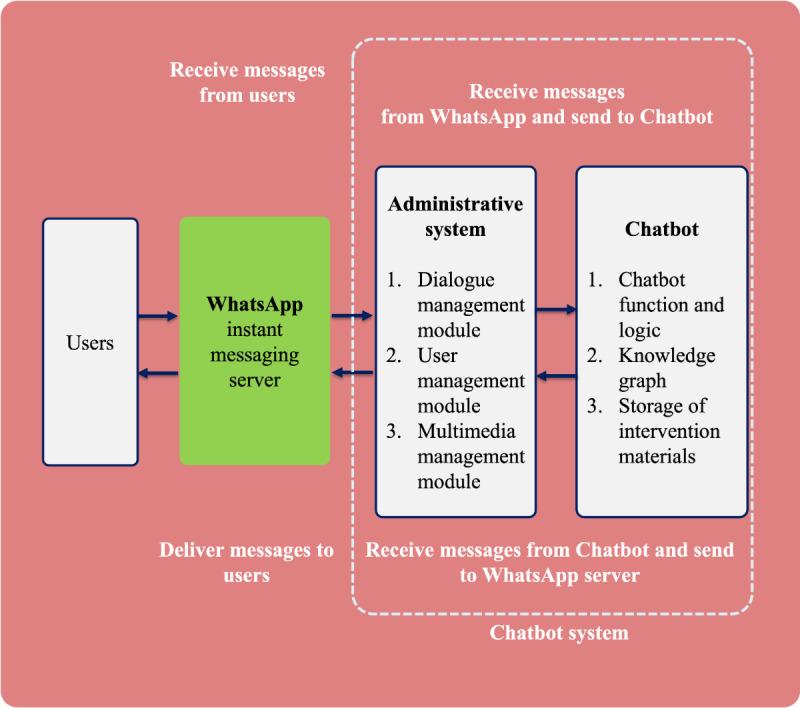
This randomized controlled trial primarily aims to establish whether HIVST-chatbot, an innovative HIVST service with web-based real-time instruction and counseling provided by a fully automated chatbot, would produce effects that are similar to HIVST-OIC in increasing HIVST uptake and the proportion of HIVST users receiving counseling alongside testing among MSM within a 6-month follow-up period.
METHODS
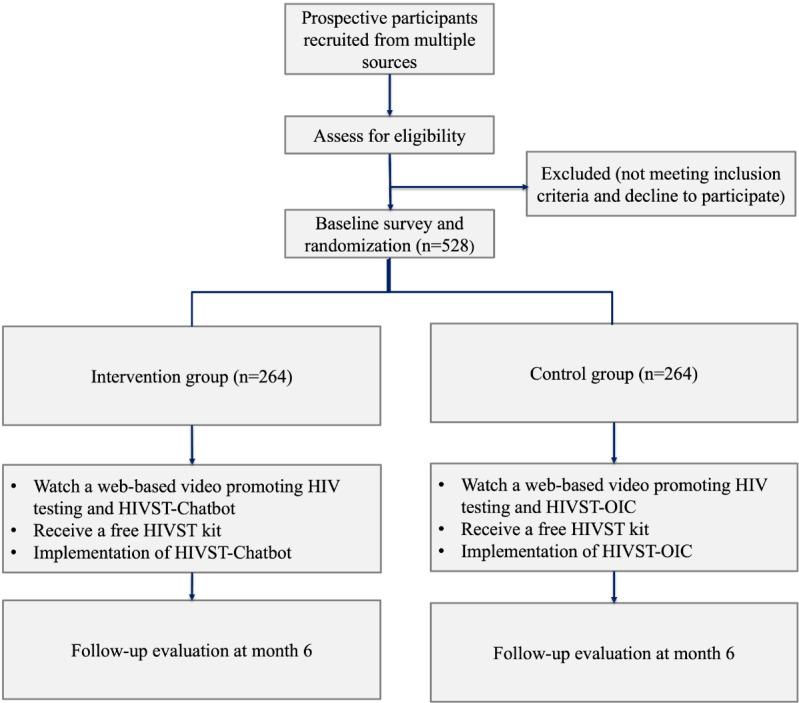
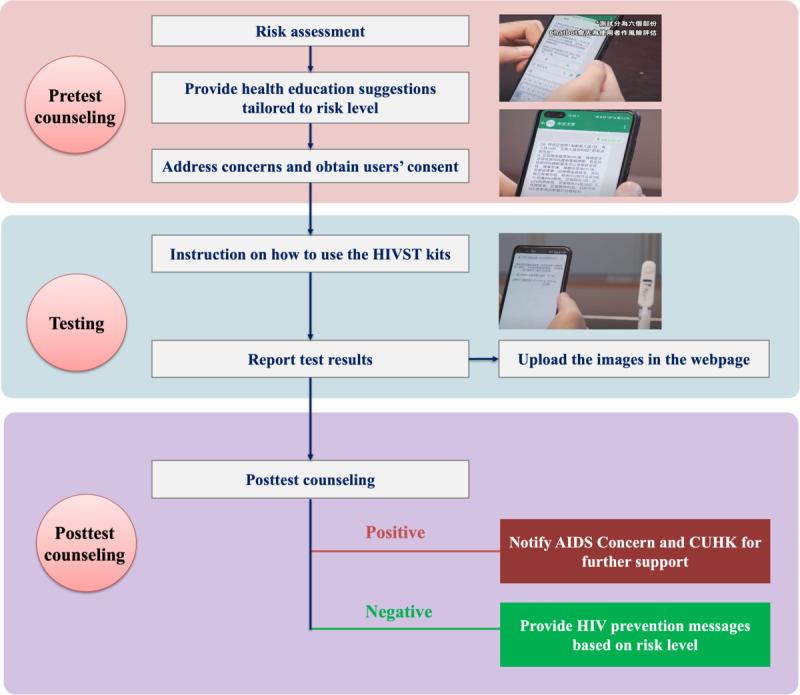
A parallel-group, noninferiority randomized controlled trial will be conducted with Chinese-speaking MSM aged ≥18 years with access to live-chat applications. A total of 528 participants will be recruited through multiple sources, including outreach in gay venues, web-based advertisement, and peer referral. After completing the baseline telephone survey, participants will be randomized evenly into the intervention or control groups. Intervention group participants will watch a web-based video promoting HIVST-chatbot and receive a free HIVST kit. The chatbot will contact the participant to implement HIVST and provide standard-of-care, real-time pretest and posttest counseling and instructions on how to use the HIVST kit through WhatsApp. Control group participants will watch a web-based video promoting HIVST-OIC and receive a free HIVST kit in the same manner. Upon appointment, a trained testing administrator will implement HIVST and provide standard-of-care, real-time pretest and posttest counseling and instructions on how to use the HIVST kit through live-chat applications. All participants will complete a telephone follow-up survey 6 months after the baseline. The primary outcomes are HIVST uptake and the proportion of HIVST users receiving counseling support along with testing in the past 6 months, measured at month 6. Secondary outcomes include sexual risk behaviors and uptake of HIV testing other than HIVST during the follow-up period. Intention-to-treat analysis will be used.
RESULTS
Recruitment and enrollment of participants started in April 2023.
CONCLUSIONS
This study will generate important research and policy implications regarding chatbot use in HIVST services. If HIVST-chatbot is proven noninferior to HIVST-OIC, it can be easily integrated into existing HIVST services in Hong Kong, given its relatively low resource requirements for implementation and maintenance. HIVST-chatbot can potentially overcome the barriers to using HIVST. Therefore, the coverage of HIV testing, the level of support, and the linkage to care for MSM HIVST users will be increased.
TRIAL REGISTRATION
ClinicalTrial.gov NCT05796622; https://clinicaltrials.gov/ct2/show/NCT05796622.
INTERNATIONAL REGISTERED REPORT IDENTIFIER (IRRID): PRR1-10.2196/48447.
背景
为艾滋病毒自我检测(HIVST)使用者提供咨询支持对于确保男男性行为者(MSM)获得支持并与医疗服务建立联系至关重要。先前的项目开发了一种由经过培训的管理人员提供基于网络的实时指导、检测前和检测后咨询的HIVST服务(HIVST-OIC)。尽管HIVST-OIC在提高HIVST的使用率以及接受咨询的HIVST使用者比例方面非常有效,但实施和维持该服务需要大量资源。HIVST-OIC的服务能力无法满足HIVST日益增长的需求。
目的
这项随机对照试验的主要目的是确定HIVST-聊天机器人(一种由全自动聊天机器人提供基于网络的实时指导和咨询的创新HIVST服务)在6个月的随访期内,在提高HIVST使用率以及接受咨询的HIVST使用者比例方面是否会产生与HIVST-OIC相似的效果。
方法
将对年龄≥18岁、能够使用即时通讯应用程序的华语男男性行为者进行一项平行组、非劣效性随机对照试验。总共528名参与者将通过多种途径招募,包括在同性恋场所外展、网络广告和同伴推荐。完成基线电话调查后,参与者将被均匀随机分配到干预组或对照组。干预组参与者将观看一段宣传HIVST-聊天机器人的网络视频,并获得一个免费的HIVST检测试剂盒。聊天机器人将与参与者联系以实施HIVST,并通过WhatsApp提供标准护理、实时检测前和检测后咨询以及关于如何使用HIVST检测试剂盒的说明。对照组参与者将观看一段宣传HIVST-OIC的网络视频,并以相同方式获得一个免费的HIVST检测试剂盒。预约后,一名经过培训的检测管理人员将通过即时通讯应用程序实施HIVST,并提供标准护理、实时检测前和检测后咨询以及关于如何使用HIVST检测试剂盒的说明。所有参与者将在基线后6个月完成电话随访调查。主要结局是HIVST使用率以及在过去6个月内接受咨询支持并同时进行检测的HIVST使用者比例,在第6个月进行测量。次要结局包括随访期间的性风险行为以及除HIVST之外的HIV检测使用率。将采用意向性分析。
结果
参与者的招募和入组于2023年4月开始。
结论
本研究将产生关于在HIVST服务中使用聊天机器人的重要研究和政策意义。如果HIVST-聊天机器人被证明不劣于HIVST-OIC,鉴于其实施和维护所需资源相对较低,它可以很容易地整合到香港现有的HIVST服务中。HIVST-聊天机器人有可能克服使用HIVST的障碍。因此,将提高HIV检测的覆盖率、支持水平以及与MSM HIVST使用者的医疗服务联系。
试验注册
ClinicalTrial.gov NCT05796622;https://clinicaltrials.gov/ct2/show/NCT05796622。
国际注册报告识别码(IRRID):PRR1-10.2196/48447。
 Zotero 插件