Department of Experimental Medicine, McGill University, Montréal, Quebec, Canada.
Department of Biomedical Engineering, McGill University, Montréal, Quebec, Canada.
PeerJ. 2023 Jun 27;11:e15578. doi: 10.7717/peerj.15578. eCollection 2023.
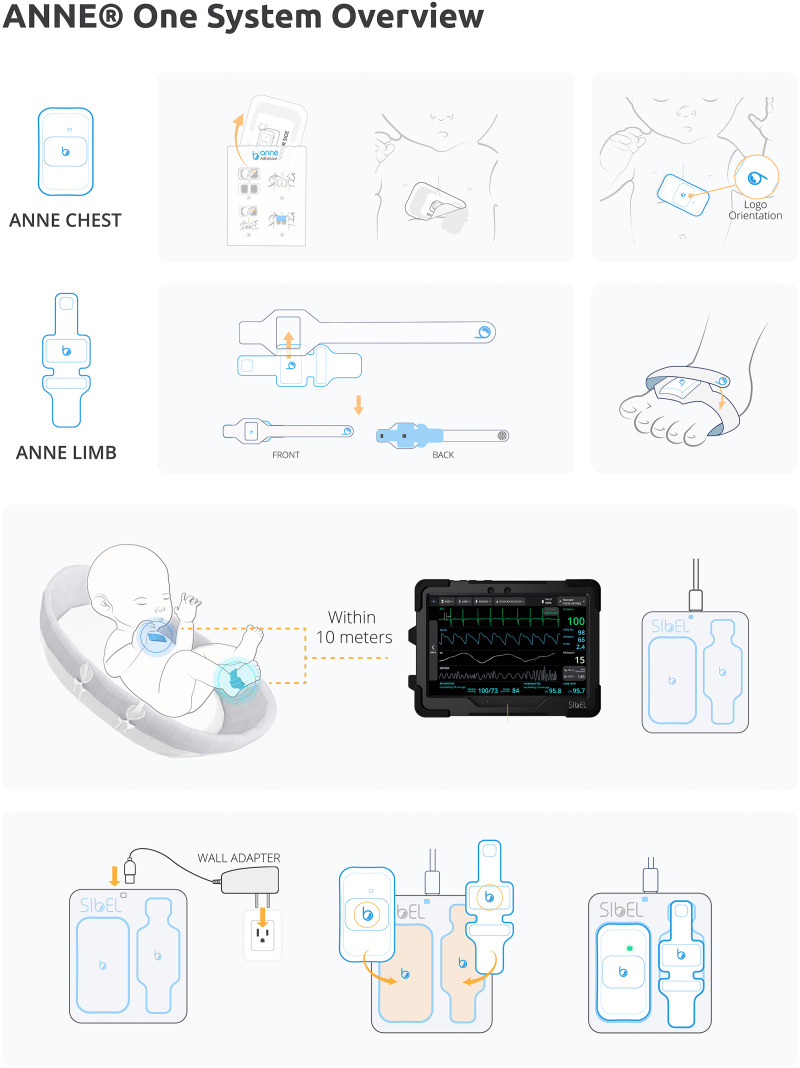
Continuous monitoring of vital signs and other biological signals in the Neonatal Intensive Care Unit (NICU) requires sensors connected to the bedside monitors by wires and cables. This monitoring system presents challenges such as risks for skin damage or infection, possibility of tangling around the patient body, or damage of the wires, which may complicate routine care. Furthermore, the presence of cables and wires can act as a barrier for parent-infant interactions and skin to skin contact. This study will investigate the use of a new wireless sensor for routine vital monitoring in the NICU.
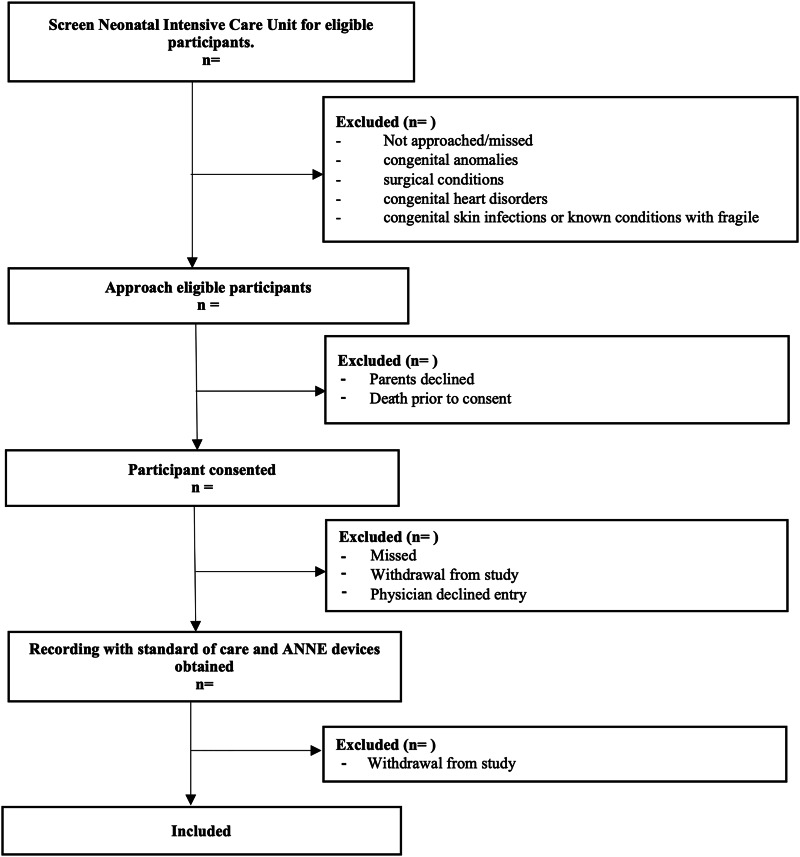
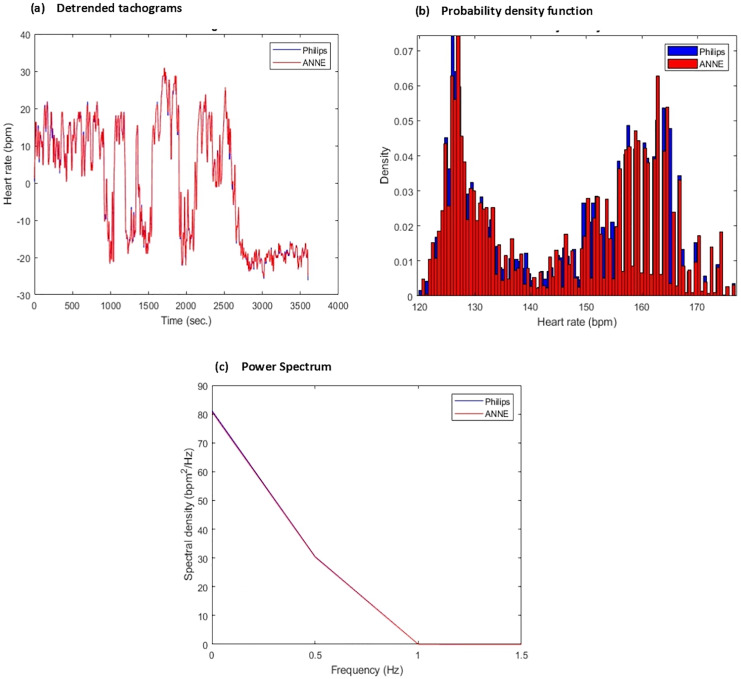
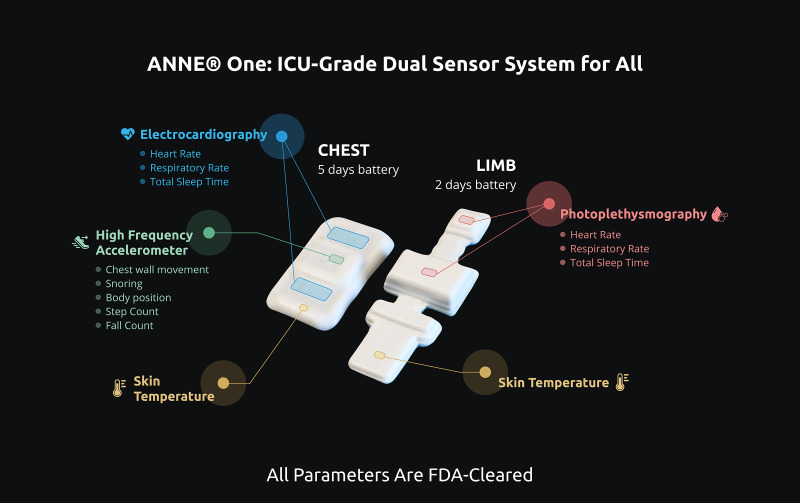
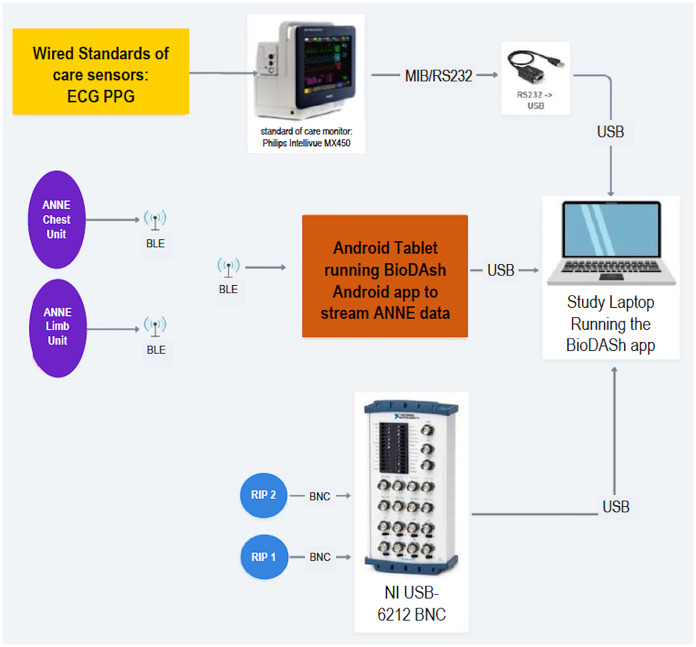
Forty-eight neonates will be recruited from the Montreal Children's Hospital NICU. The primary outcome is to evaluate the feasibility, safety, and accuracy of a wireless monitoring technology called ANNE One (Sibel Health, Niles, MI, USA). The study will be conducted in 2 phases where physiological signals will be acquired from the standard monitoring system and the new wireless monitoring system simultaneously. In phase 1, participants will be monitored for 8 h, on four consecutive days, and the following signals will be obtained: heart rate, respiratory rate, oxygen saturation and skin temperature. In phase 2, the same signals will be recorded, but for a period of 96 consecutive hours. Safety and feasibility of the wireless devices will be assessed. Analyses of device accuracy and performance will be accomplished offline by the biomedical engineering team.
This study will evaluate feasibility, safety, and accuracy of a new wireless monitoring technology in neonates treated in the NICU.
新生儿重症监护病房(NICU)中需要持续监测生命体征和其他生物信号,这需要将传感器通过电线和电缆连接到床边监护仪。这种监测系统存在一些挑战,如皮肤损伤或感染的风险、患者身体周围缠绕的可能性、或电线损坏的风险,这些都可能使常规护理变得复杂。此外,电缆和电线的存在可能会阻碍家长与婴儿的互动和皮肤接触。本研究将调查一种新的无线传感器在 NICU 中进行常规生命监测的应用。
将从蒙特利尔儿童医院 NICU 招募 48 名新生儿。主要结局是评估一种名为 ANNE One(Sibel Health,Niles,MI,USA)的无线监测技术的可行性、安全性和准确性。该研究将分两个阶段进行,在这两个阶段中,将同时从标准监测系统和新的无线监测系统中获取生理信号。在第 1 阶段,参与者将在连续四天内每天监测 8 小时,并获得以下信号:心率、呼吸率、氧饱和度和皮肤温度。在第 2 阶段,将记录相同的信号,但记录时间为 96 小时连续时间。将评估无线设备的安全性和可行性。生物医学工程团队将离线完成设备准确性和性能的分析。
本研究将评估一种新的无线监测技术在 NICU 中治疗的新生儿中的可行性、安全性和准确性。