Arastehfar Amir, Daneshnia Farnaz, Hovhannisyan Hrant, Fuentes Diego, Cabrera Nathaly, Quintin Christopher, Ilkit Macit, Ünal Nevzat, Hilmioğlu-Polat Suleyha, Jabeen Kauser, Zaka Sadaf, Desai Jigar V, Lass-Flörl Cornelia, Shor Erika, Gabaldon Toni, Perlin David S
Center for Discovery and Innovation, Hackensack Meridian Health, Nutley, NJ 07110, USA.
Division of Infectious Diseases, Massachusetts General Hospital, Boston, MA 02114 USA.
bioRxiv. 2023 Jun 16:2023.06.15.545195. doi: 10.1101/2023.06.15.545195.
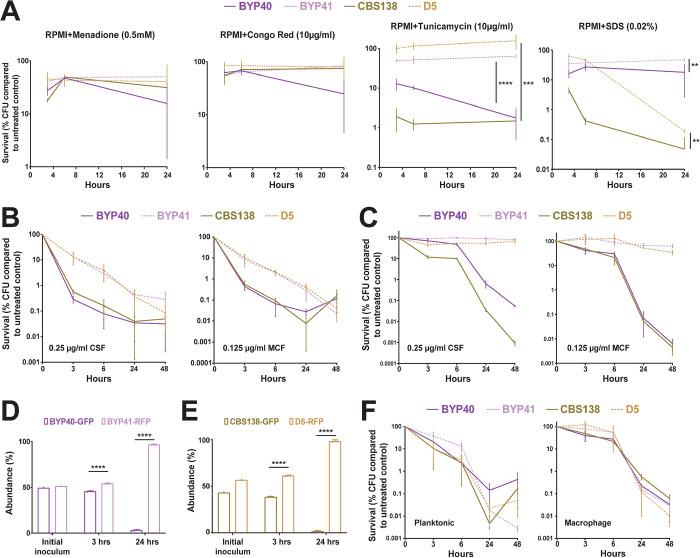
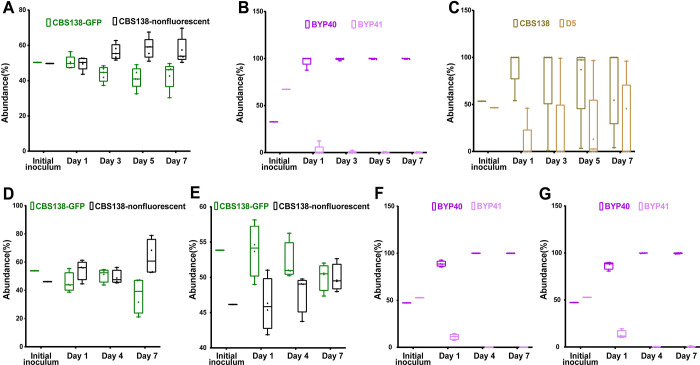
Small colony variants (SCVs) are relatively common among some bacterial species and are associated with poor prognosis and recalcitrant infections. Similarly, - a major intracellular fungal pathogen - produces small and slow-growing respiratory-deficient colonies, termed "petite." Despite reports of clinical petite . strains, our understanding of petite behavior in the host remains obscure. Moreover, controversies exist regarding in-host petite fitness and its clinical relevance. Herein, we employed whole-genome sequencing (WGS), dual-RNAseq, and extensive and studies to fill this knowledge gap. WGS identified multiple petite-specific mutations in nuclear and mitochondrially-encoded genes. Consistent with dual-RNAseq data, petite . cells did not replicate inside host macrophages and were outcompeted by their non-petite parents in macrophages and in gut colonization and systemic infection mouse models. The intracellular petites showed hallmarks of drug tolerance and were relatively insensitive to the fungicidal activity of echinocandin drugs. Petite-infected macrophages exhibited a pro-inflammatory and type I IFN-skewed transcriptional program. Interrogation of international . blood isolates ( =1000) showed that petite prevalence varies by country, albeit at an overall low prevalence (0-3.5%). Collectively, our study sheds new light on the genetic basis, drug susceptibility, clinical prevalence, and host-pathogen responses of a clinically overlooked phenotype in a major fungal pathogen.
is a major fungal pathogen, which is able to lose mitochondria and form small and slow-growing colonies, called "petite". This attenuated growth rate has created controversies and questioned the clinical importance of petiteness. Herein, we have employed multiple omicstechnologies and in vivo mouse models to critically assess the clinical importance of petite phenotype. Our WGS identifies multiple genes potentially underpinning petite phenotype. Interestingly, petite cells engulfed by macrophages are dormant and therefore are not killed by the frontline antifungal drugs. Interestingly, macrophages infected with petite cells mount distinct transcriptomic responses. Consistent with our ex-vivo observations, mitochondrial-proficient parental strains outcompete petites during systemic and gut colonization. Retrospective examination of isolates identified petite prevalence a rare entity, can significantly vary from country to country. Collectively, our study overcomes the existing controversies and provides novel insights regarding the clinical relevance of petite isolates.
小菌落变体(SCV)在某些细菌物种中相对常见,且与预后不良和顽固性感染有关。同样,一种主要的细胞内真菌病原体产生小的、生长缓慢的呼吸缺陷型菌落,称为“小菌落”。尽管有临床小菌落菌株的报道,但我们对其在宿主体内行为的了解仍然模糊。此外,关于宿主体内小菌落的适应性及其临床相关性存在争议。在此,我们采用全基因组测序(WGS)、双RNA测序以及广泛的研究来填补这一知识空白。WGS在核编码基因和线粒体编码基因中鉴定出多个小菌落特异性突变。与双RNA测序数据一致,小菌落细胞在宿主巨噬细胞内不复制,并且在巨噬细胞以及肠道定植和全身感染小鼠模型中被其非小菌落亲本所竞争。细胞内的小菌落表现出耐药性特征,并且对棘白菌素类药物的杀菌活性相对不敏感。感染小菌落的巨噬细胞表现出促炎和I型干扰素偏向的转录程序。对1000份国际血液分离株的调查显示,小菌落的流行率因国家而异,尽管总体流行率较低(0 - 3.5%)。总体而言,我们的研究为一种主要真菌病原体中一种临床忽视的表型的遗传基础、药物敏感性、临床流行率以及宿主 - 病原体反应提供了新的见解。
是一种主要的真菌病原体,能够丢失线粒体并形成小的、生长缓慢的菌落,称为“小菌落”。这种生长速率的减弱引发了争议,并对小菌落的临床重要性提出了质疑。在此,我们采用多种组学技术和体内小鼠模型来严格评估小菌落表型的临床重要性。我们的WGS鉴定出多个可能支撑小菌落表型的基因。有趣的是,被巨噬细胞吞噬的小菌落细胞处于休眠状态,因此不会被一线抗真菌药物杀死。有趣的是,感染小菌落细胞的巨噬细胞呈现出独特的转录组反应。与我们的体外观察结果一致,线粒体功能正常的亲本菌株在全身感染和肠道定植过程中比小菌落更具竞争力。对分离株的回顾性检查发现,小菌落的流行率是一个罕见的实体,在不同国家之间可能有显著差异。总体而言,我们的研究克服了现有的争议,并为小菌落分离株的临床相关性提供了新的见解。