Department of Surgery, Stavanger University Hospital, PO Box 8100, 4068, Stavanger, Norway.
Hormone Laboratory, Department of Medical Biochemistry and Pharmacology, Haukeland University Hospital, Bergen, Norway.
BMC Cancer. 2023 Jul 4;23(1):625. doi: 10.1186/s12885-023-11122-8.
Adjuvant endocrine treatment is essential for treating luminal subtypes of breast cancer, which constitute 75% of all breast malignancies. However, the detrimental side effects of treatment make it difficult for many patients to complete the guideline-required treatment. Such non-adherence may jeopardize the lifesaving ability of anti-estrogen therapy. In this systematic review, we aimed to assess the consequences of non-adherence and non-persistence from available studies meeting strict statistical and clinical criteria.
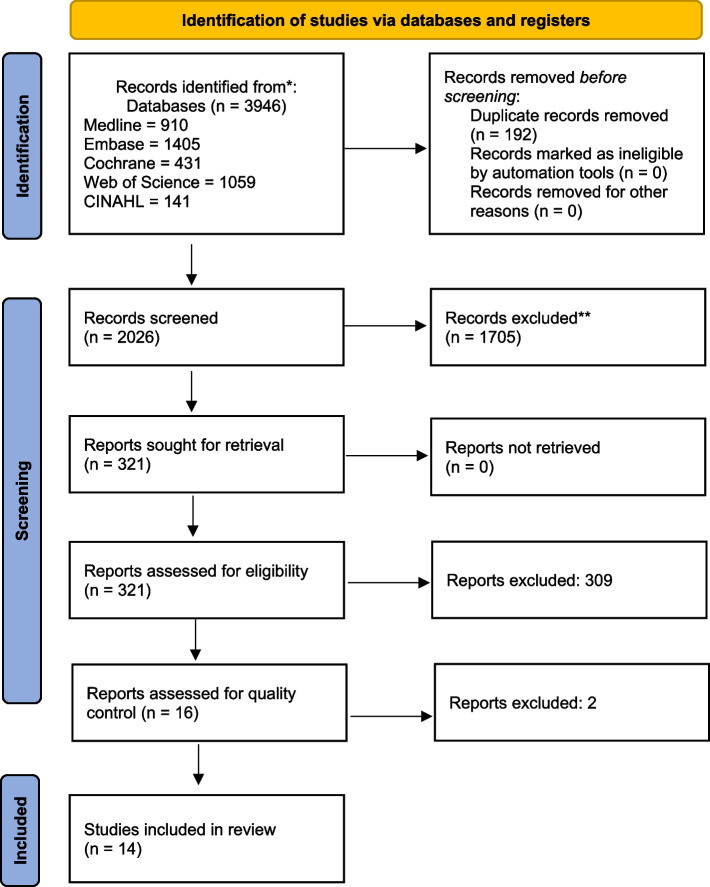
A systematic literature search was performed using several databases, yielding identification of 2,026 studies. After strict selection, 14 studies were eligible for systematic review. The review included studies that examined endocrine treatment non-adherence (patients not taking treatment as prescribed) or non-persistence (patients stopping treatment prematurely), in terms of the effects on event-free survival or overall survival among women with non-metastatic breast cancer.
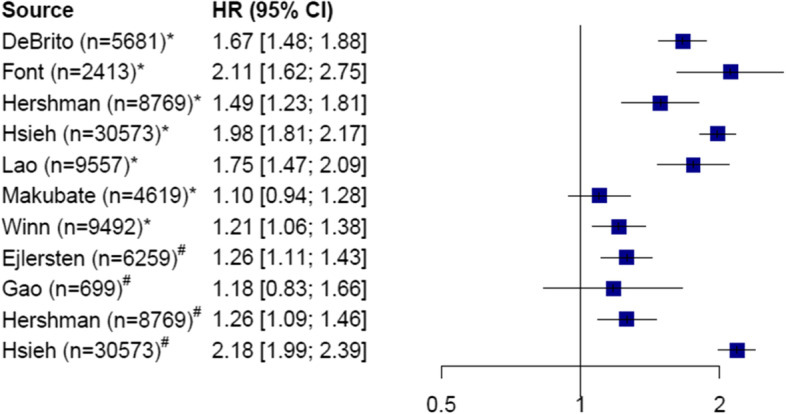
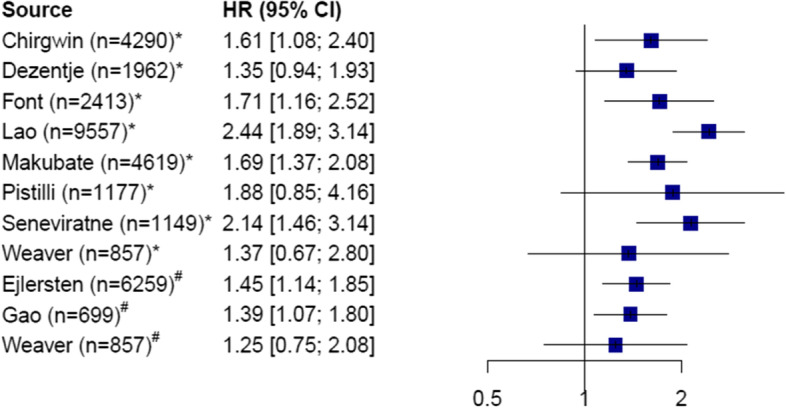
We identified 10 studies measuring the effects of endocrine treatment non-adherence and non-persistence on event-free survival. Of these studies, seven showed significantly poorer survival for the non-adherent or non-persistent patient groups, with hazard ratios (HRs) ranging from 1.39 (95% CI, 1.07 to 1.53) to 2.44 (95% CI, 1.89 to 3.14). We identified nine studies measuring the effects of endocrine treatment non-adherence and non-persistence on overall survival. Of these studies, seven demonstrated significantly reduced overall survival in the groups with non-adherence and non-persistence, with HRs ranging from 1.26 (95% CI, 1.11 to 1.43) to 2.18 (95% CI, 1.99 to 2.39).
The present systematic review demonstrates that non-adherence and non-persistence to endocrine treatment negatively affect event-free and overall survival. Improved follow-up, with focus on adherence and persistence, is vital for improving health outcomes among patients with non-metastatic breast cancer.
辅助内分泌治疗对于治疗占所有乳腺癌 75%的腔型乳腺癌亚型至关重要。然而,治疗的有害副作用使得许多患者难以完成指南要求的治疗。这种不依从可能危及抗雌激素治疗的救生能力。在这项系统评价中,我们旨在根据严格的统计和临床标准评估现有研究中不依从和不持续的后果。
使用多个数据库进行系统文献检索,确定了 2026 项研究。经过严格选择,有 14 项研究符合系统评价的条件。该综述包括研究内分泌治疗不依从(患者未按规定服用治疗药物)或不持续(患者过早停止治疗)对非转移性乳腺癌妇女无事件生存或总生存的影响。
我们确定了 10 项研究,这些研究测量了内分泌治疗不依从和不持续对无事件生存的影响。其中 7 项研究表明,不依从或不持续患者组的生存明显较差,风险比(HR)范围为 1.39(95%可信区间,1.07 至 1.53)至 2.44(95%可信区间,1.89 至 3.14)。我们确定了 9 项研究,这些研究测量了内分泌治疗不依从和不持续对总生存的影响。其中 7 项研究表明,不依从和不持续组的总生存明显降低,风险比(HR)范围为 1.26(95%可信区间,1.11 至 1.43)至 2.18(95%可信区间,1.99 至 2.39)。
本系统评价表明,内分泌治疗的不依从和不持续会对无事件生存和总生存产生负面影响。改善随访,重点关注依从性和持续性,对于改善非转移性乳腺癌患者的健康结局至关重要。