Centre for Research in Agricultural Genomics (CRAG) CSIC-IRTA-UAB-UB, C/Vall Moronta, Edifici CRAG, 08193 Bellaterra (Cerdanyola del Vallès), Barcelona, Spain.
Department of Biology, Biochemistry, and Natural Sciences, School of Technology and Experimental Sciences, Universitat Jaume I, 12006 Castelló de la Plana, Spain.
Plant Commun. 2024 Jan 8;5(1):100645. doi: 10.1016/j.xplc.2023.100645. Epub 2023 Jul 4.
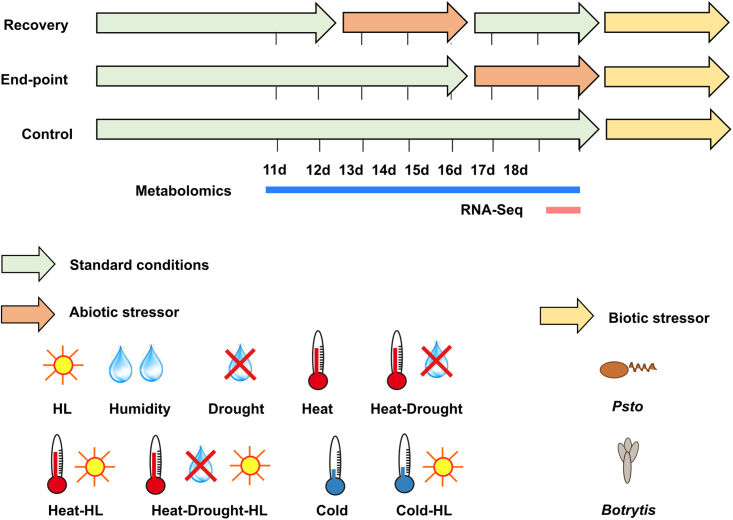
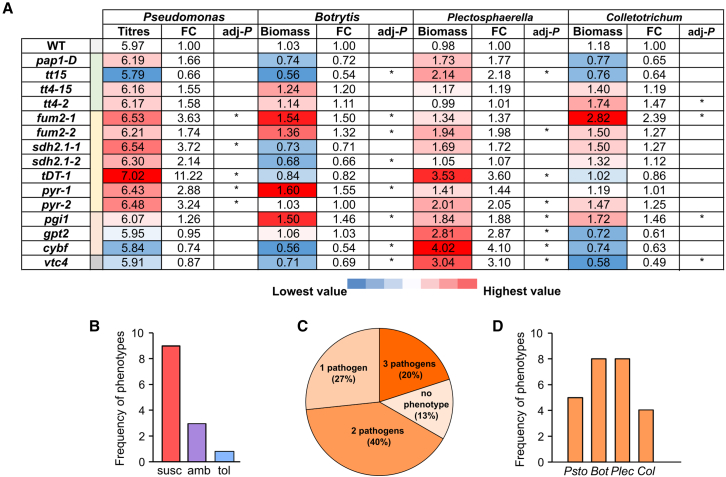
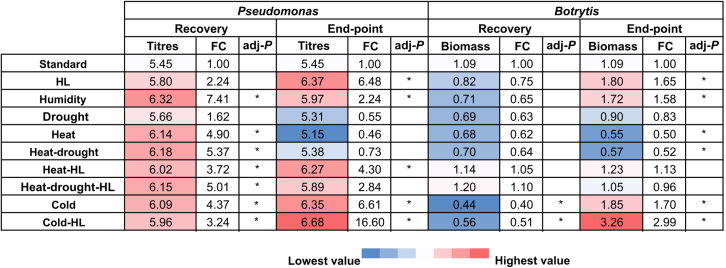
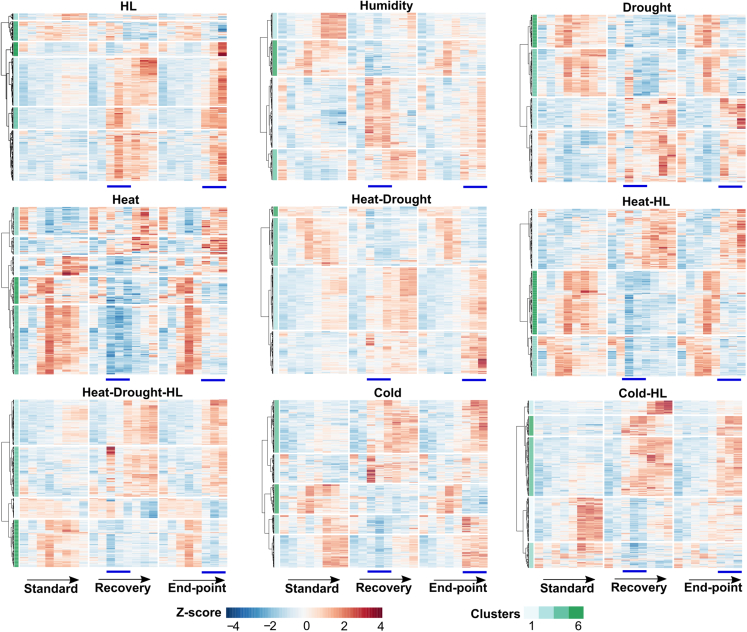
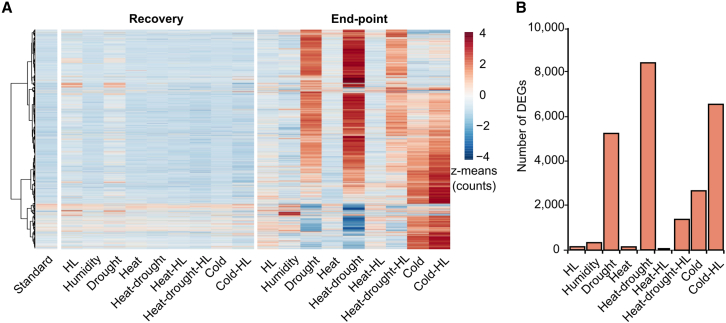
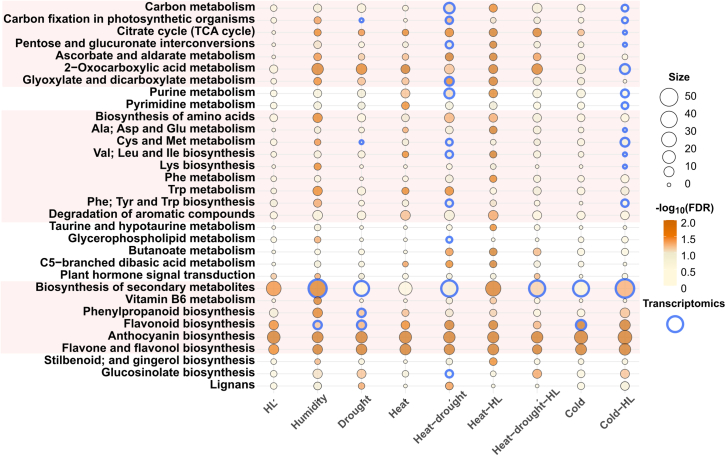
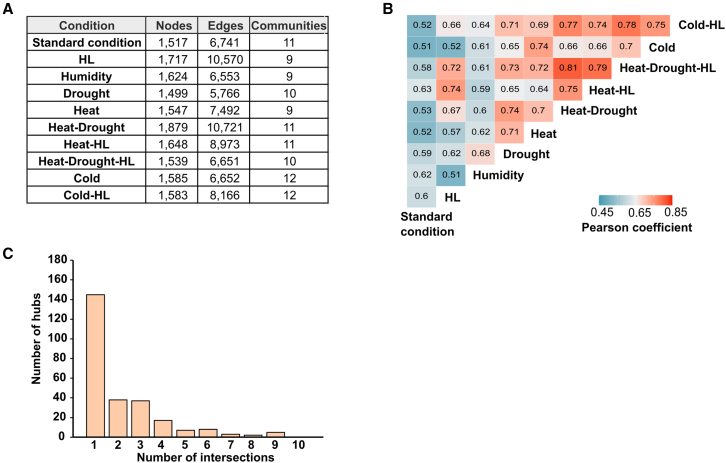
Understanding plant immune responses is complex because of the high interdependence among biological processes in homeostatic networks. Hence, the integration of environmental cues causes network rewiring that interferes with defense responses. Similarly, plants retain molecular signatures configured under abiotic stress periods to rapidly respond to recurrent stress, and these can alter immunity. Metabolome changes imposed by abiotic stressors are persistent, although their impact on defense remains to be clarified. In this study, we profiled metabolomes of Arabidopsis plants under several abiotic stress treatments applied individually or simultaneously to capture temporal trajectories in metabolite composition during adverse conditions and recovery. Further systemic analysis was performed to address the relevance of metabolome changes and extract central features to be tested in planta. Our results demonstrate irreversibility in major fractions of metabolome changes as a general pattern in response to abiotic stress periods. Functional analysis of metabolomes and co-abundance networks points to convergence in the reconfiguration of organic acid and secondary metabolite metabolism. Arabidopsis mutant lines for components related to these metabolic pathways showed altered defense capacities against different pathogens. Collectively, our data suggest that sustained metabolome changes configured in adverse environments can act as modulators of immune responses and provide evidence for a new layer of regulation in plant defense.
理解植物的免疫反应很复杂,因为在稳态网络中的生物过程之间存在高度的相互依存关系。因此,环境线索的整合会导致网络重新布线,从而干扰防御反应。同样,植物保留了在非生物胁迫期配置的分子特征,以快速响应反复出现的胁迫,这些特征可能会改变免疫。非生物胁迫因子引起的代谢组变化是持久的,尽管它们对防御的影响仍有待阐明。在这项研究中,我们对拟南芥植物在单独或同时应用几种非生物胁迫处理下的代谢组进行了分析,以捕获逆境和恢复过程中代谢物组成的时间轨迹。进一步进行了系统分析,以解决代谢组变化的相关性,并提取中心特征进行体内测试。我们的结果表明,作为对非生物胁迫期的一般反应模式,代谢组变化的主要部分具有不可逆性。代谢组和共同丰度网络的功能分析表明,有机酸和次生代谢物代谢的重新配置趋于一致。与这些代谢途径相关的成分的拟南芥突变体系表现出对不同病原体的防御能力改变。总的来说,我们的数据表明,在不利环境中配置的持续代谢组变化可以作为免疫反应的调节剂,并为植物防御的新调控层提供证据。