Mahajan Sarang, Sen Deepshikha, Sunil Anantu, Srikanth Priyadharshini, Marathe Shruti D, Shaw Karishma, Sahare Mahesh, Galande Sanjeev, Abraham Nixon M
Laboratory of Neural Circuits and Behaviour (LNCB), Department of Biology, Indian Institute of Science Education and Research (IISER), Pune, Maharashtra, India.
Department of Biology, Indian Institute of Science Education and Research (IISER), Pune, Maharashtra, India.
Front Neurosci. 2023 Jun 19;17:1180868. doi: 10.3389/fnins.2023.1180868. eCollection 2023.
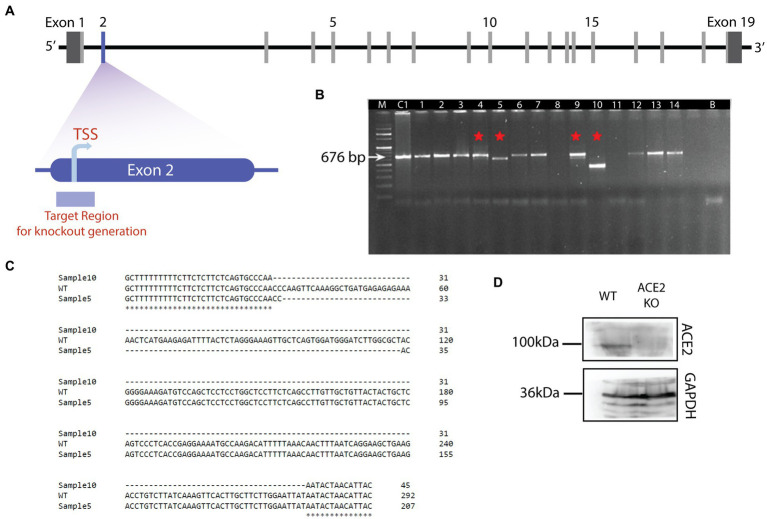
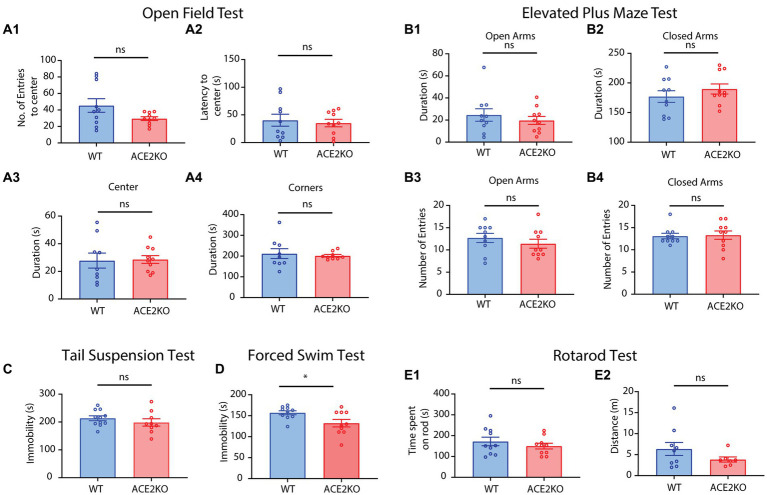
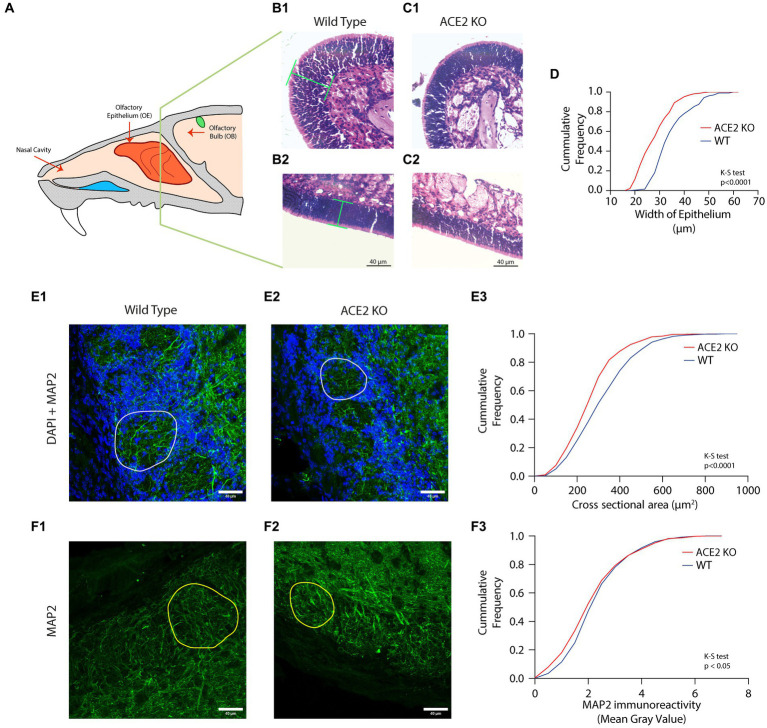
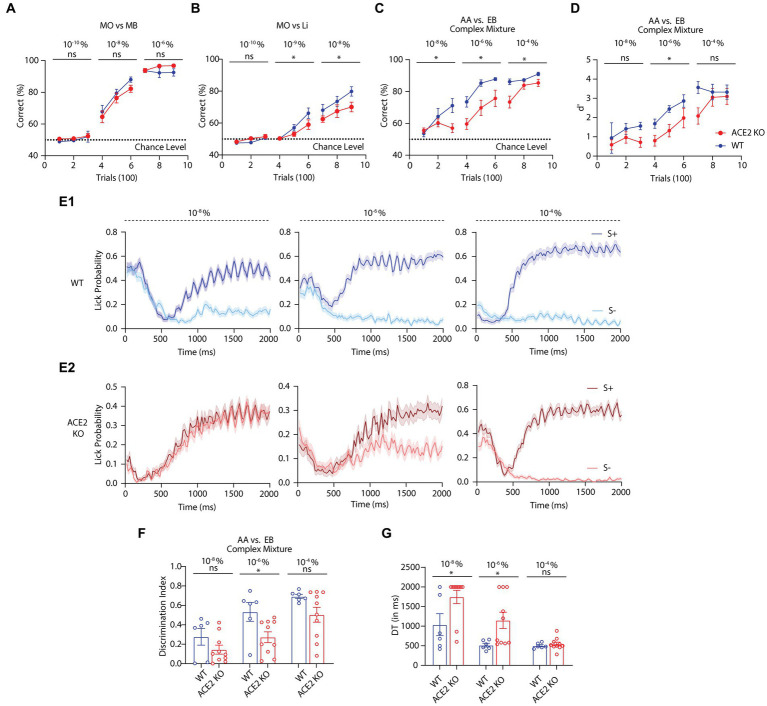
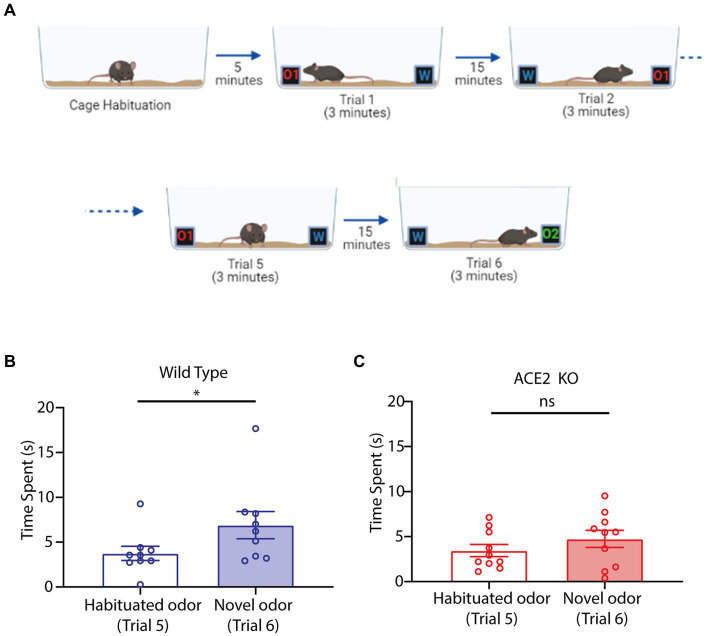
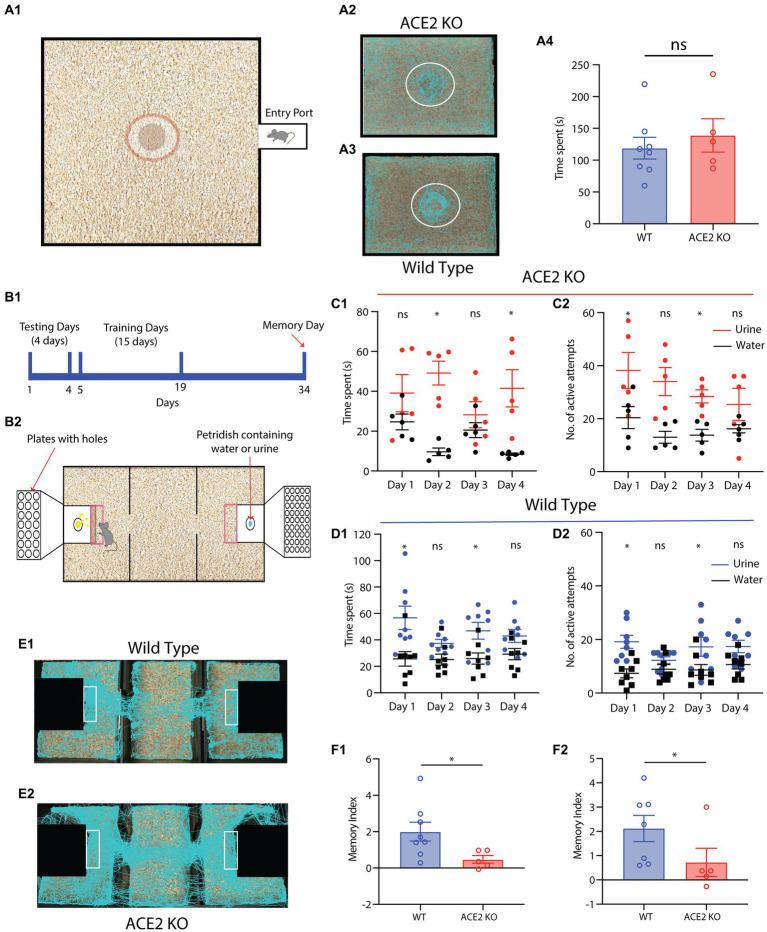
Neuronal morphological characterization and behavioral phenotyping in mouse models help dissecting neural mechanisms of brain disorders. Olfactory dysfunctions and other cognitive problems were widely reported in asymptomatic carriers and symptomatic patients infected with Severe Acute Respiratory Syndrome Coronavirus-2 (SARS-CoV-2). This led us to generate the knockout mouse model for Angiotensin Converting Enzyme-2 (ACE2) receptor, one of the molecular factors mediating SARS-CoV-2 entry to the central nervous system, using CRISPR-Cas9 based genome editing tools. ACE2 receptors and Transmembrane Serine Protease-2 (TMPRSS2) are widely expressed in the supporting (sustentacular) cells of human and rodent olfactory epithelium, however, not in the olfactory sensory neurons (OSNs). Hence, acute inflammation induced changes due to viral infection in the olfactory epithelium may explain transient changes in olfactory detectabilities. As ACE2 receptors are expressed in different olfactory centers and higher brain areas, we studied the morphological changes in the olfactory epithelium (OE) and olfactory bulb (OB) of ACE2 KO mice in comparison with wild type animals. Our results showed reduced thickness of OSN layer in the OE, and a decrease in cross-sectional area of glomeruli in the OB. Aberrations in the olfactory circuits were revealed by lowered immunoreactivity toward microtubule associated protein 2 (MAP2) in the glomerular layer of ACE2 KO mice. Further, to understand if these morphological alterations lead to compromised sensory and cognitive abilities, we performed an array of behavioral assays probing their olfactory subsystems' performances. ACE2 KO mice exhibited slower learning of odor discriminations at the threshold levels and novel odor identification impairments. Further, ACE2 KO mice failed to memorize the pheromonal locations while trained on a multimodal task implying the aberrations of neural circuits involved in higher cognitive functions. Our results thus provide the morphological basis for the sensory and cognitive disabilities caused by the deletion of ACE2 receptors and offer a potential experimental approach to study the neural circuit mechanisms of cognitive impairments observed in long COVID.
小鼠模型中的神经元形态特征和行为表型分析有助于剖析脑部疾病的神经机制。在感染严重急性呼吸综合征冠状病毒2(SARS-CoV-2)的无症状携带者和有症状患者中,广泛报道了嗅觉功能障碍和其他认知问题。这促使我们使用基于CRISPR-Cas9的基因组编辑工具,构建血管紧张素转换酶2(ACE2)受体的基因敲除小鼠模型,ACE2受体是介导SARS-CoV-2进入中枢神经系统的分子因素之一。ACE2受体和跨膜丝氨酸蛋白酶2(TMPRSS2)在人和啮齿动物嗅觉上皮的支持(支柱)细胞中广泛表达,但在嗅觉感觉神经元(OSN)中不表达。因此,病毒感染在嗅觉上皮中引起的急性炎症可能解释了嗅觉检测能力的短暂变化。由于ACE2受体在不同的嗅觉中枢和更高脑区表达,我们研究了与野生型动物相比,ACE2基因敲除小鼠嗅觉上皮(OE)和嗅球(OB)的形态变化。我们的结果显示,OE中OSN层厚度降低,OB中肾小球横截面积减小。ACE2基因敲除小鼠肾小球层中微管相关蛋白2(MAP2)的免疫反应性降低,揭示了嗅觉回路的异常。此外,为了了解这些形态学改变是否导致感觉和认知能力受损,我们进行了一系列行为试验,以探究其嗅觉子系统的表现。ACE2基因敲除小鼠在阈值水平上对气味辨别的学习较慢,并且在识别新气味方面存在障碍。此外,在多模式任务训练中,ACE2基因敲除小鼠无法记住信息素的位置,这意味着参与更高认知功能的神经回路存在异常。因此,我们的结果为ACE2受体缺失导致的感觉和认知障碍提供了形态学基础,并为研究长期新冠中观察到的认知障碍的神经回路机制提供了一种潜在的实验方法。