Choi In-Su, Han Eun-Kyeong, Wojciechowski Martin F, Heo Tae-Im, Park Jong-Soo, Yang Jong-Cheol, Gantsetseg Amarsanaa, Cheon Kyeong-Sik, Tamaki Ichiro, Lee Jung-Hyun
Department of Biological Sciences and Biotechnology Hannam University Daejeon Korea.
Department of Biology Education Chonnam National University Gwangju Korea.
Ecol Evol. 2023 Jul 3;13(7):e10252. doi: 10.1002/ece3.10252. eCollection 2023 Jul.
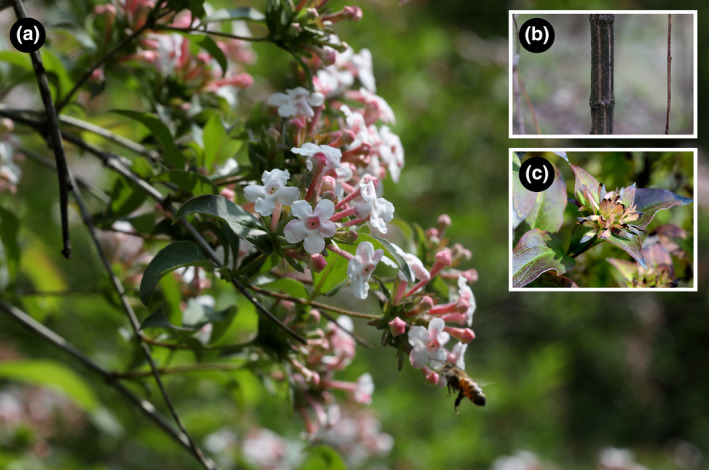
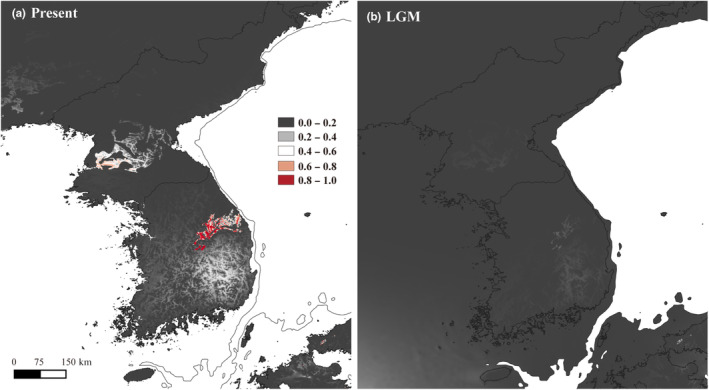
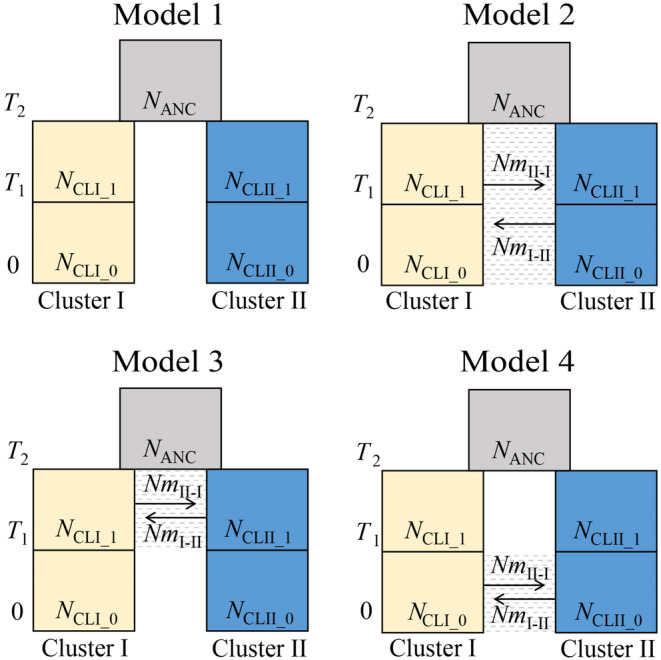
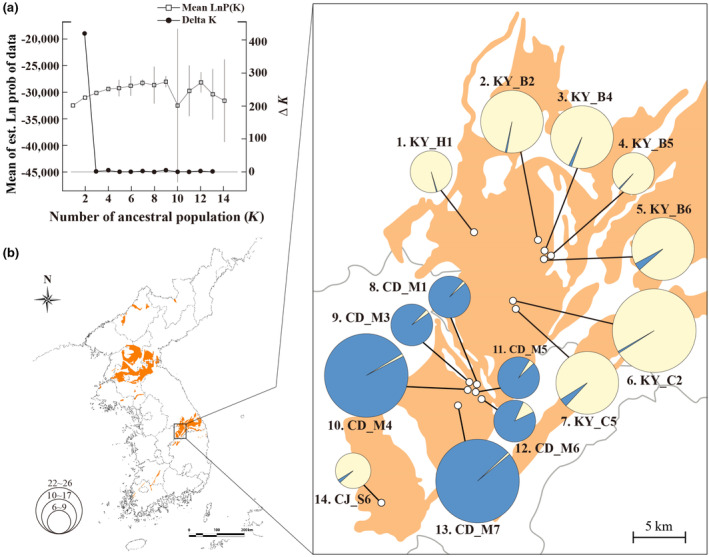
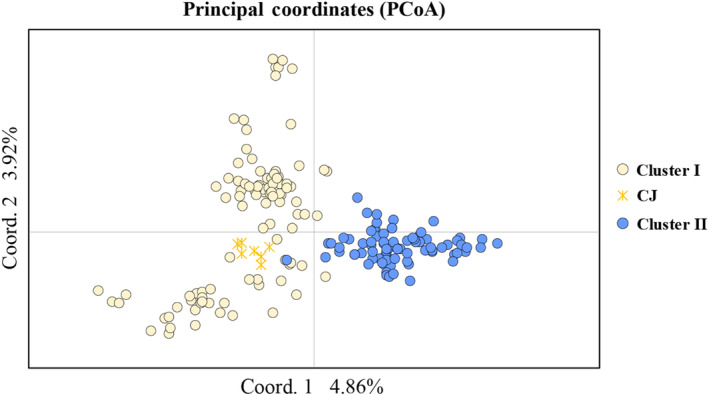
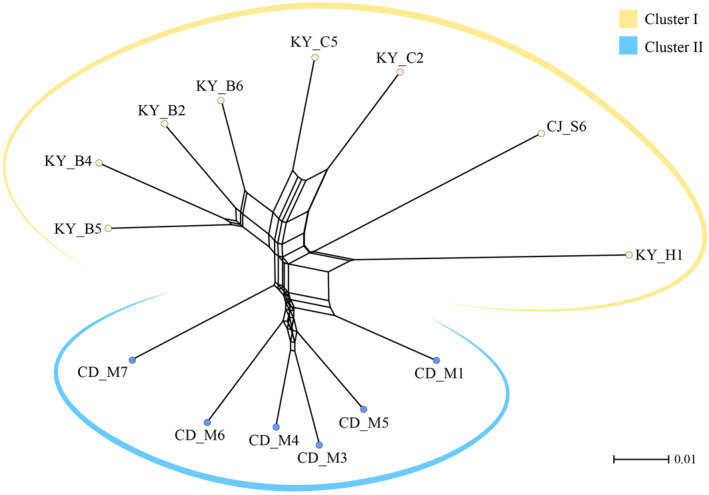
Similar to the global phenomenon, many plant species endemic to Korean limestone karst forests are at risk of extinction due to human intervention. is a familiar shrub, called "Hardy abelia" and "Fragrant abelia" growing in the karst forests of Korea, where it is one of the most threatened species. We investigated the genetic structure and demographic history of , which allow us to develop appropriate conservation and management strategies. The genetic structure was evaluated using a total of 187 samples from 14 populations, covering the entire distribution of in South Korea. We utilized 254 and 1753 SNP loci obtained via MIG-seq (Multiplexed ISSR Genotyping by sequencing) for structure and demographic analyses, respectively. The population demographic modeling was performed with site frequency spectrum. To gain further historical insights, we also employed ENM (Ecological Niche Modeling). We found two distinct clusters (CLI and CLII) of ancient origin (ca. 490 ka). Despite CLII experiencing a more severe bottleneck, both clusters showed similar levels of genetic diversity, indicating mutual historical gene flow. Their historical distribution range seems to have changed very little. We proposed a historical distribution scenario for , taking into account its intrinsic factors, and emphasized a more complex response to Quaternary climate change beyond simple allopatric speciation models. These findings provide valuable insights for conservation and management strategies for .
与全球现象类似,许多韩国石灰岩岩溶森林特有的植物物种因人类干预而面临灭绝风险。 是一种常见的灌木,被称为“耐寒六道木”和“香六道木”,生长在韩国的岩溶森林中,是那里最受威胁的物种之一。我们调查了 的遗传结构和种群历史,这使我们能够制定适当的保护和管理策略。使用来自14个种群的总共187个样本评估了遗传结构,涵盖了 在韩国的整个分布范围。我们分别利用通过MIG-seq(多重ISSR测序基因分型)获得的254个和1753个SNP位点进行结构和种群分析。使用位点频率谱进行种群动态建模。为了获得更多的历史见解,我们还采用了生态位建模(ENM)。我们发现了两个起源古老(约49万年)的不同聚类(CLI和CLII)。尽管CLII经历了更严重的瓶颈,但两个聚类显示出相似水平的遗传多样性,表明存在相互的历史基因流动。它们的历史分布范围似乎变化很小。我们考虑到其内在因素,提出了 的历史分布情景,并强调了对第四纪气候变化的反应比简单的异域物种形成模型更为复杂。这些发现为 的保护和管理策略提供了有价值的见解。