Department of Biology and Center for Neuroscience and Behavior, American University, Washington, DC, United States of America.
PLoS One. 2023 Jul 5;18(7):e0286596. doi: 10.1371/journal.pone.0286596. eCollection 2023.
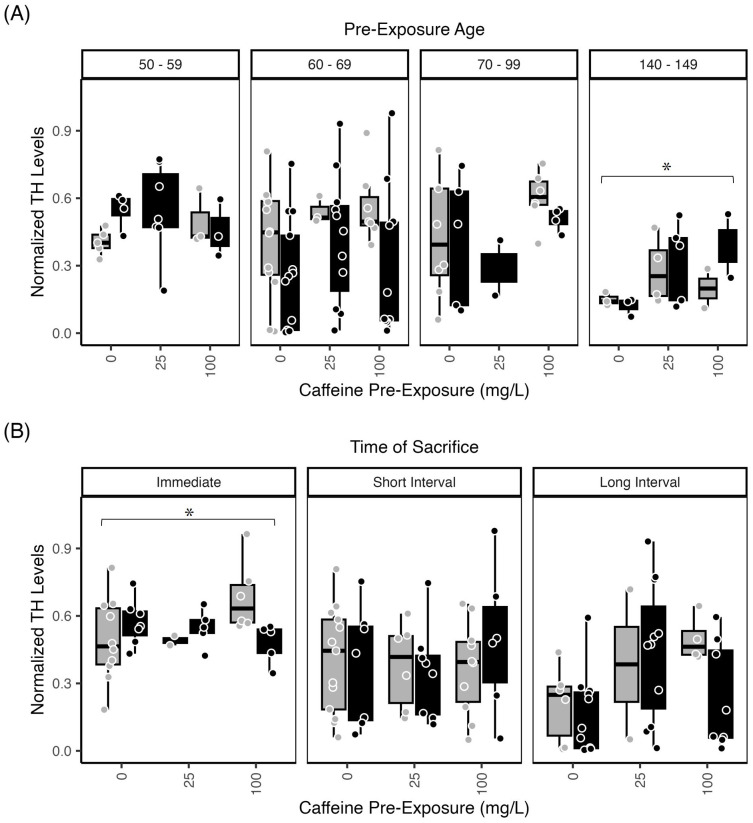
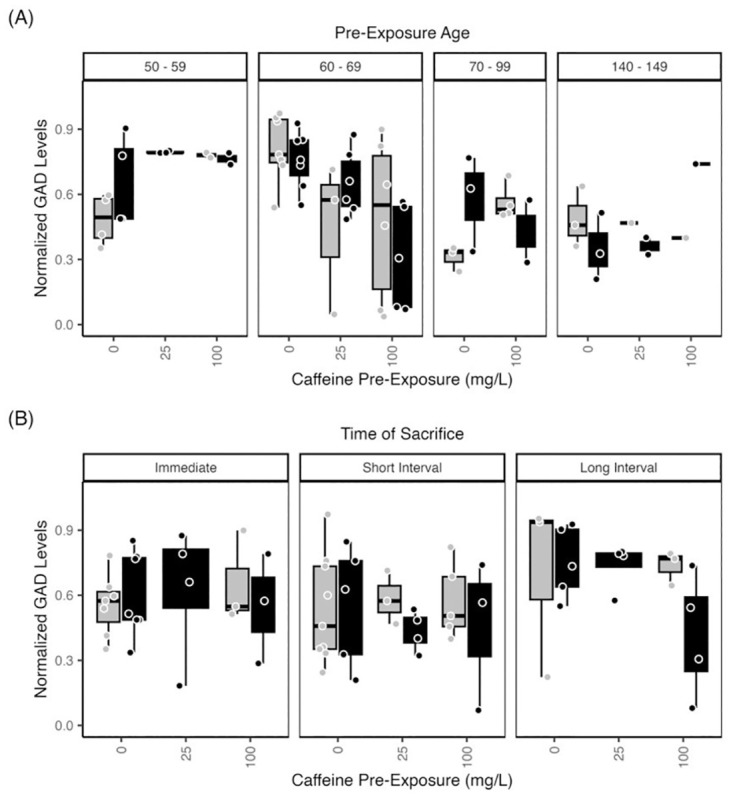
Adolescent alcohol exposure in humans is predictive of adult development of alcoholism. In rodents, caffeine pre-exposure enhances adult responsiveness to ethanol via a pathway targeted by both compounds. Embryonic exposure to either compound adversely affects development, and both compounds can alter zebrafish behaviors. Here, we evaluate whether co-exposure to caffeine and/or alcohol in adolescence exerts neurochemical changes in retina and brain. Zebrafish (Danio rerio) were given daily 20 min treatments to ethanol (1.5% v/v), caffeine (25-100 mg/L), or caffeine + ethanol for 1 week during mid-late adolescence (53-92 days post fertilization (dpf)) or early adulthood (93-142 dpf). Immediately after exposure, anatomical measurements were taken, including weight, heart rate, pigment density, length, girth, gill width, inner and outer eye distance. Brain and retinal tissue were subsequently collected either (1) immediately, (2) after a short interval (2-4d) following exposure, or (3) after a longer interval that included an acute 1.5% ethanol challenge. Chronic ethanol and/or caffeine exposure did not alter anatomical parameters. However, retinal and brain levels of tyrosine hydroxylase were elevated in fish sacrificed after the long interval following exposure. Protein levels of glutamic acid decarboxylase were also increased, with the highest levels observed in 70-79 dpf fish exposed to caffeine. The influence of ethanol and caffeine exposure on neurochemistry demonstrates specificity of their effects during postembryonic development. Using the zebrafish model to assess neurochemistry relevant to reward and anxiety may inform understanding of the mechanisms that reinforce co-addiction to alcohol and stimulants.
人类青春期接触酒精可预测成年后是否会发展成酒瘾。在啮齿动物中,咖啡因预先暴露会通过两种化合物都作用的途径增强成年后对乙醇的反应性。胚胎期接触这两种化合物都会对发育产生不利影响,而且这两种化合物都可以改变斑马鱼的行为。在这里,我们评估青春期同时接触咖啡因和/或酒精是否会对视网膜和大脑产生神经化学变化。斑马鱼(Danio rerio)在青春期中期至晚期(受精后 53-92 天)或成年早期(93-142 天)接受每天 20 分钟的乙醇(1.5%v/v)、咖啡因(25-100mg/L)或咖啡因+乙醇处理。在暴露后立即进行解剖学测量,包括体重、心率、色素密度、长度、周长、鳃宽、内眼距和外眼距。随后立即或在暴露后短时间(2-4 天)或长时间(包括急性 1.5%乙醇挑战)后收集大脑和视网膜组织。慢性乙醇和/或咖啡因暴露不会改变解剖学参数。然而,暴露后长时间间隔后处死的鱼的视网膜和大脑中酪氨酸羟化酶水平升高。谷氨酸脱羧酶的蛋白水平也增加,在暴露于咖啡因的 70-79 天龄鱼中观察到最高水平。乙醇和咖啡因暴露对神经化学的影响表明它们在胚胎后发育过程中的作用具有特异性。使用斑马鱼模型评估与奖励和焦虑相关的神经化学可能有助于理解强化酒精和兴奋剂共成瘾的机制。