GIGA-Research, Cyclotron Research Center-In Vivo Imaging Unit, 8 allée du Six Août, Batiment B30, University of Liège, 4000 Liège, Belgium.
GIGA-Research, Cyclotron Research Center-In Vivo Imaging Unit, 8 allée du Six Août, Batiment B30, University of Liège, 4000 Liège, Belgium.
Neuroimage Clin. 2023;39:103463. doi: 10.1016/j.nicl.2023.103463. Epub 2023 Jun 25.
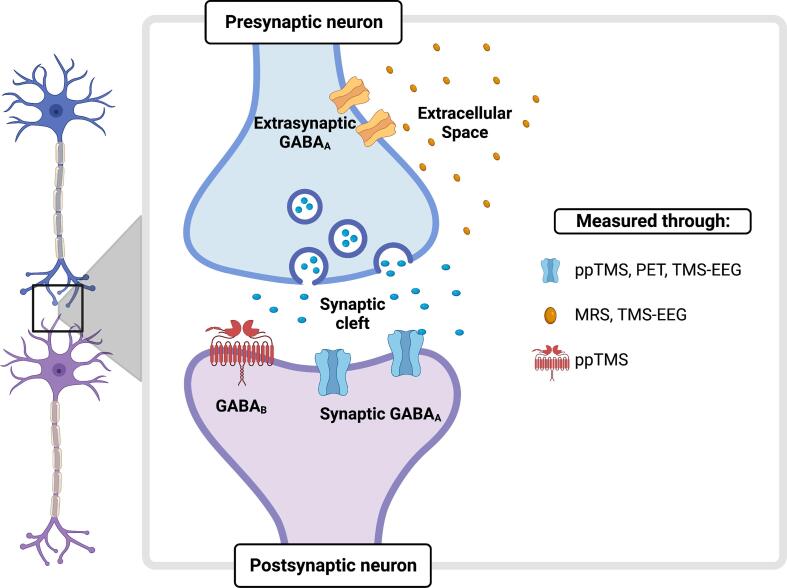
Stroke is a major cause of death and chronic neurological disability. Despite the improvements in stroke care, the number of patients affected by stroke keeps increasing and many stroke survivors are left permanently disabled. Current therapies are limited in efficacy. Understanding the neurobiological mechanisms underlying post-stroke recovery is therefore crucial to find new therapeutic options to address this medical burden. Long-lasting and widespread alterations of γ-aminobutyric acid (GABA) neurotransmission seem to play a key role in stroke recovery. In this review we first discuss a possible model of GABAergic modulation of post-stroke plasticity. We then overview the techniques currently available to non-invasively assess GABA in patients and the conclusions drawn from this limited body of work. Finally, we address the remaining open questions to clarify GABAergic changes underlying post-stroke recovery, we briefly review possible ways to modulate GABA post stroke and propose a novel approach to thoroughly quantify GABA in stroke patients, by integrating its concentration, the activity of its receptors and its link with microstructural changes.
中风是死亡和慢性神经残疾的主要原因。尽管中风护理有所改善,但受中风影响的患者人数仍在不断增加,许多中风幸存者留下了永久性残疾。目前的治疗方法疗效有限。因此,了解中风后恢复的神经生物学机制对于寻找新的治疗方法来解决这一医疗负担至关重要。γ-氨基丁酸(GABA)神经递质的持久和广泛改变似乎在中风恢复中起着关键作用。在这篇综述中,我们首先讨论了 GABA 对中风后可塑性的调节的可能模型。然后,我们综述了目前可用于非侵入性评估患者 GABA 的技术以及从这项有限的工作中得出的结论。最后,我们解决了剩余的开放性问题,以阐明中风后恢复的 GABA 能变化,我们简要回顾了中风后调节 GABA 的可能方法,并提出了一种通过整合其浓度、受体活性及其与微观结构变化的联系来全面量化中风患者 GABA 的新方法。